Xuzhou See the excavated Han world, then leave time for the lake and a proper local dinner.
Xuzhou rewards travellers who want more than a fast railway connection. Royal tombs and Han burial figures give its history a physical presence, while Yunlong Lake and the old-city food streets make the stay enjoyable between museum visits. It is a good choice for ancient-history enthusiasts and people happy to organise a day around both an exhibition and dinner.
Give it two full days and three nights: one day for the city museum, old streets and lake, and another for the Han Cultural Scenic Area with a slower afternoon. If only one full day is available, choose the museum or the tomb complex as the main event; trying to see every Han site will leave little time for the city itself.
Old-city lanes, courtyard exteriors, cafés and food · Central city south of Pengcheng Square
1–2 hours, plus a meal · Street exploration; individual historic interiors are separate
Put the two Han experiences on separate half days
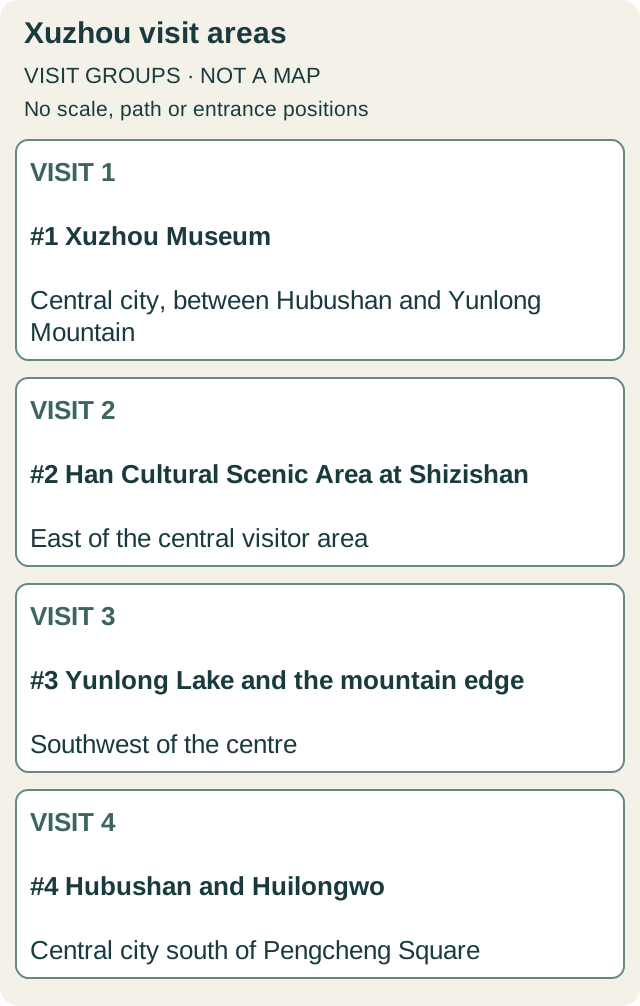
Open full-size map ↗. Central city, between Hubushan and Yunlong Mountain. East of the central visitor area. Southwest of the centre. Central city south of Pengcheng Square. This is an editorial relationship diagram, not a navigation map; box position does not encode distance or an entrance. ChinaMile diagram; location sources. Navigation: search the Chinese name in Amap.
The museum and old-city lanes belong to the central group. Yunlong Lake lies to the southwest, while the Shizishan tomb complex is a separate eastern trip. The diagram shows these relationships; it does not turn them into one continuous walking loop.
Two full days, three nights is the balanced choice. Book the museum first and use the other morning for Shizishan. One full day, two nights works if you select one major Han visit and a lake or old-city afternoon.
Guishan Han Tomb is another important option for visitors specifically interested in tomb construction. It is a separate site in a different direction, not another name for Shizishan. Choose it as a replacement or add time. The Han Stone Relief Art Museum is also a distinct venue near the lake: its own notices and reservation conditions apply, even though it shares museum administration.
Central meals or lakeside quiet
Pengcheng Square / Hubushan: the default for a short first stay, with evening food choices and access to the central sights. Check the road entrance and room noise: being close to pedestrian dining streets is useful, but not every lane-facing room is quiet.
Yunlong Lake: choose this when a quieter lakeside evening matters more than walking to old-city food. Compare the exact shore and transfer back from dinner; “lake area” covers a broad space.
Xuzhou East station: useful for a very early train or late arrival, but less convenient for repeated city sightseeing. If the train uses Xuzhou station instead, do not book a station hotel by name alone. Confirm passport check-in with the selected hotel before paying.
Keep one evening free for a shared pot
地锅鸡 diguo ji is a useful shared dinner choice: chicken cooked in a pot, commonly accompanied by dough cakes around its edge. Ask the serving size and chilli level before ordering; two people may need only one pot and a vegetable dish.
Try 烙馍卷馓子, thin flatbread wrapped around crisp fried dough, for a different texture, or a local spicy soup such as 饣它汤 for breakfast. Soup stock and fillings vary, so ask about meat and allergens. These are food choices, not a promise that every café near a sight serves them.
Use the central old-city area for the longer dinner, and eat a simple lunch near the day’s museum or tomb route. Xuzhou’s local-food selection also includes braised pork and rice noodles; choose what fits your appetite instead of queueing for every famous name.
Two adults, three nights and two full days
Use 3R + A + T + ¥720–1,000. R is the nightly shared-room quote; A is the pair’s combined arrival and departure transfers; T is the actual total for the chosen tomb tickets and any special exhibitions.
The ¥720–1,000 is an editorial allowance: ¥440–600 for meals from arrival dinner through departure breakfast, ¥160–240 for local journeys and ¥120–160 for drinks and contingency. It is not a live menu or taxi quote. Intercity rail or flights, shopping, paid guides and optional boats or cableways are excluded.
Example: R = ¥320, A = ¥120 and T = ¥200 produces ¥2,000–2,280 for the pair. The ¥200 is a sample combined ticket input, not a current scenic-area tariff. Enter the actual booked products before payment.
For the shorter one-day, two-night version use 2R + A + T + ¥460–660, allowing ¥280–400 for food, ¥80–120 for local travel and ¥100–140 for drinks and contingency. With the same sample inputs that is ¥1,420–1,620; change T if your chosen version uses different admissions.
Choose the history that interests you, then leave space
1. Xuzhou Museum · 徐州博物馆
The museum is the most useful introduction to the Han world you will see elsewhere in Xuzhou. Focus on the jade, burial objects and pottery figures, looking at what they reveal about status, daily life and burial practice. The official introduction also describes archaeological remains and historic buildings within the museum complex; choose according to what is open, rather than assuming every part needs a separate visit.
Make the reservation before fixing your sightseeing order. The standard rule is real-name booking through the museum’s own website or WeChat account. It specifically rejects unauthorised third-party promises of admission bundled with a guide.
Hours
Normally Tuesday–Sunday 09:00–17:00, last entry 16:00. Monday closure and holiday changes follow the museum’s current notice.
Tickets
Use the official reservation entry. First release is 20:00 one week ahead; further same-day releases depend on capacity. Check special-exhibition charges separately.
Time
Allow 2–3 hours, including entry and a small selection of galleries.
Chinese address
徐州市和平路118号;徐州博物馆
Getting there
Use the museum’s own current address and entrance, then walk or take a local transfer from the central hotel.
How to visit
The published guide describes Chinese-ID gates but does not establish a tested passport workflow. If the form cannot accept your passport, call 0516-83804412 or 0516-83804400 during open days before travel; keep the outdoor city route available.
2. Han Cultural Scenic Area at Shizishan · 汉文化景区 · 狮子山楚王陵
This is the strongest complement to the museum: move from objects in cases to the excavated setting of a Han royal burial. The cut-rock tomb and the small military figures give different impressions from the much larger Qin figures near Xi’an. The site’s own account treats the tomb owner as probable, so it is better to describe a Chu royal tomb than to present one identification as certain.
Choose the tomb and military-figure museum as the main pair. Extra garden, temple and interpretation areas can extend the visit, but they are not all obligatory. Tomb passages and level changes require more care than a flat gallery; ask staff about the route if enclosed spaces or steps are a concern.
Hours
Check the current scenic notice and final-entry time before setting out; start in the morning for the full main visit.
Tickets
Use the operator’s current ticket link and read the list of included sites. No present-day tariff is assumed from old visitor pages.
Time
A half day works for the tomb and principal figure displays, with pauses.
Chinese address
徐州市兵马俑路1号;汉文化景区
Getting there
Navigate to 汉文化景区 or 狮子山楚王陵 and confirm the gate shown on the ticket. Return to the centre by a checked local route or taxi.
How to visit
Confirm admission document requirements if the seller cannot accept a passport. Operator consultation: 0516-83661269. Do not substitute an unrelated tomb ticket.
3. Yunlong Lake and the mountain edge · 云龙湖 · 云龙山
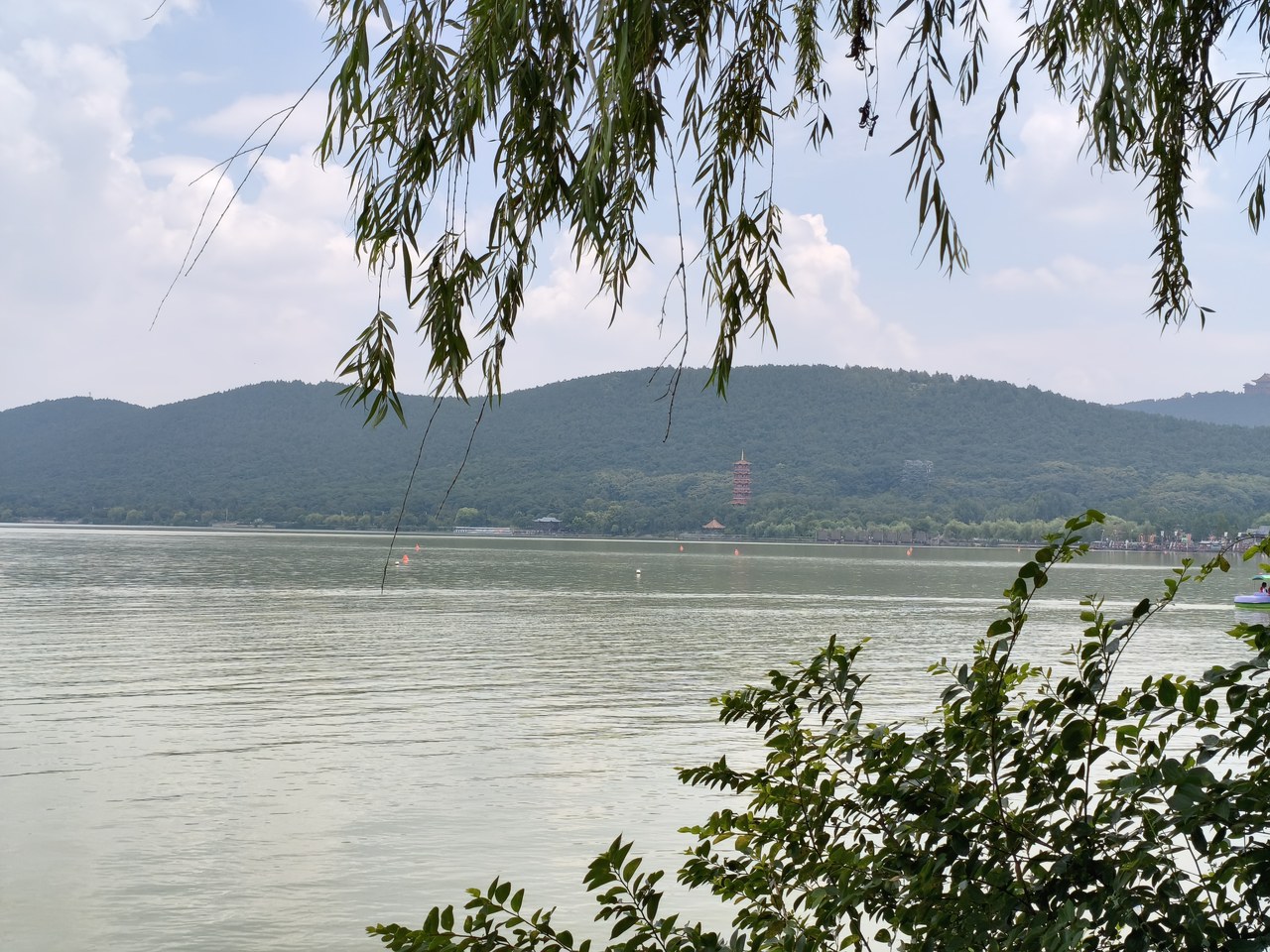
Yunlong Lake is the breathing space in a history-focused stay. Pick one shore section and enjoy the water and wooded backdrop instead of trying to complete the whole lake circuit. A late-afternoon walk fits well after the museum if the weather is comfortable.
Yunlong Mountain adds a climb and views, but is a separate physical choice. Check current access and the return route before going uphill; a cableway should not be assumed open or necessary. Travellers who prefer limited walking can keep to a short shore section and arrange collection at the same access point.
Hours
Use daylight for unfamiliar paths and any climb. Follow closures and weather warnings.
Tickets
No boat or cableway is required by this itinerary; price and operation of extras must be checked separately.
Time
Allow 1–2 hours for a selected shore walk; add time for mountain paths.
Chinese address
徐州市云龙湖;云龙山
Getting there
Choose a specific lakeside park entrance or meeting point on the current map; the lake is too large for a vague taxi destination.
How to visit
Start with the shore. Add the hill only when energy, conditions and remaining daylight justify it.
4. Hubushan and Huilongwo · 户部山 · 回龙窝
Use these neighbouring old-city areas for a more informal part of Xuzhou: sloping lanes, courtyard fronts and places to eat or sit. The visitor district includes restored and commercial spaces, so arrive expecting a mix of heritage and present-day leisure.
Go in daylight to appreciate the buildings, then stay for dinner if a menu appeals. Optional historic houses or Ximatai can deepen the visit when open; do not make a closed interior the reason to abandon the whole neighbourhood.
Hours
Street visit in daylight or early evening; shops and historic interiors set their own hours.
Tickets
The plan uses lanes and external views. Check any museum or house admission at its own entrance.
Time
1–2 hours of wandering, plus dinner.
Chinese address
徐州市云龙区户部山;回龙窝历史文化街区
Getting there
Navigate to the actual pedestrian entrance, with a taxi pickup on an adjoining road rather than inside the lanes.
How to visit
Pair with a central hotel and a local dinner. Keep bags at the hotel rather than carrying them through the slopes.
A workable museum-and-lake stay
Arrival evening · night 1
Check in, eat nearby and confirm the next morning’s reservation. An evening arrival is not counted as a full sightseeing day.
First full day · night 2
Visit Xuzhou Museum in your reserved morning slot. Eat lunch near the centre, then spend part of the afternoon around Hubushan and Huilongwo. If energy and weather allow, take a local transfer to one shore of Yunlong Lake before dinner; otherwise keep the lake for the following afternoon.
Second full day · night 3
Give the morning to Shizishan’s tomb and Han figures. After lunch, return to the centre. Use the remaining time for the lake, a rest or a longer old-city meal rather than committing to a second distant tomb by default.
Departure morning
Have breakfast and travel to the exact station or airport on the ticket. Swap the two full days if museum closure or reservation availability requires it. If museum admission cannot be arranged, use the confirmed-open tomb complex as the principal history visit and retain the outdoor city route.
Save both the station name and the site entrance
Compare Xuzhou 徐州 with Xuzhou East 徐州东 on 12306. They are distinct stations; check the actual train and map the hotel transfer before booking. For air arrival, use Xuzhou Guanyin Airport 徐州观音机场 when an operating flight suits the route, then confirm the ground connection for that arrival time.
Within the city, use walking for individual neighbourhoods and current public-transport directions or taxis between the centre, lake and Han complex. Do not borrow an old numbered bus route as a guaranteed service. For the return from Shizishan or the lake, save an accessible pickup point and the hotel’s Chinese address.
On the final morning, leave room for road conditions, station entry and security. A railway hub can make Xuzhou a convenient stop between longer stays, but it does not make its attractions part of a station transfer.
Choose a different reason for the next stop
Nanjing extends the history theme with a much larger city and a different period of monuments. Lianyungang changes the focus to mountains and coast. Compare actual trains and give the next place its own useful arrival day.
Verified rules and editable planning choices
Sources reviewed on . The museum’s visitor page supplies its regular hours, reservation release and official support numbers. Its collection page and the Han Cultural Scenic Area explain the different archaeological experiences; the lake authority supplies the outdoor context. Holiday or temporary notices override normal hours.
Foreign-passport booking and hotel check-in were not field-tested. Ticket amounts used in the examples are editable assumptions, while the museum release time comes from its published rule. Visit lengths, base choices and daily order are editorial judgments; use the linked official services for your party’s actual date and document type.