Quzhou Start with the family temple and city walls; choose one separate landscape day if you stay longer.
Quzhou is a rewarding small-city stop for Confucian history, surviving city-wall scenery and food with more chilli than many visitors expect in Zhejiang. Its principal urban route is manageable in one full day: a family temple with a specific southern lineage story, lanes around Shuitingmen and time to eat.
The wider municipality offers a different kind of stay. Longyou’s vast carved chambers and Jianglang Mountain’s rock formations are separate regional outings. Add a day and a night for one of them; do not turn a relaxed city visit into a race across the whole prefecture.
Three striking Danxia rock forms and an active landscape day · Jiangshan, southwest of Quzhou city
A full regional day; walking route depends on ability and conditions · Scenic admission and any required internal transport
One compact city day; two different directions beyond it
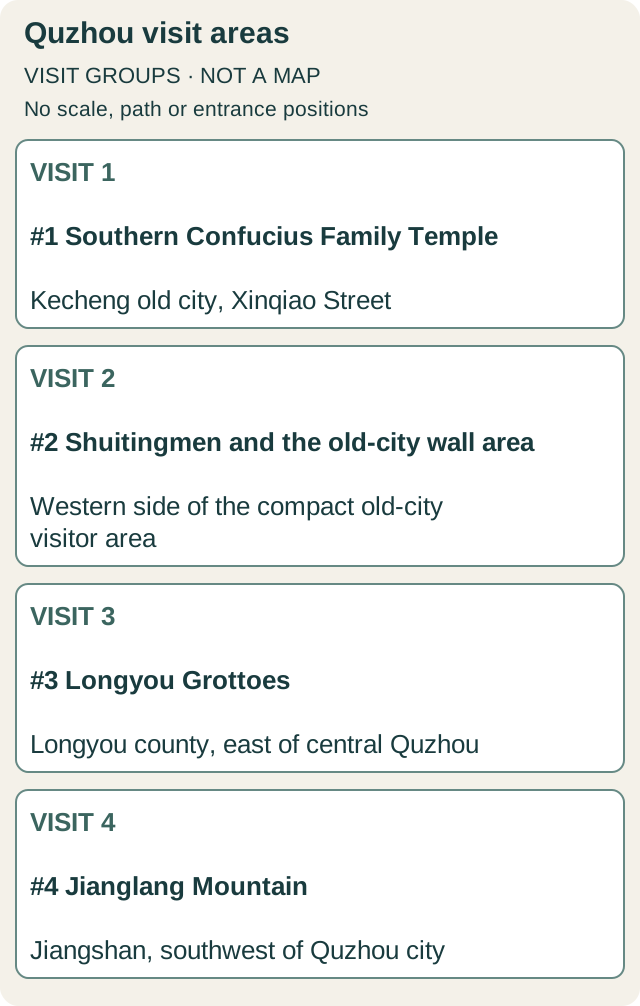
Open full-size map ↗. Kecheng old city, Xinqiao Street. Western side of the compact old-city visitor area. Longyou county, east of central Quzhou. Jiangshan, southwest of Quzhou city. This is an editorial relationship diagram, not a navigation map; box position does not encode distance or an entrance. ChinaMile diagram; location sources. Navigation: search the Chinese name in Amap.
One full day, two nights suits the temple, old streets and local meals. A late arrival followed by an early departure still needs two nights to preserve that full day.
Two full days, three nights adds either Longyou Grottoes to the east or Jianglang Mountain in Jiangshan to the southwest. Choose Longyou for carved interior spaces and Jianglang for a physically active landscape day. They are alternatives in this plan, not a single convenient loop.
If Jianglang is the main reason for travelling, staying in Jiangshan or near the scenic area may make more sense than repeatedly returning to Quzhou. Likewise, a longer Longyou visit can use its own county base. Keep Quzhou’s old-city hotel when the city remains the main event.
Sleep near the old-city edge for the short visit
Kecheng old-city edge: the default. Look for a practical walking route to Xinqiao Street or Shuitingmen, plus a road entrance for luggage. A room directly over an evening dining lane may be less quiet than one a few streets away.
Modern city hotels: useful if room space, vehicle access or a particular facility matters more than walking back from dinner. Check the actual transfer rather than relying on “city centre” in the listing.
Station-area accommodation: useful for a very early train, provided the hotel is beside the station named on the ticket. For an extra regional day, compare one central base against a night in Longyou or Jiangshan. Confirm passport check-in with the selected property before paying.
Choose your own level of chilli
三头一掌 refers to fish head, rabbit head, duck head and duck feet. These are distinctive local foods, but you do not need to order all four. Ask how much chilli is already in the preparation; “less spicy” may not remove seasoning from a pre-cooked dish.
衢州烤饼 Quzhou kaobing is an easier small snack to try. Ask about the filling, heat and whether the listed price is per piece or a serving. For a less adventurous meal, choose plainly prepared vegetables and a familiar rice or noodle dish from a restaurant willing to adjust seasoning.
Have a proper lunch near the city route and keep the longer evening meal around the old city. On a regional excursion, eat before the final return rather than relying on a station change to supply dinner.
City-only and one-extra-day versions
For two adults, one full day and two nights in a shared room, use 2R + A + T + ¥440–660. R is the nightly room quote, A the combined arrival and departure transfers and T the actual city admission total. The allowance is food ¥280–400, local travel ¥60–120 and drinks or contingency ¥100–140.
At R = ¥300, A = ¥100 and T = ¥40, the total is ¥1,180–1,400 for the pair. T is an editable example, not a current temple tariff. Intercity rail or flights, guides, shopping, boats and special performances are excluded.
For two full days and three nights, add R + D + G + ¥220–340 to the city version. D is the pair’s complete return transport quote for Longyou or Jianglang, G the actual additional admissions and internal transport, and ¥220–340 allows for another day’s food and drinks.
Using R = ¥300, D = ¥400 and G = ¥200 as sample inputs adds ¥1,120–1,240, giving ¥2,300–2,640 for the pair. Replace D and G with the chosen route’s price; a train-plus-taxi day and a private-car day will not cost the same.
Two urban anchors and two optional regional days
1. Southern Confucius Family Temple · 孔氏南宗家庙
This is a family temple connected with descendants of Confucius who settled in the south, rather than simply another school temple. That distinction is the useful thread to follow through the visit: migration, family memory and the continued practice of commemorating Confucius.
Look for the main halls and the Silu, or “remembering Lu”, theme in the interpretation. Visitors who want more context can check the separate China Confucianism Museum opposite; it has its own opening and entry conditions. The family temple is the first choice, with the museum an optional addition.
Hours
Confirm the day’s opening and any ceremony-related restrictions before fixing the morning.
Tickets
Current admission, reservation and passport handling must be confirmed with the venue; no historic discount is assumed.
Time
Allow 1–1.5 hours; add time only if visiting the separate Confucianism Museum.
Chinese address
衢州市柯城区新桥街;孔氏南宗家庙
Getting there
Use the temple entrance on the current map, then continue through the old-city area on foot or by a short local transfer.
How to visit
Ask your hotel to confirm entry for your date and passport if a booking form is unclear. If the interior is unavailable, retain the old-city walk and choose an open museum after checking its own notice.
2. Shuitingmen and the old-city wall area · 水亭门 · 北门街
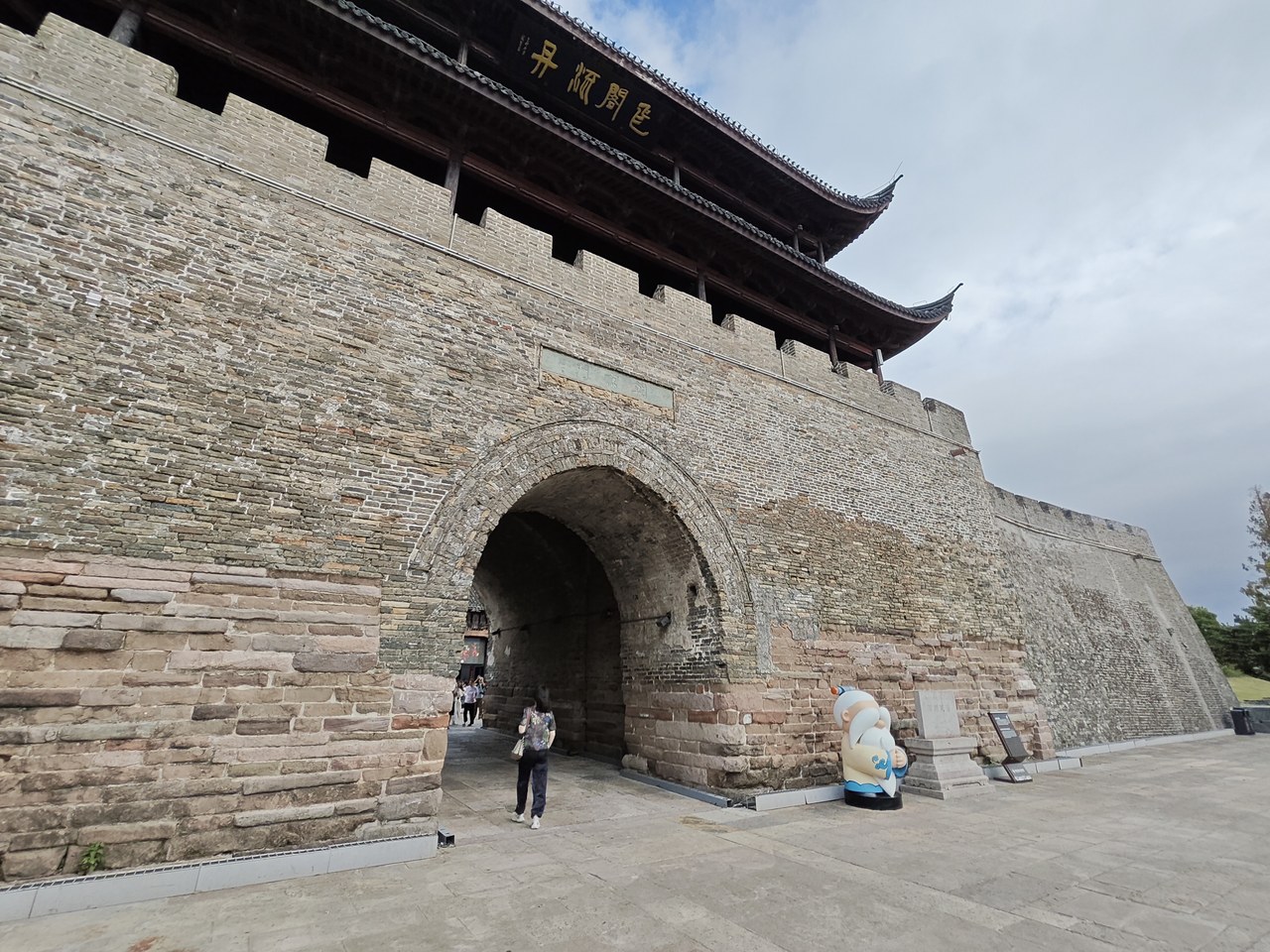
Shuitingmen is the natural place to slow down after the temple. The gate, walls and connected streets make the physical outline of the old city easier to understand. Explore a few lanes and compare the historic structures with the newer shops around them.
Arrive before dark for the architecture and river-side setting, then stay for a meal if you like the evening atmosphere. A public street visit does not depend on a boat, tower ascent or a scheduled show. Check those separately instead of assuming they are bundled together.
Hours
Use daylight for buildings and unfamiliar paths. Shops and ticketed interiors follow their own schedules.
Tickets
The default walk uses public streets and external views. Optional admission or performance prices vary.
Time
2–3 hours including breaks, plus the time you want for dinner.
Chinese address
衢州市水亭门历史文化街区;北门街
Getting there
Walk within the historic district, with short local transfers if heat, distance or mobility makes a continuous route uncomfortable.
How to visit
Choose a street route with a known road exit. Only use officially open wall or tower access; an exterior view does not require a climb.
3. Longyou Grottoes · 龙游石窟
Choose Longyou if the unusual carved underground spaces interest you more than an exposed mountain climb. The scale, supports and repeated chisel marks are the things to look at. The original purpose and history are debated; a promotional “mystery” label is not a settled archaeological explanation.
The caves are in Longyou county, not under Quzhou’s old city. Give the excursion its own transport plan and return booking. With spare time, an open Longyou museum or the county’s old-city area can be a gentler addition, but neither is necessary to justify the cave visit.
Hours
Confirm the day’s open chambers and final cave entry before leaving Quzhou.
Tickets
Use the actual scenic ticket office or a clearly identified official seller. Current tariff and any free-admission dates must be checked.
Time
An editorial estimate of 2–3 hours on site, with the rest of the day available for transfers and lunch.
Chinese address
衢州市龙游县小南海镇;龙游石窟景区
Getting there
Compare a booked round-trip car with a train to 龙游站 followed by a local connection. The station is not the grotto entrance.
How to visit
Expect stairs and enclosed, sometimes dim spaces; ask about the accessible route before paying if needed. Save the return pickup and leave enough margin for a booked train.
4. Jianglang Mountain · 江郎山
Jianglang’s three rock towers—Langfeng 郎峰, Yafeng 亚峰 and Lingfeng 灵峰—rise above the wooded slopes like separate slabs. Come to see their changing profiles from the viewpoints and then stand between the rock walls. Climbing Langfeng is a different, much harder choice; seeing the landscape does not require it.
Default: the lower circuit to Dengtianping
From 江郎山游客中心, use the scenic shuttle to the Kaiming Temple 开明禅寺 parking area when that upper road section is operating. This saves the additional Shibaqu 十八曲 stair approach. If buses terminate lower down at Shibaqu, that climb becomes part of your day: reduce the route or change plans if you cannot manage the added steps. The shuttle is a mountain approach, not transport to Dengtianping or the summit.
Kaiming Temple → Huixian Rock 会仙岩. Start with the temple setting, then follow the path to the large sheltered rock chamber; the contrast between buildings and eroded stone introduces the mountain.
Take the Xiake Pavilion 霞客亭 branch, then return to the junction. This is the wide view of the three towers; it is worth the short detour before entering the gorge. The pavilion is not on the summit.
Continue through Yixiantian 一线天 to Dengtianping 登天坪. Look up between Yafeng and Lingfeng as the walls narrow the sky, then pause at the terrace beneath the towers. The stepped gorge still needs effort even though this is the shorter option.
Return to Kaiming Temple and the signed shuttle pickup. The simple plan retraces the lower approach where two-way access is allowed; follow any posted one-way return diversion instead of pushing against it. Keep the final bus and road pickup separate in your timing.
Langfeng is an optional climb, not the next easy viewpoint
For walkers comfortable with prolonged steep steps and exposure, the published upper route continues from Dengtianping up the Langfeng Tianyou 郎峰天游 south route, reaches the summit, and descends by the north route past Zhonggu Cave 钟鼓洞 and Yanxia Pavilion 烟霞亭 back toward Kaiming Temple. The descent includes very steep sections as well as the ascent. This is a poor choice for fear of heights, painful knees or a group whose slowest member would struggle on narrow stairs.
Decide at Dengtianping. Stay with the lower return if weather is wet or windy, queues have eaten the margin, or the operator cannot confirm the entire upper loop and its entry cutoff. A summit photo is not worth leaving an uncertain descent. Langfeng has its own opening/maintenance controls and ticket eligibility; a mountain admission or free-entry offer does not automatically include it. Do not walk a closed high route or assume a cable car will remove the climb.
For an even shorter visit, turn back after the Xiake Pavilion viewpoint and skip the Yixiantian climb. It keeps the most useful panorama but gives up the gorge experience. Bring water and a snack; place a proper lunch before or after the walk so that a long meal does not consume the return margin.
Hours
Check weather, route restrictions, last admission and the final internal return before setting out.
Tickets
Confirm the day’s admission and transport basket. Older free-day campaigns do not establish current eligibility.
Time
Keep a full day including Jiangshan transfers. Budget about 3–4 hours for the lower walking visit with rests, or 5–6 hours if adding Langfeng; these are editorial allowances, not timed access guarantees.
Chinese address
衢州市江山市江郎山景区游客中心
Getting there
Use a booked round-trip car or a train to 江山站 plus a separately confirmed road transfer. Match the return to the chosen walking route.
How to visit
Use Kaiming Temple → Huixian Rock → Xiake Pavilion branch → Yixiantian → Dengtianping as the default; return to Kaiming Temple for the scenic shuttle. Dengtianping is the decision point, not the summit. Add Langfeng only when its complete ascent and descent are confirmed open.
A city day that does not depend on a distant attraction
Arrival evening · night 1
Check in, eat nearby and confirm the temple’s entry conditions for the following day.
First full day · night 2
Start with the Southern Confucius Family Temple when open. Add the separate Confucianism Museum only if its current opening and your interest justify it. After lunch, explore the connected old-city streets and finish around Shuitingmen before a local dinner.
Optional second full day · night 3
Take the pre-arranged Longyou or Jianglang outing. For Jianglang, start with the scenic shuttle and the Kaiming Temple–Xiake Pavilion–Yixiantian–Dengtianping route; return from Kaiming Temple by shuttle. Choose the summit extension before the walking margin becomes tight, and only with its complete route open. Keep the other regional destination for another stay. Rain or an unsuitable route is a reason to change to an open city museum and a slower old-city day.
Departure morning
Leave after night 2 for the city-only version, or after night 3 with the regional day. Avoid booking a tight onward train immediately after a mountain descent.
Match the railway destination to the part you are visiting
Search Quzhou 衢州 on 12306 and read the exact departure and arrival station names on the selected service. For regional outings, Longyou 龙游 and Jiangshan 江山 are different stations serving different towns; each still needs a road connection to its attraction.
From your Quzhou hotel, walking works within selected old-city sections. Use a short taxi or current bus route between distant entrances or when heat and mobility make it helpful. For Longyou or Jianglang, arrange both directions before leaving, including the scenic pickup point, final local service and enough margin for rail boarding.
Air travel is an option only if the actual flight and airport transfer suit the trip. Check the exact airport named on the booking and the current ground service. The guide does not assume a particular flight route or a fixed taxi duration.
A natural west–east sequence
Jinhua adds old-city food and a separate limestone-cave option. Shangrao opens a different regional choice between a city stop, mountain scenery and resort landscapes. Compare the actual train before fixing the sequence.
Physical geography is stable; entry terms need the visit date
Sources reviewed on . Municipal and provincial visitor sources distinguish the old city, Longyou and Jianglang. The first-person People’s Daily account supplies context for the southern family temple and local foods.
Current temple and regional ticket prices, free-day eligibility, passport processing and last local services were not confirmed as a complete transaction. Keep them as actual booking inputs, and use the public street route if an interior cannot be arranged. Visit lengths, base choices and budget allowances are editorial judgments.
The Jianglang route comparison was reviewed separately on . Jiangshan Release’s organised outing establishes the Kaiming Temple shuttle endpoint and Dengtianping sequence; its event time, transport allocation and participant rules are not ordinary visitor promises. The first-person account supports the pavilion branch, while the attributed tourism-development guide describes the demanding upper loop. Current upper-route availability, ticket terms and bus cutoffs still require the actual date; this addition does not reverify the city interiors or Longyou operation.