QINGHAI · MONASTERY ART, REGIONAL HISTORY & CITY FOOD
Xining Give the city a stay of its own
Spend two full days in Xining if you want both the city and Kumbum Monastery / Ta'er Si. Use the first day for Qinghai's history and a slow food walk, then give the monastery a separate outing. This is a useful introduction to the region's different cultural traditions before a longer Qinghai journey.
With only one day, choose the city or Kumbum. Do not add Qinghai Lake and Chaka Salt Lake to the same short stop: those belong to a separate road itinerary with its own transport, weather and overnight decisions. On arrival, leave the evening light and allow time to rest before a more demanding excursion.
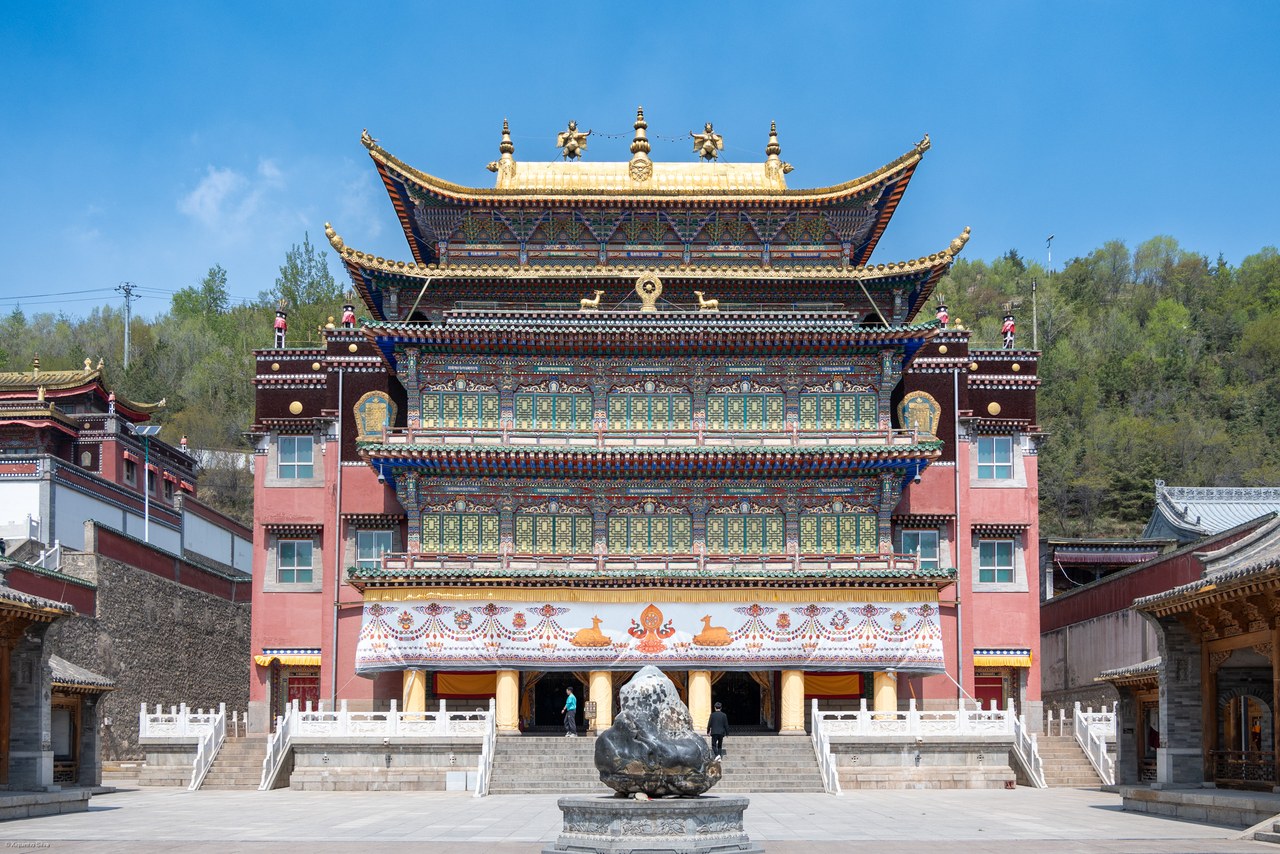
Kumbum (Ta’er) Monastery in Xining’s Huangzhong District, photographed in May 2024. This architectural view does not establish today’s interior access.Photo: xiquinhosilva (Xiquinho Silva) · CC BY 2.0 · Image credits
A living religious neighbourhood and a choice of Xining's everyday food areas. · Chengdong and Chengzhong · separate walking clusters
2–3 hours with food and a short transfer · Public streets have no combined attraction ticket; religious interiors depend on local access.
Keep the monastery separate from the city day
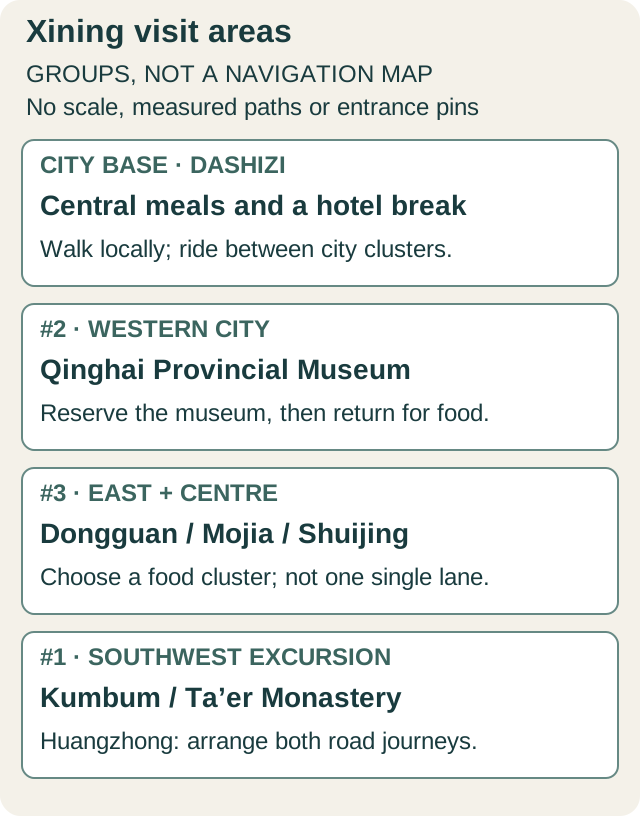
Open full-size map ↗. Kumbum is a separate southwest road excursion. Qinghai Museum and the east/central food streets belong to different city clusters. Qinghai Lake is outside this city plan. This is an editorial area diagram, not a navigation map; boxes do not encode measured distance or a walking route. ChinaMile area diagram; location sources. Navigation: search the Chinese name in Amap.
Two full days: the useful first stay
After an arrival evening and rest, spend the first morning at the provincial museum if you have admission. Have lunch nearby, rest at the hotel, then choose the Dongguan neighbourhood or one central food street. On the second day, take the confirmed Kumbum outing, have lunch in Lusha'er and return without a second distant excursion.
One full day: choose your anchor
Choose Kumbum if monastery art is the reason for stopping, with only dinner in Xining afterward. Choose the museum and city food if you want a gentler day, the weather is poor, or you cannot arrange monastery admission. A normal Monday makes the museum plan unsuitable; switch the days or use the public streets.
Three full days: add depth before adding distance
Separate the city museum, monastery and food-neighbourhood visits, leaving a free afternoon. If Qinghai Lake is the actual priority, book it as a distinct trip with the exact lakeside stop, a return arrangement and an additional night if needed. The lake is not included in these city-day timings or costs.
For an evening arrival, two complete sightseeing days and a morning departure, book three nights. If your arrival or departure uses part of a day, shorten that day's sightseeing rather than treating a travel day as another full day.
Choose a central food base or a practical rail stop
Default: Dashizi / 大十字 and the central-city area for evening meals and short street walks. Check the exact entrance and pickup point: being close to a pedestrian lane is useful; carrying bags deep into one is less useful. Xinning Square / 新宁广场 suits a museum-focused stay but adds a transfer for Dongguan. The railway-station area is practical for early trains, with less reason to walk out for the central evening route.
A specific rail-base option
Holiday Inn Express Xining Railway Station / 西宁火车站智选假日酒店 is at 互助西路145号, Chengdong, by the railway-station area. Choose it when the rail arrival or departure matters more than walking straight into the central lanes. The operator's 35 m² Standard category lists a king, two singles, or a king plus single as distinct bed arrangements; select the exact one for your party. A 65–68 m² One Bedroom Suite with a king offers more space, but is not a promise of an extra bed. The operator includes breakfast. Confirm every guest and any extra-bed requirement with reception, +86 971 3866666.
These are operator room descriptions, not inspected rooms or live prices. Compare the full dated rate, cancellation and bed arrangement; confirm foreign-passport check-in and a late arrival before a non-refundable payment. A station hotel is still a transfer from both the provincial museum and Kumbum.
Let a noodle meal and one food street carry the evening
Use a noodle shop near the day's route for lunch. Ganban / 干拌 is mixed noodles without a large bowl of broth; ask what meat and chilli are included. A simple first order is one noodle portion and a drink, then a shared extra dish if needed. For dinner, choose a seated restaurant around the central lanes rather than building the whole meal out of snacks.
Look for shouzhua yangrou / 手抓羊肉 if you want a lamb meal, and suannai / 酸奶 for local-style yoghurt. Lamb portions may be sold by weight: agree the weight, unit price and total before ordering. Dairy, meat broth and chilli can appear in otherwise simple dishes; tell the server what you cannot eat rather than relying on the English name.
After the museum, eat near Xinning Square before returning to the centre. After Kumbum, have lunch in Lusha'er or return for a late lunch; carry water and avoid adding a long food detour before a reserved pickup. At a halal establishment, follow the restaurant's house rules and do not bring in outside alcohol or pork.
Price the room and monastery transfer separately
For two adults sharing one room, three nights and two full sightseeing days, use this planning envelope: 3R + T + K + CNY 480–800. R is your selected hotel's actual total nightly room rate; T is the quoted return Kumbum transport for the party; K is the actual combined admission charge. At the checked platform reference of CNY 70 each, K would be CNY 140 for two full-price adults, subject to the dated product.
The CNY 480–800 is an editorial spending target, not observed market averages: CNY 160–260 per day for the party's simple meals over two days, plus CNY 160–280 for arrival/departure food and city transport. If taxi estimates or restaurant choices exceed that allowance, add the difference. For a worked room-input example only, R = CNY 400 produces CNY 1,820–2,140 plus T using K = CNY 140; CNY 400 is not a quoted hotel rate.
This excludes travel to/from Xining, airport transfers, guides, shopping, paid VR and any Qinghai Lake or Chaka trip. Before paying for a car, get a total covering return distance, waiting, tolls and pickup; an outbound fare alone is not the return-trip price.
Three experiences, each with a different purpose
1. Kumbum Monastery / Ta'er Si · 塔尔寺
Kumbum rewards looking slowly. Its courts, halls and changing rooflines are arranged across a hillside rather than a single straight ceremonial axis. The district identifies butter sculpture, murals and appliqué embroidery as its three celebrated arts. Choose the open halls containing those works instead of trying to collect every building.
This remains a place of worship. Give pilgrims space, follow the direction and photography signs at each hall, and ask before photographing people. A guided explanation can help with the religious imagery; arrange the language, scope and price with the visitor service desk before paying. A guide is an optional service, not an automatic part of a basic admission ticket.
Hours
Make this a morning outing and follow the admission hours for the actual visit date. The current official general-information page does not establish a reliable year-round last-entry time; do not arrive late expecting every hall to remain accessible.
Tickets
The Qunar basic-adult listing showed CNY 70 when checked. This is a platform reference, not a completed purchase or a promise for every season. Select 塔尔寺, your date and the actual admission product; do not mistake an audio guide or vehicle transfer for entry. Foreign-passport checkout was not tested. For document handling, call the visitor number listed by Trip.com, +86 971 2210188, before departure and bring the original passport. If admission cannot be arranged, retain the city museum-and-food plan.
Time
Allow about 3 hours inside as an editorial visiting allowance, plus the road trip and a meal; longer if you want a guided explanation and rests.
Chinese address
西宁市湟中区鲁沙尔镇金塔路56号,塔尔寺游客服务中心。
Getting there
The district places it roughly 27 km southwest of Xining. Use a licensed taxi or a confirmed car transfer to the visitor centre, and agree the return pickup point and whether waiting is included. Reserve a full half-day or more rather than treating it as a central-city walk. For a bus journey, ask the hotel to confirm the currently operating Lusha'er service and its last return before boarding; no unverified bus number or fare is assumed here.
How to visit
Visitor centre and document check → open temple courts and art displays → rest and lunch in Lusha'er → prearranged return to Xining. Keep a fixed intercity train or flight on another half-day.
2. Qinghai Provincial Museum · 青海省博物馆
Choose the Qinghai history and archaeology displays for a first visit. They give the pottery, trade and cultural encounters of the region a sequence that is hard to grasp from a quick series of road stops. Add the traditional-arts display if that is what drew you to the monastery.
The museum is a useful indoor anchor for a cool or wet morning. It is not the Tibetan Culture Museum, which is a separate institution in another part of Xining. Save the full Chinese name and address so the driver takes you to the provincial museum intended here.
Hours
The museum's published return to regular hours is Tuesday–Sunday 09:00–17:00, last admission 16:30; normally closed Monday except statutory-holiday arrangements. Follow any newer notice attached to your booking.
Tickets
Main admission is free. Use the official 微信公众号 青海省博物馆 for an individual reservation, available up to three days ahead according to the museum-authored visitor notice. Paid VR and guide services are separate. The notice does not explicitly resolve the foreign-passport form, and we did not test it. Call +86 971 6111326 on an opening day if the form rejects your document; confirm an accepted method before making the museum the day's anchor. Bring the original passport and reservation. Do not buy a reseller's ticket for this free main visit.
Time
2–3 hours, plus a short break at Xinning Square.
Chinese address
西宁市城西区西关大街58号,新宁广场东侧,青海省博物馆。
Getting there
Take a taxi or a locally checked bus to 青海省博物馆 / 新宁广场. This is west of the central food-street district; visit once, then return toward the centre instead of repeatedly crossing the city.
How to visit
Reserved morning session → history and archaeology galleries → lunch near Xinning Square → central-city rest or food walk. If reservation or Monday closure prevents entry, use the central street route and move the museum to another open day.
3. Dongguan neighbourhood and central food streets · 东关大街 · 莫家街 · 水井巷
Dongguan's mosque is an important local religious landmark, but this visit starts with its public street setting. Ask the entrance staff whether non-worship visitors may enter on that day, dress respectfully and avoid interrupting prayer. An old photograph of a dome or a published tourist itinerary is not proof that every interior is open now.
For the meal, choose one food cluster rather than crossing town for several famous stalls. Mojia Street is useful around the central Dashizi area; Shuijing Lane combines food, shopping and a visibly renewed commercial setting. Neither needs to be presented as an untouched old town to make a pleasant evening.
Hours
Use daylight for the Dongguan street visit and a normal meal period for the food streets. Shops set their own hours; mosque access follows current religious and visitor arrangements.
Tickets
No combined street ticket or reservation. Pay separately for food and purchases. Mosque interior admission and any charge were not verified; ask staff, and use the public-street walk if visitor entry is unavailable.
Time
2–3 hours for one relaxed cluster and a meal; add a taxi or bus transfer if combining Dongguan with the central lanes.
Chinese address
东关清真大寺,西宁市城东区东关大街;莫家街、水井巷位于城中区,勿当作同一条街。
Getting there
Use 东关清真大寺 for the eastern stop, then 莫家街 or 水井巷 for the food destination. With limited walking, save a roadside pickup outside each lane and take a taxi between clusters.
How to visit
Daylight street view and any permitted mosque visit → choose one central food area → sit-down dinner → return to the same hotel. Keep prayer spaces and residents' doorways clear.
Use the current airport terminal and one city base
Xining Caojiabao Airport / 西宁曹家堡国际机场
The government's T3 transport notice directs domestic departures to T3 and arriving travellers to the signed ground-transport centre / GTC for airport buses, licensed taxis and booked cars. Follow your airline's actual terminal information. The official account 青海机场有限公司 gives current airport-bus stops; show the full hotel address at the counter and buy a city stop that fits it. For a late arrival or several bags, a licensed taxi directly to the hotel is the simpler choice.
Do not use old T2 pickup instructions or assume the airport is beside the railway station. Keep the arrival evening free of timed museum or monastery bookings. Exact door-to-door times and taxi prices depend on the hotel and traffic; check the live route and quoted fare before accepting the ride.
Xining railway station / 西宁站
Book the actual train and passport details through 12306. Use a taxi or current local bus route to the hotel and leave the bags before sightseeing. The station-base hotel described above is useful for an early departure; central food streets are a separate journey. For the onward train, keep station security and luggage collection outside your last sightseeing block.
Inside the city
Walk within one street cluster, then use a taxi or locally checked bus between the museum, central area and Dongguan. For Kumbum, confirm both legs before leaving. The same hotel for the whole stay avoids a luggage transfer that adds little to a short visit.
Add Lanzhou or a separate Qinghai road journey
Lanzhou is a useful next city for Yellow River walks and Gansu Museum; compare actual Xining → Lanzhou or Lanzhou West trains before choosing the destination station. A Qinghai Lake journey needs its own nights, transport and chosen lakeside stop. Keep this Xining city stay as a complete visit rather than treating every western destination as a day trip from the same hotel.
Sources, date and remaining conditions
Sources read on . The district supplies Kumbum's location and cultural context; the provincial museum's regular-operations notice is museum-authored text carried by Qinghai News on Sichuan Daily's platform. The museum website timed out during this check. Kumbum's ticket and visitor contact are platform evidence, explicitly labelled above; neither passport checkout nor entry was tested. Mosque interior access remains conditional. Hotel room categories are operator descriptions. Visit durations, combinations, spending targets and the R = 400 example are editorial planning assumptions, not real-time offers or field tests.
.jpg)