Jingdezhen understand porcelain, then meet the makers
Jingdezhen makes most sense when you connect three experiences: see the ceramics that made its reputation, understand how a pot is made, then spend time with the people making and selling ceramics today. The Imperial Kiln area supplies the historical setting; Taoxichuan turns a former porcelain factory into a place for contemporary design; the workshops and wooded valley of Sanbao give you a slower afternoon. You do not need specialist knowledge, but curiosity about objects and craft helps more here than a checklist of monuments.
Give the city two full days and three nights for museums, one making experience and unhurried browsing. Two nights work for a tighter visit with one full day plus arrival and departure time. Stay in the old centre for the Imperial Kiln and local food, or around Taoxichuan if browsing and dinner there will shape your evenings. Jingdezhen is a useful craft-focused addition to Nanchang; keep a Huangshan or Wuyuan extension as its own stay, with the actual rail connection booked separately.
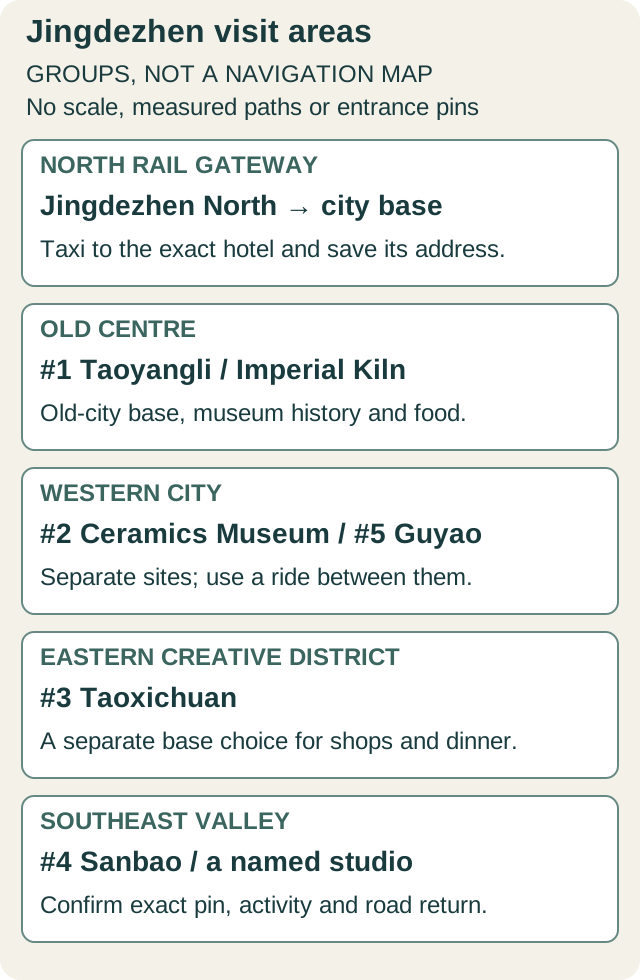
Think in four pieces. The old centre around Zhushan Middle Road / 珠山中路 contains #1 and gives you local food streets. The west side near Zijing Avenue / 紫晶大道 contains #2, with #5 farther south in the western part of the city. Taoxichuan is east of the old centre, and Sanbao extends southeast into a valley. Jingdezhen North station is the northern rail gateway. A city-area diagram is useful for choosing a base; it is not a walking map.
Walk inside one precinct, then use a taxi to the next. Do not interpret an itinerary listing Taoyangli, Taoxichuan and Sanbao as a continuous shopping street. At Sanbao, ask your chosen studio to send its map pin and a vehicle pickup point; a generic “Sanbao” destination can leave you far from the place you intended to visit. In busy periods, a driver may need to stop at the signed access point rather than the studio door. The city's October 2026 transport update describes traffic management and park-and-ride arrangements around these areas; use current signs and the live navigation route on the day.
Open full-size map ↗. The old centre, western museums, Taoxichuan and Sanbao require distinct visit blocks. China Ceramics Museum and Ancient Kiln are separate sites even within the western group. This is an editorial area diagram, not a navigation map; boxes do not encode measured distance or a walking route. ChinaMile area diagram; location sources. Navigation: search the Chinese name in Amap.
Put the reservation, workshop and nights together
Two nights, one full day: arrive in the afternoon, leave luggage, then browse #3 and have dinner. On the full day, use a reserved #2 slot if you have confirmed admission, lunch, then #1. If you prefer watching the making process, replace #2 with #5 rather than adding it. Use the departure morning for a short shopping return close to your hotel, collect luggage and go to the station. This is enough for a clear introduction; Sanbao is the first thing to leave for another visit.
Three nights, two full days: arrive and settle in, then use the first full day for #2 and #1. On the second day, choose a pre-arranged workshop in #3 or #4, leaving time for lunch and browsing. If you choose Sanbao, keep the afternoon there and return to the hotel before dinner; if you choose a Taoxichuan workshop, #5 can occupy the other half-day. Pick your return train after breakfast and an easy last morning, not straight after a kiln demonstration with an uncertain finish.
On a Monday, build the day around #3, a confirmed workshop and #4. China Ceramics Museum normally closes on Mondays except public holidays; independently check the Imperial Kiln Museum's date as well. With only a day trip, arrive early enough for one substantial visit plus Taoxichuan, and reserve both train journeys first. It is a poor format for a firing-and-collection workshop or for seeing all four city areas.
All durations and combinations here are editorial planning allowances, not timed test journeys. Keep an unhurried meal and a return leg in the day rather than spending every open hour at an attraction.
Where to sleep: old centre, Taoxichuan or the western museums
The old centre near Taoyangli / Zhushan Middle Road is the default for a first visit focused on #1 and street food. Check the exact hotel entrance and recent room photographs: a room beside a busy visitor street may be less restful than one a block back. You will still need rides east and west.
Taoxichuan is the better base if you want to browse again after dinner, or have a workshop there. The trade-off is more transport for #1 and #2. The China Ceramics Museum area makes sense for an early museum slot and a conventional hotel; it is less useful for spontaneous old-city dinners. A Sanbao guesthouse suits a studio-focused stay only after you have settled transport and meals with the property; it adds friction to a first visit with several city museums.
Operator-confirmed hotel
Best fit and room starting point
Trade-off
Taoxichuan Hotel, The Unbound Collection by Hyatt · 陶溪川凯悦臻选酒店
In Taoxichuan Phase II, at Zhushan Avenue and Taoxichuan South Road. The operator lists 1 King Bed, Balcony and 2 Twin Beds, Balcony, both 45 sq m. Choose this for a design-focused stay and repeat time in the eastern creative district.
It is a different base from the Imperial Kiln. Compare your dates on Hyatt, including breakfast and cancellation. The 70 sq m king-and-bunk family room is a separate category; do not assume a standard room has those beds.
Hampton by Hilton Jingdezhen Porcelain Center · 景德镇瓷都中心希尔顿欢朋酒店
1 Zijing Branch Road / 紫晶支路1号, on the west side. Hilton confirms hot breakfast and its position near China Ceramics Museum. A useful conventional base if the western museum visit comes first.
More rides to Taoxichuan and the old centre. Check the exact room's bed arrangement on Hilton before paying; choose this property, not the separate Hampton in Fuliang. The operator lists no airport shuttle.
These comparisons use location and published room information, not an inspected stay or a live price quote. The budget below uses a generic room allowance; either property can cost more on your dates. Carry each guest's original passport and send late-arrival details to the booked property in advance.
Eat local food between visits
Save one breakfast or simple lunch for 冷粉 — lengfen, Jingdezhen's thick rice noodles dressed with chilli and other savoury seasonings; pickled citrus peel is part of the characteristic flavour. Despite the name “cold noodles,” preparation can include a quick hot-water blanch. Start with one bowl and ask 少辣 / shǎo là for less chilli before it is mixed. Chilli already present in a prepared sauce cannot always be removed.
碱水粑 — jianshuiba is a rice-based cake, sliced and stir-fried; egg, vegetables, preserved greens or meat vary by shop. It is a useful shared dish when you want something more substantial than snacks. 饺子粑 — jiaoziba uses a rice-flour wrapper; fillings vary, so do not assume a vegetable-looking version contains no meat. The city's food account identifies all three, and its jianshuiba entry explains the rice-cake preparation.
For the old-city day, eat around Shengli Road / 胜利路 or Mashilong / 麻石弄, then continue to the Imperial Kiln area. These are meal-search areas, not a promise that every shop serves every dish. The city's food feature names 毛仔特色小吃 on Shengli Road for jianshuiba and 眼镜饺子粑 in Mashilong for rice dumplings; use the current map listing and posted menu, and choose a nearby open shop if there is a queue or the old listing has changed. At Taoxichuan, a seated dinner is easier than relying on temporary market snacks. In Sanbao, arrange the meal near your chosen studio before heading farther up the valley.
A workable order for two is two small noodle or dumpling portions at breakfast, then one rice-cake dish, one other main and vegetables to share at lunch. Tea or a café break fits well after a shop visit. Keep ceramic purchases and café spending as separate choices; neither is required to enjoy the city.
A budget with the optional costs visible
For two adults sharing one room, three nights and two full sightseeing days plus arrival/departure time, use this planning example, not a set of live quotations:
Input
Amount for two
Room allowance: CNY 450 × 3 nights
CNY 1,350
Meals, snacks and drinks across the stay: CNY 375 per person
CNY 750
Station transfers and city rides, including a Sanbao return
CNY 350
Paid-attraction pool: CNY 150 per person
CNY 300
One making-session pool: CNY 200 per person
CNY 400
Total planning envelope
CNY 3,150 for two / CNY 1,575 each
The calculation is 1,350 + 750 + 350 + 300 + 400 = 3,150. The attraction and workshop rows are spending inputs to replace with the products you choose, not verified tariffs or a claim that every named stop fits that amount. If your workshop quote includes firing and shipping, replace the whole workshop input; otherwise add those charges separately. The room input is not a quote for either named hotel. The city-transport pool excludes a waiting driver for the whole day.
Excluded: intercity tickets and flights, airport transfers, the Nanchang airport coach, ceramic purchases, shipping, private guides and countryside excursions. Museum admission being free does not make its transport or a paid guided service free. A short history-and-browsing stay can omit the making-session row; a specialist ceramic shopping trip needs its own purchase budget.
What to look for at each stop
1. Taoyangli and the Imperial Kiln · 陶阳里 / 御窑博物馆
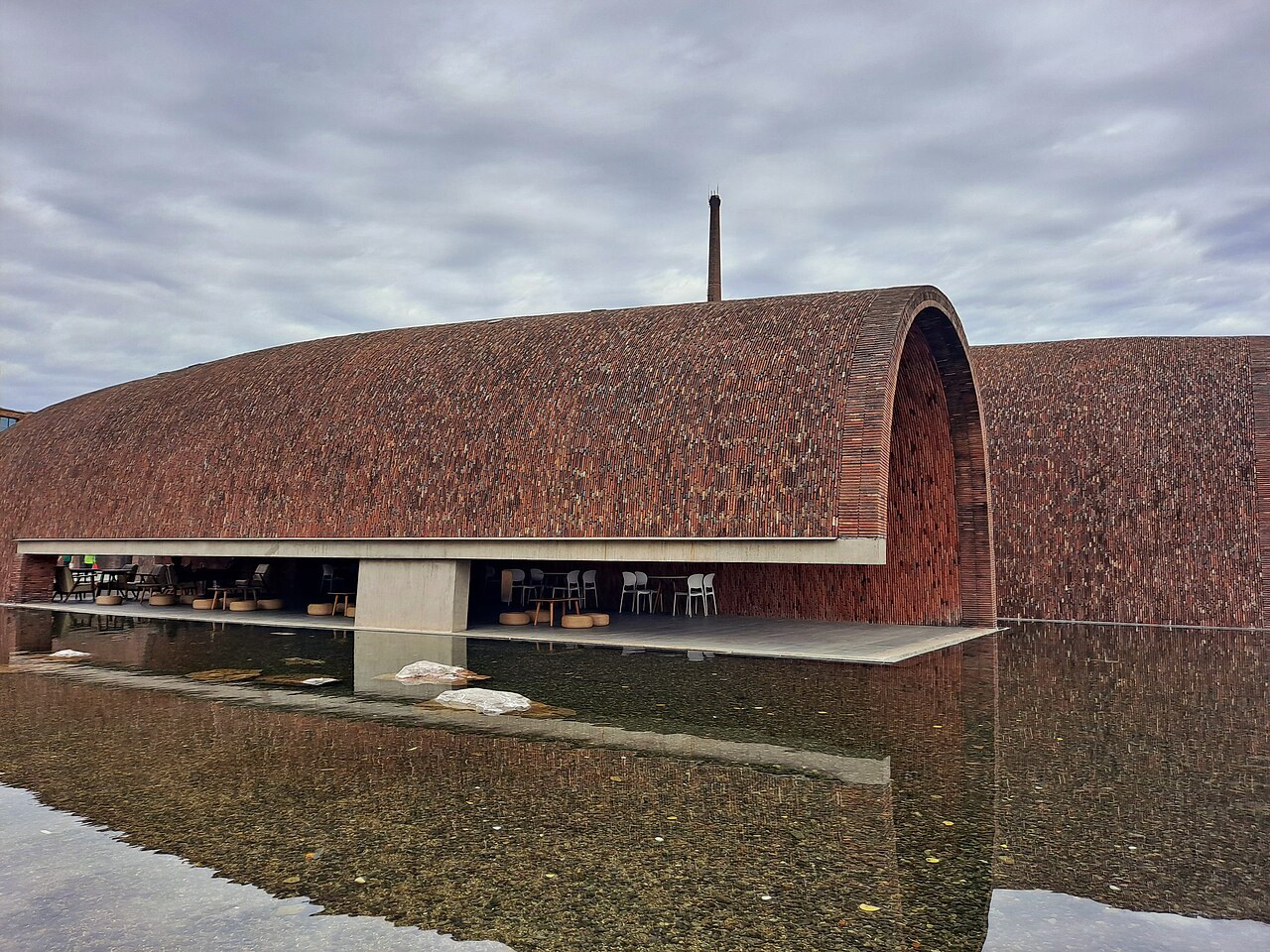
The value of the Imperial Kiln Museum is the connection between recovered ceramic material and the place where imperial production happened. Look for how broken or reconstructed vessels reveal shape and decoration, then step back outside to read the brick vaults and surrounding old-city fabric. Allow 2–3 hours for the museum and its immediate setting, or a half-day with lanes, photographs and food. The municipal Taoyangli description connects the kiln remains, museum and surrounding historic district.
Navigate to 陶阳里历史文化旅游区; the operator lists 187 Zhushan Middle Road / 珠山中路187号. Distinguish entry to the tourist district from a timed museum reservation. Start at the Taoyangli operator website and the official WeChat account 景德镇御窑博物院, whose 预约导览 menu is identified in the museum's published booking notice. Check the selected date's district admission, museum slot and inclusion before paying: a museum confirmation should not be treated as proof that every district product is included. Take the original document used to book. If a passport cannot be entered, use the operator or staffed visitor centre to resolve it before relying on that slot.
Evening photographs and museum viewing are separate aims. The outdoor setting may remain attractive after the galleries stop admitting visitors; do not arrive late solely because you saw a night photograph. If the museum is unavailable, decide whether a paid district walk is still worth the price to you; otherwise use Taoxichuan and return on a confirmed day. No current universal admission tariff or late-opening guarantee is assumed here.
Hours
Use the selected district product and museum slot, not a night photo, to establish gallery access.
Tickets
Taoyangli operator and 景德镇御窑博物院 → 预约导览. Confirm passport handling before relying on the booking.
Time
2–3 hours; half-day with surrounding lanes; editorial planning allowance.
Chinese address
陶阳里历史文化旅游区,珠山中路187号
Getting there
Taxi to the visitor entrance, then walk the historic precinct.
How to visit
Read the visit plan below and retain the return journey in your day.
2. China Ceramics Museum · 中国陶瓷博物馆
Use 景德镇中国陶瓷博物馆, on Zijing Avenue / 紫晶大道, for the broad ceramic story. Rather than trying to remember every dynasty, compare three things: the vessel shape, the surface or glaze, and what it was made to do. Take a few notes about objects you like; later, you will have a better starting point for talking to makers. Allow 2–3 hours, longer only if ceramics are a main interest. This is not the brick-vaulted Imperial Kiln Museum.
The museum is free but reservation is required. Its 31 March 2026 notice names 畅游景德镇, the WeChat mini-program, as its only official booking channel, normally allowing individual bookings up to five days ahead. Published ordinary hours are 09:00–17:00, last entry 16:30; closed Monday except public holidays. A dated special notice can replace those hours. Do not pay a reseller for a supposed reservation; the museum says third-party booking is not authorised.
Passport holders should settle document handling before travelling to the museum. The primary notice describes Chinese-ID gate entry and does not set out a passport workflow. Ask the museum's published visitor service, +86 798 8253701, or its official 景德镇中国陶瓷博物馆 account, how to register your passport and where staff check it; carry the original and your confirmed reservation. The phone is reproduced in the museum's own July 2025 announcement. Do not replace a passport number with an invented Chinese ID, and do not assume showing up without a reservation solves the problem. If you cannot confirm access, use #5 for production history and keep #3 as a useful flexible visit.
Hours
Ordinary 09:00–17:00, last entry 16:30; closed Monday except public holidays.
Tickets
畅游景德镇 mini-program, normally up to five days ahead. Passport handling needs prior confirmation with +86 798 8253701.
Time
2–3 hours; editorial planning allowance.
Chinese address
景德镇中国陶瓷博物馆,紫晶大道
Getting there
Taxi from the hotel or another precinct; this is separate from the Imperial Kiln Museum.
How to visit
Read the visit plan below and retain the return journey in your day.
3. Taoxichuan · 陶溪川文创街区
The former Universe Porcelain Factory / 宇宙瓷厂 gives Taoxichuan its chimneys, industrial buildings and kiln heritage. Start with the street spaces, choose a gallery or shop that interests you and leave time for a drink or dinner. This is where a design object or conversation can be the point of the afternoon. Allow 2–3 hours, with more time only for a booked activity or a market you have confirmed. The municipal precinct page places it at 150 Xinchang West Road / 新厂西路150号 and identifies its art, industrial-history and training spaces.
Individual exhibitions and workshops may have their own opening times and charges even when you are simply walking the precinct. Do not build the trip around an assumed Friday-to-Sunday market schedule. Ask the official 陶溪川 account or precinct visitor service for the event on your actual date. Permanent spaces are the fallback when there is no large outdoor market.
For a making session, the city's page names 陶公塾 as Taoxichuan's pottery-training space. Ask for the date, duration, language support, age requirements and full price before booking. Establish whether the activity is wheel-throwing, hand-building or decorating a ready-made piece: they are different experiences. A recently thrown pot is not an immediate souvenir. Get the firing, collection or shipping arrangement in writing; confirm overseas shipping, packaging and damage handling if needed. If the workshop cannot meet your departure date, make the session about learning and buy a finished piece separately.
Hours
Permanent spaces set their own hours; date-specific markets are optional.
Tickets
Check the official 陶溪川 account for events. Agree activity, duration, language, price and firing/shipping before booking.
Taxi between precincts, then walk inside; choose a specific meeting point for a class.
How to visit
Read the visit plan below and retain the return journey in your day.
4. Sanbao International Porcelain Valley · 三宝国际瓷谷
Sanbao combines ceramic workspaces with a wooded valley southeast of the centre. The city's description identifies 三宝国际陶艺村 and 真如堂 among the established ceramic spaces. Use one as a starting enquiry, or book a particular studio whose work you already like. Give this outing half a day including both transfers, a meal and the visit. A car to a named destination is more useful than collecting distant café pins.
Confirm public access before travelling; an artist's workplace is not automatically a walk-in visitor attraction. Ask before photographing a work in progress or handling a piece. If you have no studio appointment, plan a modest browse-and-lunch visit around an open ceramic space rather than promising a masterclass. Keep the driver's contact or pre-agree a return pickup; in heavy rain, replace the valley excursion with an indoor exhibition or a workshop you have already confirmed in town. With restricted mobility, have the host describe the exact approach, entrance and toilet access before paying.
Hours
Ask the selected studio for its visit time and access point.
Tickets
A working studio is not automatically a walk-in attraction. Confirm the activity and exact map pin.
Time
Half-day including both transfers and a meal; editorial planning allowance.
Chinese address
三宝国际陶艺村 / 三宝国际瓷谷(以所约工作室定位为准)
Getting there
Car to a named studio; retain driver contact or agree the return before entering the valley.
How to visit
Read the visit plan below and retain the return journey in your day.
5. Ancient Kiln Folk Customs Museum · 古窑民俗博览区
At 古窑民俗博览区, the useful question is how clay becomes a vessel: shaping, trimming, decoration and firing require different skills. Historic and reconstructed kiln types help you see that the kiln is part of the technology, not just a backdrop. The city's August 2026 description distinguishes the surviving Qing kiln from later reconstructions and describes traditional craft displays. Allow 2–3 hours, leaving space for any demonstration that is actually running.
Navigate to 1 Guyao Road / 古窑路1号 off Cidu Avenue. Use the operator or its published service number +86 798 8534444 to check the day's ticket, last entry and demonstration programme. Do not assume a kiln firing happens daily, or that a listed performance will run at the same time all year. Buy this visit for the permanent production setting; treat a live demonstration as an added reason to time the day, once confirmed. Some of the route is outdoors, so this is not an all-indoor rain substitute.
Hours
Ask the operator for dated last entry and demonstrations; no daily firing is promised.
Tickets
Operator or +86 798 8534444; choose it for the permanent production setting.
Time
2–3 hours; editorial planning allowance.
Chinese address
古窑民俗博览区,古窑路1号
Getting there
Taxi between the museum and other precincts; allow outdoor walking on site.
How to visit
Read the visit plan below and retain the return journey in your day.
Buy a piece you can take home
Browse before buying. Compare the weight, rim, foot and finish of pieces you are actually considering, ask who made them, and request the seller's own explanation of the technique. A signature or story by itself is not independent proof of age or authorship. For a cup or bowl you intend to use, ask whether it is intended for food contact and about microwave or dishwasher use; do not infer those properties from its appearance.
Have the seller show the total price and pack the piece before you leave. For shipping, get the destination, cost, dispatch time and breakage procedure in writing, and photograph the chosen piece and receipt. Finished contemporary work is the simplest souvenir for a short visit; a newly made workshop piece needs firing and later collection or delivery. Leave space in your luggage rather than planning to carry several unprotected bags through a station.
Arrive and leave without mixing up the gateways
For rail, search the exact date on China Railway 12306 for 景德镇北 / Jingdezhen North. Compare services from Nanchang East 南昌东, Huangshan North 黄山北 or Hangzhou East 杭州东 as appropriate to your route; the station on your issued ticket is the one to reach. The opened Changjinghuang line is documented in the city's railway record. This is not a promise that every origin has a suitable direct train every day. 景德镇站 / Jingdezhen station and 景德镇北站 are different destinations.
At North station, use the official taxi rank to your hotel's exact address. For an app car, follow the current pickup signs and send the driver the marked pickup point; do not remain inside the arrivals hall expecting a car at the door. Save the hotel address in Chinese. Within the city, taxis between precincts plus walking inside them are the simplest first-visit plan. This guide does not rely on a fixed tourist-bus timetable.
If flying, compare the actual flights into Jingdezhen's airport with the total onward journey from Nanchang Changbei Airport / 南昌昌北国际机场. Changbei is not a city-airport transfer for Jingdezhen. A September 2026 operator notice confirms a direct coach sold through 景德镇出行 → 昌北机场巴士. Check its dated departure, pickup point, luggage conditions and arrival estimate against your flight; do not assume an overnight service. If that connection does not fit, stay in Nanchang and continue by rail, or obtain a written car quote. For a Jingdezhen flight, use the airport taxi rank or a hotel pickup with the flight number and exact meeting point.
For departure, retrieve luggage before starting the final transfer to the station on your ticket. Aim to be there an hour before the train as an editorial buffer for an unfamiliar station; add that to the live traffic estimate rather than treating an hour as the whole hotel-to-platform journey. Drop the last shop if the day runs late. For a flight, follow the airline's check-in deadline and add your live road journey and a traffic margin. Keep Sanbao or a distant countryside visit away from a tight departure window.
Let weather and reservations change the order
For an October visit, use a current forecast to decide which day gets Sanbao and the longer outdoor walks; do not assume every autumn day is dry. In summer heat, give the middle of the day to a reserved museum, a workshop or a hotel break, then browse Taoxichuan later. In rain, keep the museum if admitted and replace a long valley outing with a confirmed indoor activity. Ancient Kiln and Taoyangli include outdoor walking, so neither is a fully sheltered substitute.
If museum slots are full, the city still works as a craft trip: choose Ancient Kiln, a confirmed making session and Taoxichuan's permanent spaces. If a market is cancelled, stay with the galleries and shops instead of crossing the city to chase another unconfirmed event. If rain or traffic makes the Sanbao return unreliable, shorten the visit while you can still make your booked departure. A useful ceramic trip leaves time to look, ask and compare; it does not require every museum and every market.
Sources and reservation boundaries
Researched 10 October 2026. Operator and municipal sources support the named sites, hotel locations and published room categories. Sightseeing times, combinations and budget inputs are editorial planning allowances. We did not transact museum reservations or workshop bookings: confirm passport handling, dated admission and your chosen activity before committing. Event dates and kiln demonstrations are not assumed.