Chongqing travel guide: hills, rivers and old streets
Chongqing climbs above two rivers, with cliffside terraces, stone-step lanes and trains threaded through steep streets. For a first visit, stay on Jiefangbei's upper streets and protect a riverfront block plus a museum-and-hillside block; crossing districts costs time.
Base
Jiefangbei’s upper streets
Protect
a riverfront block plus a museum-and-hillside block
Travel cost
crossing districts costs time
Allow two full city days and three hotel nights; add a full day for the western sights or a separate extension.
Public-street visit · interiors and shows separate · Line 1 access
If you have time or a specific interest
9. Eling Park · 鹅岭公园Hilltop garden and layered river panoramas · Western Yuzhong ridge.
Editorial visit time
1½–2 h
Entry conditions
Free 两江楼 / 广岛园 areas · uphill approach · good visibility matters
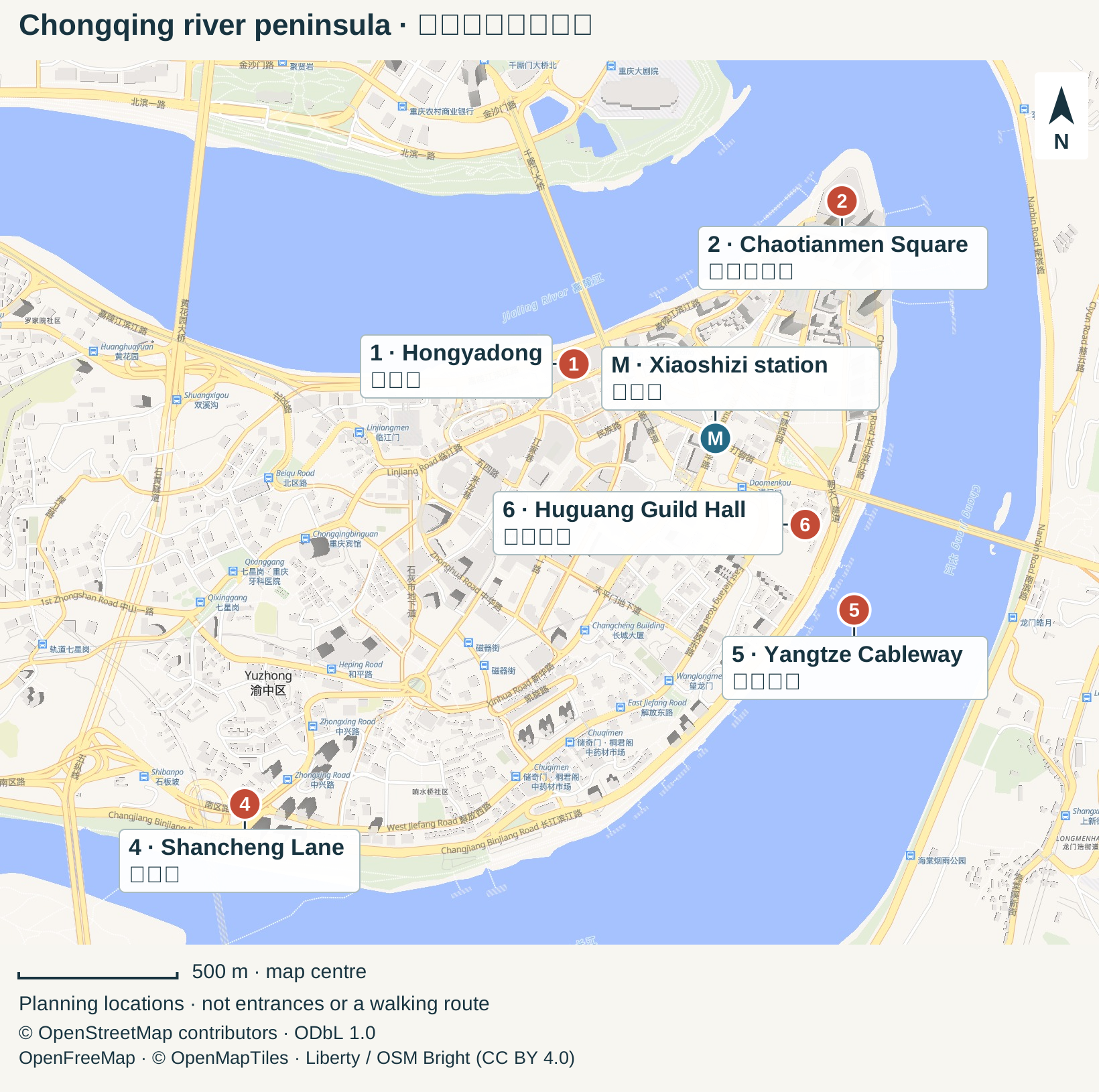
The first four give a mixed visit: river geometry, city history and hillside streets. Choose #5 for the crossing, #6 for carved architecture, #7 for working transport, #8 for a river town and #9 for a ridge panorama.
Choose the bank and level before linking two stops
Default: two full sightseeing days, with three nights in one Jiefangbei hotel.
This protects #1–4, meals and a hotel pause between climbs. Arrival and departure remain transfer blocks. Three full days / four nights let you choose the western sights, a south-bank outing or a slower food visit; Dazu and Wulong each need extra time beyond those city days.
#2 → #1:
allow 3–4 editorial hours plus dinner. Start with the river confluence, return to the signed surface streets, and approach Hongyadong for its evening facade. A closed waterfront segment means the surface route, while heavy crowd controls mean fewer interior terraces.
#3 → #4:
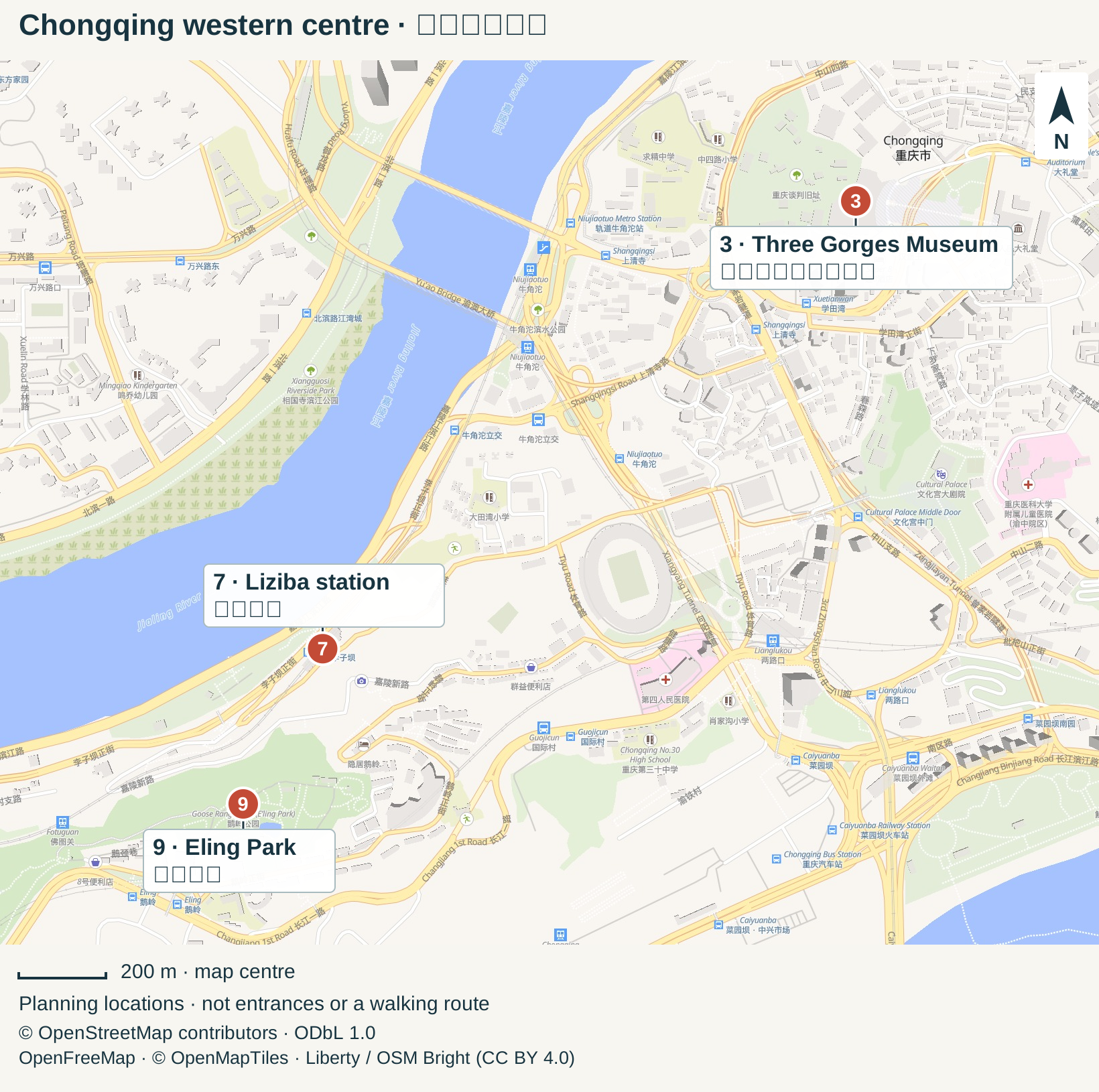
allow 5–6 hours including lunch and a rail/road leg. The museum supplies the history before the lane supplies the terrain; put museum entry first because of its Monday closure and entry cutoff.
#6 → #2:
allow 3½–5 hours. Start with the guild-hall admission, then the open Dongshuimen–Chaotianmen river walk. Guild-hall entry needs a current admission window; if closed, keep the public river block.
#9 → #7:
allow 3½–5 hours with a road transfer down from the ridge. The high panorama and lower monorail platform show different heights; Liziba's station works and stair detours can reverse the lower-walking choice.
#8 → #7, optionally:
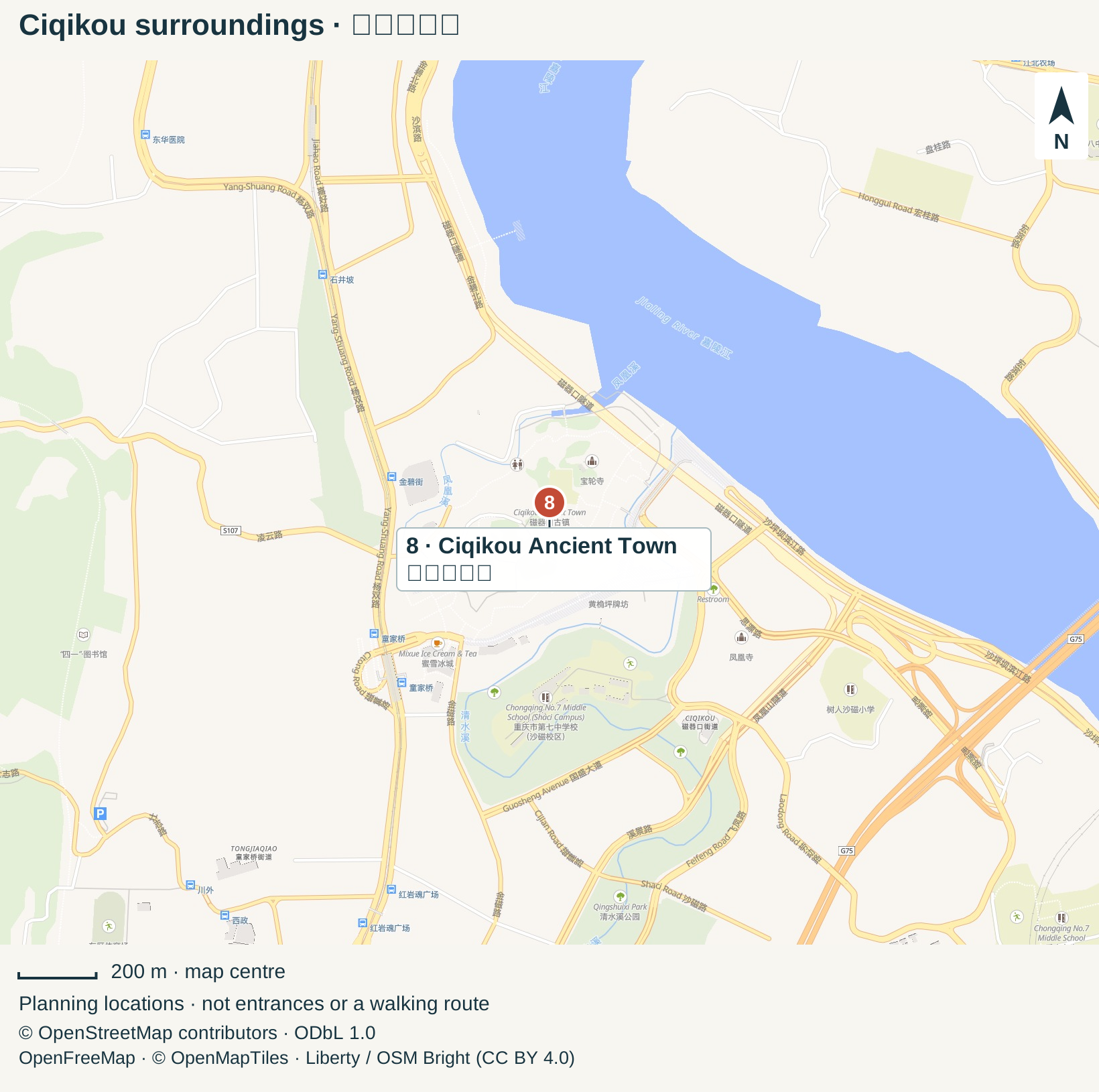
allow 5–7 hours with rail and a meal. Ciqikou gets the larger block; use Line 1 to 大坪, then Line 2 for 李子坝. Stop after Ciqikou if the street walk has already used your energy.
#5 → south-bank walk:
allow a flexible 3–4 hours. Take an issued north-to-south session, walk around 上新街 / 龙门浩, and return by Line 6. A long queue or suspension switches the whole block to the riverfront or a metro crossing.
With one full day:
choose #2 → #1 and either #3 or #4 in daylight; drop Ciqikou and the ridge. With a spare half day, pick one of #5–7 rather than adding all three. These are editorial combinations, so move the museum block to an open day and let weather decide the outdoor order.
Book ahead for the decisions that can fail
Hotel and rail/flight first: obtain the hotel's Chinese road entrance and the exact ticketed station or terminal. Fix late-arrival reception and the party's passport documents on the actual booking.
Cableway on the visit date: use the operator's same-day sales flow, choosing departure bank and one-way/return product. Save the issued session and independently save the 上新街 → 小什字 metro return.
Museum calendar, rather than a reservation: the main museum removed advance entry reservations. Carry the original identity document, arrive before the entry cutoff, and keep #4 as the Monday alternative.
Default: 解放碑 / 小什字 on the upper Yuzhong streets. This keeps meals, the central sights and the Line 1/6 corridor near one base. The trade-off is busy commerce and room prices that change with demand. Choose the actual lobby road and rail approach before paying: an apartment labelled near Hongyadong may sit far below the useful upper exit.
Hyatt Regency Metropolitan Chongqing · 重庆大都会凯悦酒店: 渝中区邹容路68号, connected to Metropolitan Oriental Plaza beside the Liberation Monument. Choose this for a central shopping/meal base; allow about 10–15 minutes to 临江门站 or 15–20 to 小什字站 as editorial walking estimates. Hyatt lists King, Twin and Garden View choices; ask for the quiet-side room and exact luggage drop-off that suit your booking.
The Westin Chongqing Liberation Square · 重庆解放碑威斯汀酒店: 渝中区新华路222号. Choose this for an upper Xinhua Road base near the cableway corridor; allow about 10–15 minutes to 小什字站 as an editorial estimate. Ask the hotel which entrance accepts your arrival vehicle and which room view you are actually buying.
Switch to Guanyinqiao for shopping / a north-side stay:Hyatt Regency Chongqing · 重庆富力凯悦酒店, 北城天街11号 / 11 Paradise Walk. This is a different Hyatt from the Metropolitan hotel. Allow about 15–20 minutes to 观音桥站 as an editorial estimate; the cost is a cross-river metro or road leg for the Yuzhong sights.
The named hotels are operator-listed location examples, without a room-rate, quiet-room or passport check-in field test. For a low-walking stay, obtain the lobby lift route and a car pickup that reaches the door. Use the foreign-passport hotel booking and check-in steps before a non-refundable payment. A very early flight may favour a separate airport-area final night with a hotel-arranged terminal transfer.
Getting to Chongqing, and leaving
重庆江北国际机场 (CKG), 重庆北站 and 重庆西站 are different doors. Read the issued flight or 12306 rail ticket before choosing transport. The routes below end at an upper-street Jiefangbei hotel; transfer allowances are editorial door-to-hotel estimates including orientation and luggage. Rail fare comes from the destination selected in the operator's route/fare planner or station machine.
Route details, choices and return steps
CKG · 重庆江北国际机场
Rail default:
follow arrivals signs to the airport rail station. The airport lists Line 10 for T2 and T3, plus Line 3 for T2. Take Line 10 → 红土地 → Line 6 → 小什字; leave by the upper 新华路 side for the hotel's saved walking route or a short road pickup. Allow 80–110 minutes to an upper Jiefangbei hotel. An arrival gate, terminal and rail station are different points; follow the signs from your actual flight.
T3 K01 bus alternative:
the airport lists T3 → 解放碑 at CNY 15 per person, about 65 minutes running time, with up to 30 minutes waiting after the first passenger boards. Use the signed airport-bus boarding area, then the hotel's saved upper-street final walk / taxi; allow 90–120 minutes overall. Ask the boarding dispatcher for the exact 解放碑 drop-off before loading bags.
Road / late arrival:
use the signed arrivals taxi queue, or the hotel's booked driver and meeting point. Give the hotel's Chinese lobby entrance rather than 洪崖洞. Allow 45–90 minutes in ordinary traffic, with more in congestion; settle meter/toll or a written transfer total before departing. If rail has ended, switch at arrivals to the taxi or arranged-car branch.
Leaving for CKG:
reverse 小什字 → 红土地 → Line 10 and follow the flight's terminal signs. Add the airline's required airport arrival margin to the ground allowance. The K01 reverse service from 解放碑 has no fixed departure time and uses dispatcher 023-67910674; use it only after receiving a departure and pickup point that fit the flight. An early flight needs a pre-arranged car or airport-area stay.
Chongqing North · 重庆北站
From the north square:
follow railway arrivals signs to 重庆北站北广场 rail transit, take Line 10 → 红土地 → Line 6 → 小什字. From the south square: use 重庆北站南广场 Line 3 → 红旗河沟 → Line 6 → 小什字. The operator's network map distinguishes the two square stations. Allow 50–80 minutes to the upper hotel, including the final walk; buy the through ticket for 小什字. A taxi from the signed station taxi queue goes directly to the lobby, with a metered or agreed written total.
Leaving from North:
reverse the route for the square named on the issued train/entrance guidance, then follow national-rail departures and passport/security signs. Save 60–90 minutes hotel-to-station ground allowance plus the railway's boarding/security margin. Distinguish station and square names before booking a vehicle.
Chongqing West · 重庆西站
Follow railway arrivals toward rail transit and take Line 5 → 石桥铺 → Line 1 → 小什字. Continue by the saved upper-street hotel approach; allow 70–100 minutes, with the rail machine/planner supplying the fare. With heavy luggage, use the signed railway-station taxi queue and the hotel's Chinese road entrance instead of adding hillside stairs.
Leaving from West: reverse 小什字 → 石桥铺 → Line 5 → 重庆西站, then the national-rail departure entrance. Allow 80–110 minutes hotel-to-station ground time plus the issued train's security/boarding margin. A 重庆北站 ticket requires North instead. Choose the rail booking channel and complete passport booking and station entry before the trip.
If the ticket says 重庆东站: use the separate East station, on the Line 6 corridor; it is relevant to a Wulong connection. Obtain the actual East-station departure and final road/rail approach before treating it as a substitute for North or West.
Getting around the hills
Use rail between districts, then solve the final height separately. Save the hotel lobby door and each sight's Chinese Address line. At Hongyadong, 沧白路 and 嘉滨路 are different levels; at the cableway, 新华路 is on the upper north bank; at Liziba, the viewing platform is below the station. A map's short distance can include steps, a lift entrance or a road crossing.
Use the current operator map to choose the station, and the operating exit signs for its final approach. Read the Chongqing metro foreign-card ticket guide for machines, the staffed counter and the payment fallback. For low walking, use door-to-entrance taxis and one level at a time; leave Shancheng Lane's stair loop and Liziba's construction detours out. When the next road pickup sits on another level, ask the driver for the meeting door before walking down.
Sights in detail
Match each list number to its entrance and return. Time allowances are editorial estimates; the linked authority/operator supports the changing admission and transport facts.
1. Hongyadong · 洪崖洞
Look across the terraces and down toward the Jialing River to understand how one building connects several street levels. The present complex is a commercial interpretation of stilt-house architecture, built in 2006; choose the outside facade and river view before adding shops.
Hours
Use daylight for the level changes and an evening for the lit facade. Public approach paths and individual businesses have different hours; obey the managed entrance and crowd-control signs. A published holiday lighting window applies to that holiday only.
The city guide names 临江门站 on Line 2 and 小什字站 on Lines 1/6. From 小什字, use the signed 沧白路 approach for the upper entrance; follow the signed descent for the river facade. Return to the upper street before walking toward a Jiefangbei hotel.
How to visit
沧白路 upper entrance → terraces → signed descent to 嘉滨路 facade viewpoint → the same signed ascent or a named road pickup. If a queue blocks the interior, keep the public street view and move to #2.
Stand at the peninsula's end, where the Yangtze and Jialing meet, and look back at the steep city behind the wharves. The rebuilt plaza and Two Rivers promenade provide a river-level visit distinct from the elevated shopping streets; the rivers' colours vary with water conditions.
Hours
The city lists the outdoor plaza and promenade as open public areas. Use daylight or an early evening; follow river-level closure barriers during high water or severe weather.
Tickets
Use the public outdoor plaza. A Raffles City observation product, river cruise or shopping purchase has separate terms and is unnecessary for this river-confluence visit.
From 小什字站, follow signs toward 朝天门 / 来福士, then the public plaza and 大梯道. The municipal account identifies Raffles City access 7 as a plaza connection. Keep the hotel's upper-street return separate from the waterfront descent.
How to visit
Signed plaza entrance → gate and broad steps → river-confluence viewpoint → return up to the plaza. Continue toward 东水门 only where the promenade is open; a published route described a 棉花街 detour near Hongyadong, so use the signed surface route where a waterfront segment is closed.
The 壮丽三峡 and 远古巴渝 galleries give the river, ancient regional life and resettlement more depth than a skyline photograph. This is the strongest indoor anchor for a mixed first visit; the People's Great Hall across the square adds an exterior architecture stop.
The museum names 曾家岩站 on Line 2. Follow the signed pedestrian route toward 大礼堂 / 人民广场, then the museum side of the square; allow roughly 15 minutes for the final walk as an editorial estimate. A taxi can use 人民路236号.
How to visit
Main entry and security → 壮丽三峡 → 远古巴渝 → another gallery matching your interests → main exit and 人民广场. Leave the museum before its clearing time; eat outside before a longer hill walk.
The cliffside paths, old walls and surviving 仁爱堂 buildings reveal the working scale of the mountain city. This adds an older hillside experience to #1's commercial terraces. Choose a short out-and-back walk if repeated climbing would cost the rest of your day.
Hours
Make the public-street walk in daylight; shops and interior venues set their own hours. Follow any current street closure, and return before darkness makes wet steps harder to see.
Tickets
Walk the public streets without buying an interior product. Food, exhibitions and other businesses are separate purchases.
From 较场口站 on Lines 1/2, follow 中兴路 toward the signed 山城巷 lower entrance. The district describes the lower entrance and constrained pavement; use its pedestrian crossings and the entrance sign rather than a straight line through an adjacent building.
How to visit
中兴路 lower entrance → stone-step lanes → cliffside river view / 仁爱堂 area → reverse to the same lower entrance. A through-walk to an upper exit is an extra climb; establish the open exit before committing to it.
Riding above the Yangtze changes the city's viewpoint and lands you among the south-bank streets. Choose it when the crossing itself interests you, and make the return independent of another long cableway queue. For the broad skyline alone, the public riverfronts use your time more efficiently.
For the north station, the operator directs Lines 1/6 小什字站 exit 5 to the adjacent entrance. For the south bank it names 上新街站 on Line 6, exit 2; follow the operating station signs for the final approach.
How to visit
Correct-bank ticket desk / issued session → cable car → south-bank street and river view → 上新街站 → Line 6 back to 小什字. Buy a return cableway product only if both queues fit. Treat a weather or maintenance suspension as a switch to the metro or a same-bank walk.
Use the venue's dated admission and last-entry notice at the entrance identified by the cultural authority. Make this the first daylight stop in a #6 → #2 block; if entry is closed, the public Dongshuimen riverfront and #2 still form a useful outing.
Tickets
The city tourism register lists CNY 25 ordinary admission. Buy the guild-hall visit at its staffed entrance; a performance, tea or guided package is a separate product.
Use 小什字站 on Lines 1/6, then the signed descent toward 东水门 / 湖广会馆. Select the Chinese scenic entrance as the walking destination; it is below the upper Xinhua Road streets. A road pickup should specify the venue entrance, rather than the nearby bridge deck.
How to visit
Admission entrance → carved stages and courtyards → 禹王宫 → migration displays → same entrance. Then use the open public riverfront toward #2 or return up to 小什字; a performance needs its own issued time.
Watch Line 2 trains enter the building from the lower viewpoint, then ride the elevated line to see how the track fits the hillside. The platform and a train ride show different things; choose this as a short urban-transport stop, rather than spending half a day hunting for a photograph.
Hours
Visit the outside platform while Line 2 is running and daylight makes the building clear. The 2026 station notice schedules partial platform works through 30 November and A-hall closure from 1 September to an expected 31 October; use the staffed, signed circulation.
Take Line 2 to 李子坝站. Follow current construction signs down to the public platform and cross the road at the controlled pedestrian crossing. The works notice allows signed platform-to-hall stair detours; it is a poor default for someone who must avoid stairs.
How to visit
Operating station exit → marked crossing → platform train view → return through the signed station route. For a lower-walking visit, arrange a road pickup on the signed transport side and skip the station stair circuit.
The older river-town street pattern offers a smaller scale than the central towers. Expect active tourist commerce: choose the stone-paved lanes, a meal and a few side streets, then return before the outing turns into a long shopping crawl. It earns its own western block.
Hours
The municipality describes 后街 as open 24 hours; shop, temple and performance hours differ. Visit the older lanes in daylight, when their steps and changes of level are easier to follow.
Tickets
Use the public pedestrian streets; select and pay for any interior attraction or performance separately. The district's guide distinguishes the street area from the 重庆·1949 theatre product.
Take Line 1 to 磁器口站 and follow the signed 古镇 entrance. The official guide also names 磁器口西门站 for road/bus access. Return to the same station-side entrance instead of assuming a riverside path leads straight back to rail.
How to visit
Station-side gate → main old street → quieter side lanes / river edge where open → meal → same gate and Line 1. Add a temple or theatre only after obtaining that venue's admission and enough return time.
Gardens and ridge viewpoints show the shape of the peninsula and its two river valleys together. Choose this over another interior observation deck when the sky is clear and you have energy for the approach. Nearby 鹅岭贰厂 is a separate cafe/creative-business stop, rather than the park entrance.
Hours
For the visit date's gate and viewpoint access, use the park management centre, 023-63656060. Its published office hours are administrative hours, so this guide uses a daylight garden visit rather than quoting them as visitor opening hours.
Take Line 1 to 鹅岭站, then follow the operating exit and 鹅岭正街 uphill to the park. Allow around 15–20 minutes as an editorial walking estimate. A car to 鹅岭正街176号 removes the station-to-ridge climb; #7's river-level station is a separate transfer.
How to visit
Main park gate → garden paths and ridge viewpoints → same gate. Use #9 → #7 with a road transfer or a mapped downhill walking route; a flat-looking line on the map hides a substantial descent.
Choose Dazu for carved religious art; choose Wulong for a large karst landscape. Each is a separate extension, rather than a stop between the city sights. With two city days, keep Chongqing itself. With one extra day and a preference for art, choose a return-road Dazu visit; for bridges plus another Wulong park, add an overnight base.
Dazu Rock Carvings · 大足石刻
Default object: 宝顶山. The sculptures, rock walls and 千手观音 make a substantial visit; 北山 is a separate carving area.
Dazu agreed hotel round trip
Arrange a hotel pickup → 大足石刻宝顶山游客中心 → same hotel return with a named car/driver, both pickup points and a written total.
Dazu complete time block
Allow 2½–3 hours each way and 3–4 at Baodingshan as editorial planning allowances: roughly a 9–11-hour day including a meal.
Add Beishan only by agreeing its extra transfer and return time.
Default: Three Natural Bridges / 天生三桥, then the same Chongqing bed. Choose the deep valley and three enormous rock arches for one complete extension. Fairy Mountain / 仙女山 and Furong Cave / 芙蓉洞 require separate visits and transfers; leave them out of this return-rail plan.
Wulong complete time block
Allow a full 10–12-hour day as an editorial envelope for the city approach, two rail legs, hill transfers, queues and one main site.
Request a dated quotation for 天生三桥 admission, the visitor-centre scenic buses and Tianlong rotating elevator / 天龙旋梯.
Read each charge
Read each inclusion and extra charge in that exact single-site offer.
Passport terms before rail
Obtain the total, admission window, refund terms and foreign-passport redemption instructions from the seller before fixing the rail trip; keep the original booking passport and purchase confirmation.
If its form offers only a PRC identity card, use the operator's published consultation line, 400-023-5666, to settle the actual passport purchase and staffed collection point. The operator's 2026 global-visitor Pass lists a Three Bridges transfer and elevator; its contents do not establish the inclusions of a separately sold single-site ticket. Compare a wider Pass only when its other visits fit your real stay.
Use the exact Chongqing departure station on the issued train ticket, then Wulong South / 武隆南站 → the agreed vehicle meeting point → Xiannüshan Visitor Reception Centre / 仙女山游客接待中心. Arrange the station–centre road transfer in both directions, recording the driver, collection location, return time and total.
At the centre, follow the signed 天生三桥 ticket/transfer route to the scenic bus for the attraction entrance. This is the town visitor hub, rather than the separate Fairy Mountain forest-park entrance.
Keep the existing operator access notice as geographical support; its August event-only late buses have ended.
Tianlong Bridge / 天龙桥 and Tianfu Official Posthouse / 天福官驿
Qinglong Bridge / 青龙桥
Heilong Bridge / 黑龙桥
valley-path exit → scenic bus back to the visitor centre.
The operator calls this descent a 旋转电梯 in its 2026 route and names it 天龙旋梯 in its launch description. The glass viewing platform is an optional branch; keep the valley as the main visit and ask the seller separately about any extra viewing-platform or short exit-buggy charge.
Tianlong and Tianfu: look up at the first huge arch, then contrast the tiled courtyard of the reconstructed Tang-style posthouse with the rock walls enclosing it.
Qinglong: follow the marked valley path to the second arch and look upward at its high opening and curved collapse surfaces.
Heilong: the downstream arch feels darker; look for the water-worn cavities and hanging springs from the authorised path. Actual water flow follows the weather.
The elevator removes a large descent, while the valley walk and exit still use your legs.
Decision before descending
Decide before descending whether everyone can complete the signed one-way walk.
Different entrance and exit
Entrance and exit differ: a driver waiting at the entrance is the wrong return arrangement.
Carry a daypack, use shoes with grip, and follow staff instructions if wet paths, illness or a closure interrupt the walk; ask for help rather than inventing a reverse or off-path shortcut.
Exit, return train and weather fallback
After the valley path, continue on foot to the signed return-bus boarding point, keeping time and leg strength for that final connection. Any optional short exit buggy needs its own inclusion/charge decision; leave time to walk to the bus unless you purchase that service.
Return bus, station and original hotel
Take the scenic bus marked for 仙女山游客接待中心, then meet the arranged station-bound driver there: centre → 武隆南站 → issued return train → the ticketed Chongqing station → original hotel.
Set the collection before entry
Set the centre collection time before entry, allowing the exit bus wait, hill road, station security and boarding deadline.
A bus to 龙水峡地缝 starts another attraction and breaks this one-site return plan.
If the dated admission, passport route, valley access or either station transfer is unresolved, keep the Chongqing city day. Heavy rain or an operator closure postpones the extension. A return train that leaves insufficient margin changes the choice to an actual reserved mountain-town room and next-day return; secure that room and both new transfers before replacing the same-bed plan. The route and product explanations linked here were read on 1 October 2026; current stock, exact selling-session hours, transfer departures and passport transaction success remain travel-date decisions.
Choose one bowl of 小面 / small-bowl noodles when you want to eat before the museum or old-street walk without committing to a shared pot.
Choose topping and portion
Point to the actual topping and portion on the menu before paying.
Chilli and pepper request
Show 小面,少辣 for less chilli or 不放辣椒 for no chilli; 少放花椒 asks separately for less Sichuan pepper.
A lower chilli level leaves the stock and oil unchanged unless you ask about them. If you need no meat stock or animal fat, confirm those ingredients before preparation.
A seated Yuzhong lunch: a shared fish dish
Named branch
Jinxiangyi Jianghu Cuisine · 金香译江湖菜 is a named option at 长江一路6号, 两路口 in the published venue list.
Choose this for a shared sit-down meal on a western Yuzhong day, comparing the restaurant door with your #3 / #9 route before setting out. Ask for the smallest suitable portion, how the price is calculated, the chilli level and whether the served fish has bones. Add rice and one vegetable if offered on the current menu, rather than ordering several large dishes at once. A solo diner can ask whether a smaller serving works; otherwise keep the noodle-bowl option. This is a listed local dish, not a tested meal or a promise of a boneless or mild recipe.
A longer dinner: hotpot
Shared-pot choice
Reserve hotpot for a meal when your party can share the pot and stay seated.
Begin with a small order
Choose a mild or divided pot if offered, then order ingredients in small quantities and add more after seeing the servings.
Confirm all menu charges
Agree the broth, cover and dipping-sauce charges from the menu before confirming the order.
Ask about 牛油 / beef tallow, meat stock, chilli and Sichuan pepper where your diet requires it; a vegetable order alone leaves the broth decision unresolved. A divided pot does not establish separate preparation for an allergy. If a one-person pot or a suitable broth is unavailable, choose a different meal before paying. For the #2 → #1 evening, eat on the upper streets and retain the hotel's saved road entrance for the return.
Ciqikou: try one snack, then decide what to take away
Ask to see the current bowl and toppings, then start with one serving rather than assuming 油茶 is a plain cup of tea. Check chilli, stock and toppings before ordering if those matter to you.
Mahua at Ciqikou
The same list identifies 磁器口麻花 at 磁南街8号附9号, under 重庆市磁器口陈麻花食品有限公司.
Choose a small package as a takeaway taste; compare flavours, the displayed weight and total, and the ingredient/production-date label before buying a larger gift bag. These stops belong to the Ciqikou outing; keep a central dinner near the hotel instead of adding another western return.
The linked lists establish those venue names, addresses and listed dishes, with their original dates; they do not establish today's opening hours, portions or prices. Save the Chinese name and address together and check the exact branch's current pin, menu and opening before the journey. If a listed place is closed or its recipe does not fit, use another staffed restaurant in the same area and keep the city plan.
Night-view default:
#2 → #1 with dinner on the upper streets. The riverfront gives buildings and bridges together; #5 provides a moving aerial view but spends time on a ticket and queue. A two-river night cruise is a separate product: buy only after receiving its actual pier, boarding time, route and price, and plan the road pickup from that pier. Keep your upper-street hotel return independent of lights or a boat service.
Hot, wet or hazy day:
use #3 during its open hours, shorten #4 and protect a hotel rest between outdoor blocks. Spring and autumn usually favour walking as an editorial planning choice; summer requires shorter exposed climbs. Wet steps change the Shancheng/Eling decision, while poor visibility reduces the value of a distant ridge view. River closure barriers end the lower promenade walk.
When a key leg fails
Cableway queue or suspension: leave the paid crossing out. Keep #1–2 on the north bank, or use Line 6 to 上新街 and back for a south-bank street visit.
Museum closed or entry full: use #4 in dry daylight; add #6 only with an available admission window. Protect the museum on another open day if its history is the reason for your visit.
Rain, heat or too many stairs: reduce the walk to a single entrance and arrange a door pickup. Substitute the museum / a meal and hotel pause; river barriers or unsafe wet steps are the stop line.
Wrong station or delayed arrival: read the issued ticket, tell the hotel the updated arrival time, and switch to a signed taxi queue if rail has ended. A booked North departure cannot be reached by walking out of West. Contact the ticket issuer before the boarding deadline if the connection has become impossible.
Phone/payment failure: show the saved Chinese address and use a staffed rail/ticket counter or the hotel desk. Keep cash and the original passport accessible; solve the present transfer before buying another attraction.
Sources and next steps
The food-venue list and the local-food association's original shortlist were read on . They support the named locations and dishes above; meal combinations and ordering suggestions are editorial. No restaurant visit, order, payment, present-day menu or opening time was tested.
Three Natural Bridges’ named route, descent product and return geometry were checked against the linked operator articles on 1 October 2026. They retain their original publication dates; the selected ticket controls price, inclusions and passport redemption, and no purchase or field visit was tested. Other city sources retain the dates below.
Admission, operating and location claims linked above were reviewed on . Operator pages, municipal authorities and hotel websites support the stated facts; visit lengths, combinations, walks and door-to-door allowances are editorial estimates. Real-time ticket availability, crowds, hotel room terms and weather remain decisions for the travel date.
The cableway operator and municipal attraction page carry different operating tables, so use the operator's dated selling session. Huguang's current first-party numeric price and visitor hours were unavailable; its entry desk settles that optional purchase. Eling's management office hours describe administration rather than park gates. These limits are kept beside the affected choice.