Zhanjiang A working coastal city for old streets, sea air and an unhurried seafood dinner.
Zhanjiang works best as a port-city stay: wander the small commercial streets of Chikan, look across the bay from Jinshawan, then give Xiashan’s historic buildings and waterfront their own day. Seafood and the quieter rhythms of a southern coastal city are as much a reason to come as any single monument. This is a comfortable choice if you want walking and meals without a full schedule of ticketed attractions.
Allow two full days and three nights, keeping one hotel base. With one full day and two nights, choose Chikan and Jinshawan and omit Xiashan. The itinerary is a city-seafront visit, not an island beach holiday: ferries, offshore resorts and a Hainan crossing require separate transport planning. Do not make a boat sailing essential to the short stay.
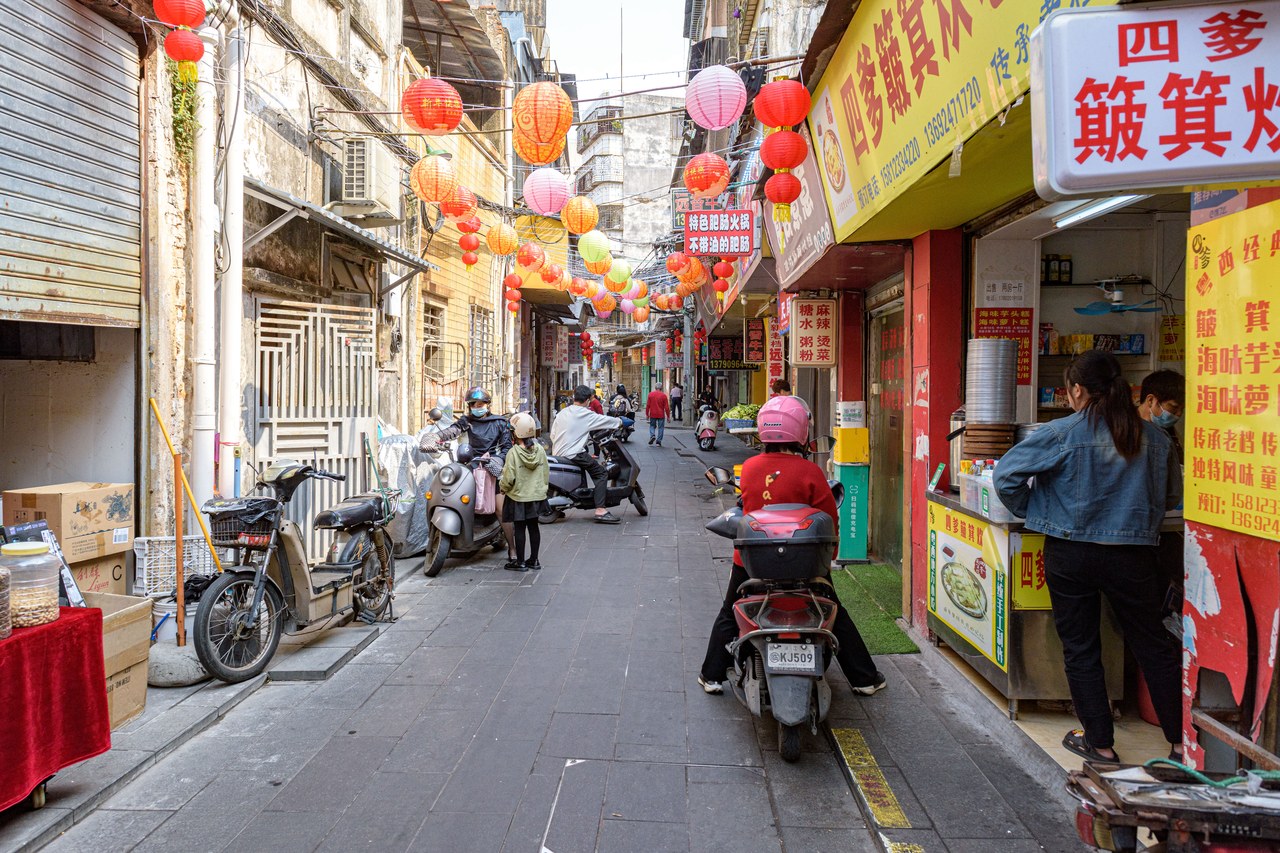
Zhongxing Street in Chikan, photographed on 19 February 2024; a lived-in commercial lane, not a current shop directory.Photo: N509FZ · CC BY-SA 4.0 · Image credits
Open bay views, planted paths and a relaxed waterfront pause · Chikan coast, separate from the old-street lanes
1–2 hours, longer with a meal · The route uses the public promenade; boat trips, watersports and other commercial services are optional and separately charged.
A second, quieter-paced view of the city’s coastal life · Xiashan coast, paired with the historic-street day
1–2 hours, adjusted for weather · The suggested visit uses public coastal paths; commercial rides, boats and other paid products are not included.
Two city groups, with the sea beside each
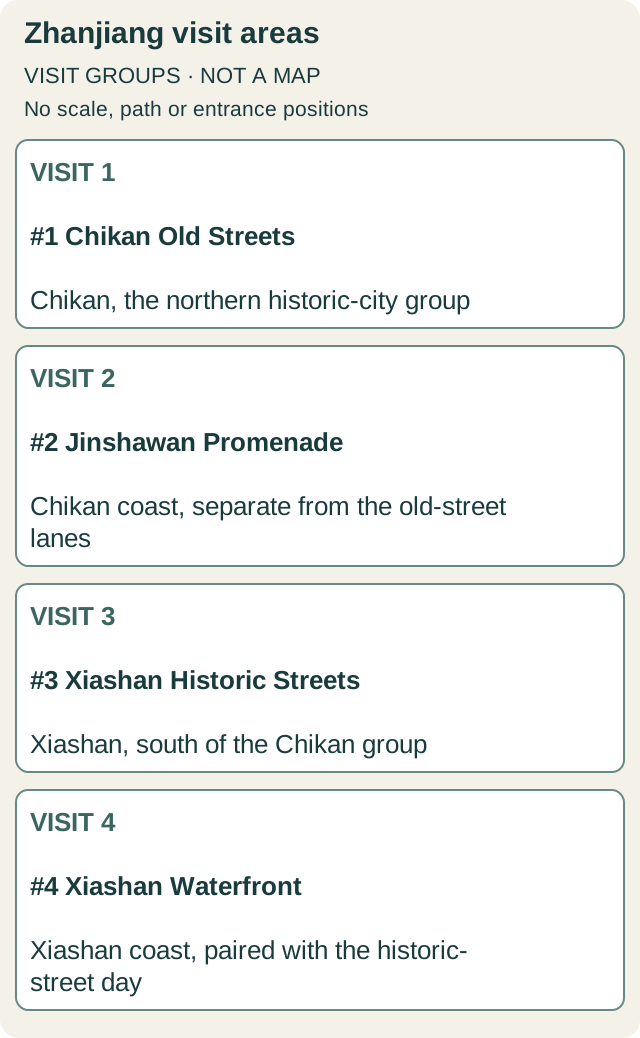
Open full-size map ↗. Chikan and Jinshawan form one day; Xiashan heritage and waterfront form another. Not to scale; groups show relationships, not navigation, ferry routes or a continuous coastal walk. This is an editorial relationship diagram, not a navigation map; box position does not encode distance or an entrance. ChinaMile diagram; location sources. Navigation: search the Chinese name in Amap.
Pair Chikan Old Streets and Jinshawan on one day. Pair Xiashan’s historic buildings and waterfront on the other. Moving between Chikan and Xiashan is a city road transfer, not a short lane-to-lane stroll. Keep the hotel base rather than moving luggage for the second day.
For only one full day, use the northern pair. If your priority is a beach resort or an island, this urban circuit is the wrong substitute: add a separately booked stay with verified access and return arrangements. If you want a larger metropolitan cultural stop instead, compare Guangzhou.
Old port textures and two distinct waterfront stops
1. Chikan Old Streets · 赤坎老街 · 赤坎古商埠
Chikan rewards close looking: ordinary businesses sit beside older shopfronts, small lanes and restored heritage spaces. The former trading-port story is more interesting when you notice the streets still being used, rather than treating the district as a film set.
Choose a compact walk around the old commercial lanes and the Datong Street area. The heritage authority identifies old wharf remains, historic buildings and cultural venues, but their interiors are not all interchangeable attractions. Keep the street walk as the core and add an open small exhibition only if it appeals.
Hours
Daylight for architecture; early evening can suit a meal. Shops and interior venues have their own hours. Keep lanes and emergency access clear.
Tickets
The itinerary follows public streets; individual exhibitions, shops and activities have separate access.
Time
2–3 hours with a food stop
Chinese address
湛江市赤坎区赤坎老街;大通街;中兴街
Getting there
Take a taxi to the Chikan old-street area, saving 大通街 as a landmark, then walk within the lanes. Choose a pickup on a vehicle-accessible surrounding road.
How to visit
Start in daylight, keep the walk short enough for a food stop, and return to the saved pickup for Jinshawan. Do not enter closed homes or climb old structures. This 赤坎 is in Zhanjiang, not the separate Chikan town in Kaiping.
2. Jinshawan Promenade · 金沙湾观海长廊
Come for the broad view and space to slow down. The promenade mixes coastal seating, plazas and planted areas, making it a good counterpoint to Chikan’s narrower streets. Choose a section around the Olympic Goddess square rather than treating the entire bay as one long mandatory walk.
The bay is part of a working city, not a remote turquoise-water resort. An enjoyable visit can be entirely on land. The view and comfort depend on visibility, wind and heat; choose a shorter visit when conditions are poor rather than trying to force a beach afternoon.
Hours
Use daylight or early evening in suitable weather. Follow storm and maintenance closures; this guide does not establish a supervised swimming session.
Tickets
The route uses the public promenade; boat trips, watersports and other commercial services are optional and separately charged.
Time
1–2 hours, longer with a meal
Chinese address
湛江市赤坎区金沙湾观海长廊;奥运女神广场
Getting there
Take a road transfer from Chikan old streets to 金沙湾奥运女神广场. Keep the exact same square or a nearby road access point for pickup.
How to visit
Walk one comfortable promenade section and return. Stay out of the water unless the current designated bathing area is open and supervised. If wind, lightning or an official closure intervenes, leave the exposed shore and have dinner inland.
3. Xiashan Historic Streets · 霞山历史街区 · 广州湾法国公使署旧址
Xiashan adds the administrative and institutional face of the former Guangzhouwan port. Use the former French consulate as a landmark and compare its formal facade with Chikan’s trading streets. This is a short architectural walk, not a promise of entering every heritage building.
The former consulate is used for museum exhibitions, while other buildings in the area may have restricted or changing access. Treat an interior as a bonus only after checking the museum’s current notice. Do not infer regular opening hours from a temporary exhibition launch.
Hours
Choose a daytime exterior walk. Current interior opening and document requirements were not verified, so the day does not rely on admission.
Tickets
The planned walk views buildings from public streets; museum interiors follow their own current admission.
Time
1½–2 hours as an exterior walk
Chinese address
湛江市霞山区广州湾法国公使署旧址;海滨一路一带
Getting there
Transfer by road from Chikan to 广州湾法国公使署旧址. Keep Xiashan and its waterfront on the same day instead of returning north between stops.
How to visit
Look from public streets, respect active buildings and any barriers, and continue to the nearby seafront area. If you want an indoor visit, use the Zhanjiang Museum notice linked in the sources and confirm its current arrangements before setting off.
4. Xiashan Waterfront · 霞山观海长廊 · 海滨公园
Use the seafront near Haibin Park for a walk and a break after the historic streets. The interest is the open water, local strolling and the contrast with the urban buildings behind you. You do not need to cover the coast all the way to Chikan to make the stop worthwhile.
For a one-day stay, Jinshawan already provides the bay experience and this is the first major area to omit. With two days, Xiashan earns its place because the heritage walk, waterfront and lunch make a coherent southern group with only one return transfer.
Hours
Daylight and comfortable weather; obey current park and coastal closures. A land walk does not establish swimming or boat safety.
Tickets
The suggested visit uses public coastal paths; commercial rides, boats and other paid products are not included.
Time
1–2 hours, adjusted for weather
Chinese address
湛江市霞山区海滨公园;霞山观海长廊
Getting there
Use current pedestrian directions from the historic-street area to 海滨公园; take a short local taxi if heat or mobility makes the connection impractical.
How to visit
Pick a manageable out-and-back section, pause in shade and save the return pickup. If the weather deteriorates, leave the waterfront for a nearby indoor meal and return to the hotel by road.
Choose the seafood before agreeing the bill
Try 炭烧生蚝, charcoal-cooked oysters, or 白灼虾, simply cooked prawns, with vegetables and rice. 白切鸡, poached sliced chicken, is a useful local alternative when you do not want a full seafood meal. For two adults, choose one main seafood dish or a half chicken if offered, add greens and rice, then order more if needed.
At a live-seafood counter, ask for the price unit, actual weight, cooking fee and total before the animal is prepared. A price per 斤 means per 500 grams, not per kilogram. Choose fully cooked dishes and explain any shellfish allergy directly; a vegetable dish can still contain oyster sauce or seafood stock.
Use Chikan for a snack or lunch during the street walk. Have the larger dinner near the hotel after Jinshawan, and lunch in Xiashan on the second day. This keeps meals within the day’s area instead of making a cross-city restaurant chase. The spending allowance below is editorial, not a restaurant tariff.
Choose Chikan for this default two-day circuit
Near Chikan old streets: good for early walking and small food stops. Choose a road-accessible hotel entrance with the room set back from late-evening activity. Check lift access in older buildings.
Near Jinshawan: the default if a modern hotel and a short evening promenade matter most. A sea-view room is a paid preference, not necessary to enjoy the bay; confirm the actual view, room and price. Budget the taxi to Chikan old streets and the separate Xiashan day.
Xiashan: choose it if the southern heritage area or your booked train makes that base more convenient. You can reverse the days. Check the precise station and hotel address; a name containing North does not mean a station is near Chikan. Confirm passport check-in directly with the chosen property before payment.
Give Chikan and Xiashan one day each
Arrival evening · night 1: check in, have dinner nearby and save the next day’s addresses. Avoid turning a late arrival into an island connection.
First full day · night 2: breakfast and Chikan old streets in the morning; lunch and a rest; a road transfer to Jinshawan for a shorter afternoon or early-evening promenade. Have dinner in the same part of town and return to the hotel.
Second full day · night 3: transfer to Xiashan after breakfast. Walk the historic streets in daylight, have lunch, then choose one seafront section around Haibin Park. Return to your original hotel before dinner; the plan does not depend on a museum interior, ferry or cruise.
Departure morning: breakfast, bags and your confirmed station or airport transfer. In persistent rain, shorten the exterior walks, use indoor meals and only add a museum when its actual entry is confirmed. If an official storm warning closes the coast, follow the closure and check transport changes with your provider. For the shorter one-day/two-night stay, omit the Xiashan day entirely.
Check North, West and the airport separately
Search Zhanjiang North 湛江北 and Zhanjiang West 湛江西 on 12306 for the train that suits your origin and date. Zhanjiang North is the newer high-speed station in Xiashan; its English name must not be used to infer a northern-city location. Zhanjiang 湛江 is another station name and must not be substituted for either.
For flights, use the airport name on the booking—Zhanjiang Wuchuan 湛江吴川—when arranging your hotel transfer. It is a separate road journey, not an interchangeable city-centre railway stop. This guide has not verified a current airport-bus schedule: use the airport’s staffed transport desk or a confirmed taxi/transfer if the bus does not fit your hotel and arrival.
With luggage, take a signed taxi or matched app pickup to the hotel’s Chinese address. For city buses, check the current route and last departure only after fixing the actual station and stop. Chikan to Xiashan, and old streets to Jinshawan, can be handled as separate road rides; no precise taxi fare or journey-time guarantee is made here.
For departure, give the hotel the ticket’s full Chinese station or airport name and confirm the pickup. Allow for traffic, security and your provider’s check-in cutoff. Keep the final morning clear of distant sightseeing; if app booking fails, ask the hotel to arrange a licensed taxi before you leave its staffed desk.
Three nights and two full days, without boats
For two adults sharing one room, two full days and three nights, use 3R + A + ¥960–1,440. R is your actual nightly room price; A is the pair’s arrival and departure ground transfers, including an airport transfer if applicable. The allowance contains ¥640–900 for meals from arrival dinner to departure breakfast, ¥180–300 for local sightseeing rides and ¥140–240 for drinks and contingency.
Worked example: R = ¥320 and A = ¥160 gives ¥2,080–2,560 for the pair. These room and transfer inputs are hypothetical. The core plan uses public streets and coastal paths. Any museum product, cruise, watersport or island excursion is an extra at its actual price; it is not silently included for free.
For one full day and two nights, use 2R + A + ¥560–840: meals ¥380–540, local rides ¥100–160, drinks and contingency ¥80–140. The same example inputs yield ¥1,360–1,640. Exclude intercity trains and flights, shopping, private guides and seafood ordered above the planned meal allowance.
Land-based plans keep the visit flexible
Sources were read on . The tourism and parks authorities document the two historic areas and coastal spaces; the rail-opening statement establishes the newer North station in Xiashan. The museum’s recent exhibition notice establishes use of the former consulate, but is not evidence for an ordinary opening schedule.
Visit lengths, district pairing, hotel areas and budgets are editorial planning inputs. We have not checked live restaurant prices, airport-bus departures, swimming supervision, cruise availability or foreign-passport museum admission. Those optional services are outside the core street-and-waterfront itinerary; the road return and named pickup points remain its transport plan.
.jpg)