Yixing A place to look closely at a teapot, meet a working craft town and give the green hills their own day.
Yixing is a good choice when craft is part of the trip rather than just a souvenir stop. In Dingshu, purple-clay teapots connect museum cases, studios and the narrow old street beside Shushan. A second full day in the Bamboo Sea gives you the contrast of a wooded hill landscape; it should not be squeezed between pottery shops and a train.
Use two full days and three nights for pottery plus hills, or one full day and two nights for Dingshu alone. Choose a city park in place of the hills if you prefer gentler walking. Yixing suits people willing to slow down and compare objects, textures and places. If you want a dense historic city centre with many major monuments close together, make it a shorter craft-focused stop.
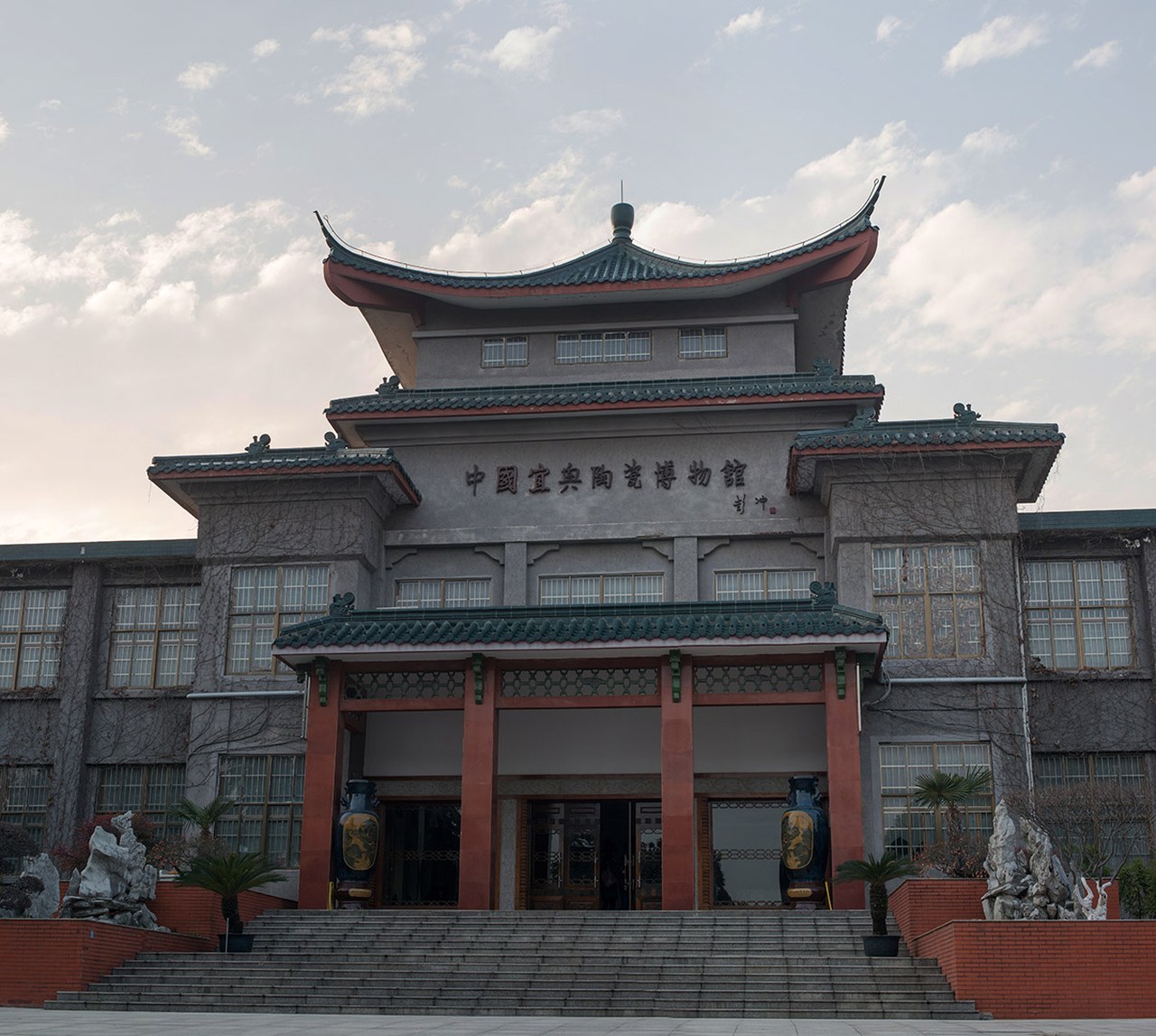
China Yixing Ceramic Museum in Dingshu, photographed in January 2014. Historical exterior view; it does not establish current entrance arrangements.Photo: DvYang · CC BY-SA 2.0 · Image credits
A grounding in ceramic forms before visiting shops and studios · Dingshan North Road, Dingshu town
1½–2 hours, longer with a booked activity · Museum visitor information publishes ¥5 standard entry and an advance reservation system for the coming seven days. Activities and special products can differ.
A separate hill day among bamboo, with a choice of walking effort · Zhuhai village in Hufu, outside Dingshu and the city centre
A full excursion day; roughly 3–5 hours inside · Official government references list basic entry at ¥78–80. Treat this as a reference range, not a current quote; select 宜兴竹海风景区 for your date and check what is included.
An easier green-space alternative within the city · Southern side of Yixing’s urban centre
1½–3 hours, at your chosen pace · Basic park entry is listed as free. Tower access, rides and any other optional services are separate.
Dingshu is the craft day; hills are another journey
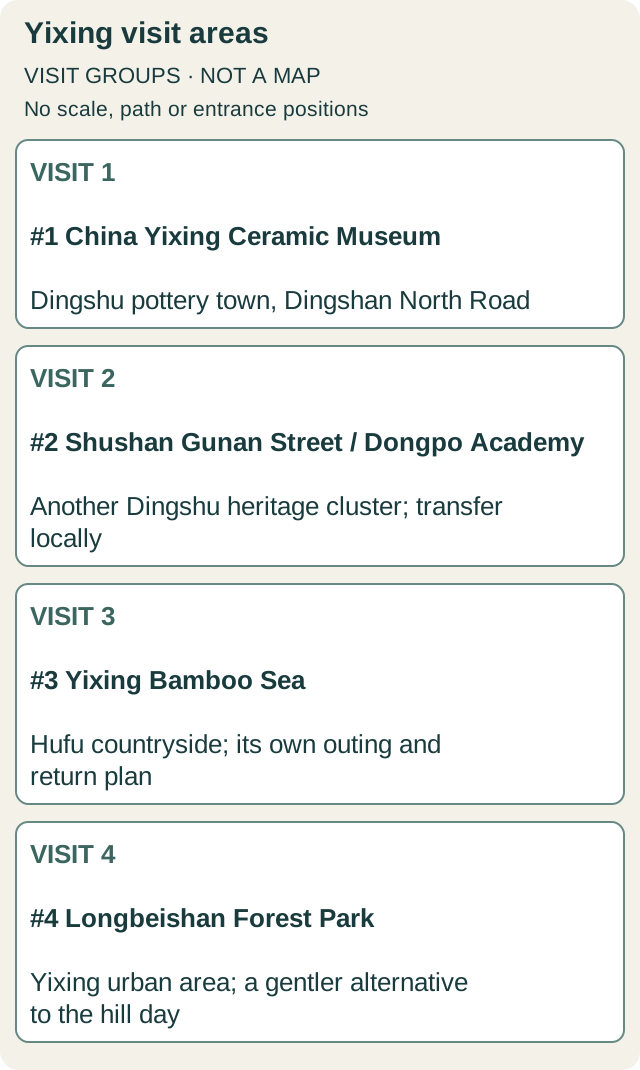
Open full-size map ↗. Not to scale or for navigation. Dingshu is the pottery-day group, Bamboo Sea is a separate Hufu hill excursion, and Longbeishan is the urban park alternative. Group placement does not show walking paths or verified bus services. This is an editorial relationship diagram, not a navigation map; box position does not encode distance or an entrance. ChinaMile diagram; location sources. Navigation: search the Chinese name in Amap.
Group the ceramic museum and Shushan Gunan Street/Dongpo Academy into the first full day, with a local road transfer between them. Keep the Bamboo Sea on the second full day. Longbeishan is a gentler replacement for that second day, not another attraction to add after the hills.
If the museum cannot arrange your admission, retain the old street and open studios, and add 陶二厂 Tao’er Factory, an adapted ceramics-industry site in Dingshu. Public-area access is listed as free; individual exhibitions, businesses and workshops have their own arrangements. This remains a useful craft day without pretending the museum booking worked.
Sleep in Dingshu for a pottery-led visit
Dingshu near the Shushan/Dongpo area: the default for a pottery-led stay, allowing you to return for tea or dinner without going back to the city centre. Confirm that a lane property has an accessible luggage drop-off and that your chosen room is away from noisy work or event spaces.
Central Yixing near Renmin Road or the urban lake areas: choose this for a broader choice of city services and for the park-based second day. You will make a return road journey to Dingshu.
Hufu countryside: better for a slower nature stay than this mixed two-day plan. A rural address may require arranged meals and transport, so do not book solely from a picture of a bamboo view. For any base, confirm the actual address, passport check-in, cancellation terms and room price with the property. These are area recommendations, not a comparison of named hotels.
Choose what to learn and how much to walk
1. China Yixing Ceramic Museum · 中国宜兴陶瓷博物馆
Start here to put the objects you will see in shops in context. Compare the surfaces and shapes of older pottery, glazed wares and purple-clay pieces; the museum gives you a reason to look beyond a maker’s name or a price tag. It is a specialist collection, distinct from the general Yixing City Museum.
A hands-on activity can add value if you want to understand the making process. Ask what you will make, the total cost, session length, firing and collection or shipping before booking. A wet clay object is not automatically a finished teapot you can pack that afternoon.
Hours
The museum’s current visitor page gives 08:30 opening, 16:00 last ticket/entry, 16:30 clearing and 17:00 closing. Published closure-day guidance differs across official pages; choose a Tuesday–Sunday morning and check the museum’s latest notice.
Tickets
Museum visitor information publishes ¥5 standard entry and an advance reservation system for the coming seven days. Activities and special products can differ.
Time
1½–2 hours, longer with a booked activity
Chinese address
宜兴市丁蜀镇丁山北路150号;中国宜兴陶瓷博物馆
Getting there
Take a taxi to the museum’s east visitor entrance, not merely to a search result for 宜兴博物馆. It is a separate stop from the Shushan old-street group.
How to visit
Use the museum website’s 参观预约 or official WeChat. Its written process specifically describes Chinese second-generation ID entry; foreign-passport handling is not confirmed. Call +86 510 87180688 before travel to ask how to reserve and enter with your original passport. If unresolved, keep the Dingshu street-and-studio route and do not use a fabricated ID.
2. Shushan Gunan Street and Dongpo Academy · 蜀山古南街 · 东坡书院
The old street is the place to slow down after the museum. Look at the small shop-and-home scale, the relationship to the river and the pottery work that gives this neighbourhood its identity. Some premises are restored or adapted; this is an active craft district, not an untouched historical set.
Dongpo Academy adds a different thread through Su Shi’s association with Yixing and its newer interpretation spaces. Visit if open, but leave time for a single unhurried tea stop rather than expecting every studio to offer a demonstration. Ask before stepping into work areas or handling pieces.
Hours
Use daylight for the lane and river setting. Academy rooms, studios and tea shops keep individual hours; evening programmes and markets are occasional.
Tickets
The city lists the street and academy among its normally free visitor places. Purchases, tea and workshops are separate.
Time
2–3 hours, with a tea stop
Chinese address
宜兴市丁蜀镇蜀山古南街;东坡书院;东坡东路
Getting there
Transfer from the ceramic museum to 东坡书院 or the signed 古南街 entrance on Dongpo East Road. Explore this local group on foot, then return to a road-accessible pickup point.
How to visit
Start at the academy area, follow the signed old-street route and return without entering private residential rooms. If the academy closes, the street and open studios still give a coherent pottery afternoon.
3. Yixing Bamboo Sea · 宜兴竹海风景区
Choose the Bamboo Sea if being among bamboo is worth the road journey. Begin with the lower visitor paths and lake setting, then decide whether to continue uphill. A shorter lower-area walk still provides the landscape experience; a summit should depend on weather, energy and the actual return route.
The scenic area is separate from a ceramic-museum ticket and from other caves or hill attractions around Yixing. A cableway, shuttle or combined product changes the cost and walking demand. Ask which sections are operating before buying; do not make a cableway essential to your ability to return.
Hours
The Wuxi government guide lists 08:00–16:30. Arrive in the morning and follow the current ticket’s last-entry and closure notices, especially in stormy weather.
Tickets
Official government references list basic entry at ¥78–80. Treat this as a reference range, not a current quote; select 宜兴竹海风景区 for your date and check what is included.
Time
A full excursion day; roughly 3–5 hours inside
Chinese address
宜兴市湖㳇镇竹海村;宜兴竹海风景区游客中心
Getting there
Arrange a road vehicle from your base with a confirmed return pickup at the same visitor centre, or confirm both directions of a current public-transport service before setting out.
How to visit
Start with the lower paths, agree a turnaround time and keep the exit ahead of the pickup. If walking surfaces are unsafe or the attraction closes, choose Dingshu’s open indoor spaces or the city park in suitable weather; do not improvise an unmarked hill route.
4. Longbeishan Forest Park · 龙背山森林公园
Choose this instead of the Bamboo Sea when you want a flexible park visit without committing to a more distant hill excursion. Gardens, trees and lawns allow you to control the length of the outing. It is a landscaped city park rather than the same experience as a bamboo-covered mountain.
Pick a manageable section after lunch and return to your original entrance. Treat a tower climb or a hired vehicle as optional; the walk does not need either. This also works as the second day of a pottery trip when someone in your party would prefer less climbing.
Hours
The Wuxi government listing gives 06:00–20:30; daylight is the better first-visit choice, and temporary park closures take precedence.
Tickets
Basic park entry is listed as free. Tower access, rides and any other optional services are separate.
Time
1½–3 hours, at your chosen pace
Chinese address
宜兴市人民南路619号;龙背山森林公园阳羡门
Getting there
Use a taxi to 阳羡门 on 人民南路, then retain that entrance as the return pickup. It is in the city, not beside Gunan Street.
How to visit
Use the entrance map to select a short out-and-back or loop. Do not mistake the size of the whole park for a walking target; rest when needed and return before conditions deteriorate.
A complete craft day before the hills
Arrival evening · night 1: transfer from Yixing station to your chosen base, eat nearby and check the museum reservation and document arrangement.
First full day · night 2: on a confirmed museum opening day, visit in the morning. Eat lunch in Dingshu, transfer to the Shushan group, then use the afternoon for Gunan Street, the academy if open and a tea stop. A booked workshop replaces part of the shopping time rather than being added at the end.
Second full day · night 3: leave after breakfast for the Bamboo Sea, walk the lower route and add an uphill section only if conditions suit. Have lunch and meet the prearranged return vehicle in the afternoon. For the easier version, stay in the city for lunch and Longbeishan instead, with time to rest.
Departure morning: collect luggage and use the transfer booked for your train. The one-full-day/two-night version keeps only Dingshu. In sustained rain, choose open indoor craft spaces and a shorter street visit; neither a slippery hill nor a large wet park is a useful automatic substitute.
Leave time for tea, and keep buying optional
Try 乌米饭 dark glutinous rice, coloured with leaf infusion, if available. Ask whether it is served sweet, plain or with meat; the rice name does not specify the topping. In spring, look for 笋烧腊肉 bamboo shoots with cured pork; outside the fresh-shoot season, ask what is available. For a shared dinner, choose one meat dish, a vegetable and rice. Keep the Dingshu lunch near the day’s visitor area rather than travelling to a distant restaurant for one dish.
A tea stop is part of the appeal of a pottery town. Ask for local 阳羡雪芽 Yangxian Xueya green tea or 宜兴红 Yixing black tea if you want to compare the region’s styles. Confirm whether you are paying for a pot, a person or a tasting service before sitting down. If you want to buy a teapot, set a spending limit and ask the seller to explain the material, maker attribution, intended use and return terms. A shop demonstration does not by itself authenticate an expensive collector’s piece.
Workshop fees, firing, packing and overseas shipping should be itemised before payment. Keep purchases outside the sightseeing budget so a relaxed craft day does not silently become a large shopping commitment.
Use Yixing station, then choose the right local area
Search Yixing 宜兴 on 12306 for your origin and travel date. Dingshu and Hufu are onward local destinations; an arrival at Yixing station is not an arrival at either attraction. Take a taxi using the hotel’s full Chinese address.
For the museum, save 丁蜀镇丁山北路150号 and the east visitor entrance. For the old street, save 蜀山古南街/东坡书院. These names avoid confusing the general city museum with the ceramics museum.
For the Bamboo Sea, book a return transfer specifying 宜兴竹海风景区游客中心, waiting time, tolls and parking. If using buses, confirm the current departure stop and return service before leaving town; this guide does not assert a tested last bus. Ask your hotel to help arrange the return if needed. Keep the excursion off your intercity departure day.
The city’s public booking entry is 宜兴旅游总入口 in Alipay. Choose the exact attraction and date; basic admission, a combined product and a workshop are different purchases. If your passport cannot be entered, contact the named attraction or its staffed visitor centre before committing to transport.
Two adults, one room, pottery and one nature day
Use 3R + A + C + T + ¥740–1,040 for two full days and three nights. R is the real nightly room quote, A is the pair’s station transfers, C is the quoted return vehicle for the Bamboo Sea, and T is the pair’s actual admissions and any chosen scenic transport.
The planning allowance covers meals ¥480–640, Dingshu/local rides ¥140–220 and drinks or contingency ¥120–180. Museum standard entry is published as ¥5 per adult. Government Bamboo Sea references differ between ¥78 and ¥80, so use the actual dated ticket when calculating T; do not treat a past promotion as a free ticket.
Worked assumptions: R = ¥300, A = ¥100, C = ¥350 and T = ¥170 (two museum tickets plus an ¥80-per-person bamboo-entry allowance) give ¥2,260–2,560 for the pair. The ¥80 is a budget input, not a confirmed checkout price. Intercity fares, workshops, pottery, cableway upgrades and shipping are excluded.
For the shorter Dingshu-only stay, use 2R + A + T + ¥460–660, with meals ¥280–380, local rides ¥100–160 and contingency ¥80–120. At R = ¥300, A = ¥100 and T = ¥10, that is ¥1,170–1,370 for two adults. For the park-based second day, replace C with the actual city transfer allowance and remove the bamboo tickets from T.
Official information, with the limits kept visible
Sources were read on . The ceramic museum’s own visitor page supplies its current day schedule, tariff, reservation text and service number. Government sources establish the free street/park options, the craft neighbourhood and the scenic-area references.
The museum’s published admission text describes Chinese ID entry, so this guide does not claim a tested foreign-passport workflow. Official closure-day references also differ; confirm your date directly and keep the craft-street alternative. Bamboo Sea’s published price references are a range, not a live quote.
Visit lengths, walking choices, area recommendations and cost allowances are editorial estimates. Hotels, workshops, bus services, individual shops and foreign-passport bookings were not field-tested.
.jpg)