Yangzhou Slow down between the lake, the gardens and morning tea
Come for composed waterside views, intimate merchant gardens and a city whose history follows the canal. Keep one central hotel for two nights to enjoy Slender West Lake, Ge Garden and the old streets. Choose three nights for a reserved Canal Museum half-day, an unhurried tea breakfast and one more place that matches your interests.
- Default base
- Wenchang Pavilion / Wenhe North Road
- Useful stay
- 2 nights for gardens; 3 with canal history
- Book first
- Canal Museum session, then transport and hotel
- Getting around
- Walk within each cluster; taxi between clusters
Eight places, with a reason to choose each
The lake, enclosed gardens and museums deliver different experiences. These numbers stay the same through the guide; a satisfying visit does not require all eight.
See first
The clearest introduction to Yangzhou: one lake, one intimate garden and the canal story.
- 1. Slender West Lake 瘦西湖
The essential open-air landscape: water, pavilions and changing views along a narrow lake.
3–4 hours
- 2. Ge Garden 个园
The best compact garden for a first visit: bamboo, a merchant’s residence and four seasons built in stone.
1½–2 hours
- 5. China Grand Canal Museum 扬州中国大运河博物馆
The strongest indoor choice: understand the canal system that shaped Yangzhou and many other Chinese cities.
3–4 hours
Combine nearby
These complete an area without another large cross-city journey.
- 4. Dongguan Street & the eastern old city 东关街·东关古渡
The easiest companion to Ge Garden: old shopfronts, small lanes and the canal at the city’s eastern edge.
1–2 hours, plus a meal
- 7. Sanwan Canal Park 运河三湾生态文化公园
See an actual canal landscape after the museum: water bends, planted banks and modern bridges.
45–90 minutes
Choose by interest
Add architectural comparison, religious history or printing; none is compulsory.
- 3. He Garden 何园(寄啸山庄)
A different garden choice: domestic architecture, linked corridors and framed views across a pond.
1½–2 hours
- 6. Daming Temple 大明寺
Add religious and literary history beside the lake’s northern end, especially the Jianzhen connection.
1½–2 hours
- 8. Yangzhou Museum & China Block Printing Museum 扬州博物馆·扬州中国雕版印刷博物馆(双博馆)
An interest-led western-city visit for local history, objects and the craft of woodblock printing.
2–3 hours
Keep the lake, old city and southern canal separate
Northwest: Slender West Lake stretches north from its south gate; Daming Temple is near its northern end. Old city: Ge Garden and Dongguan Street fit one walk, while He Garden is farther south and works best as a separate garden block. South: the Canal Museum and Sanwan Park share an area away from the old streets. The Double Museum is a fourth, optional direction west on Wenchang West Road.
Use short taxi transfers between these areas and walk once you arrive. The centre is not one continuous pedestrian park. Save your hotel’s Chinese name, address and entrance before leaving; at pedestrian streets, agree a road-accessible pickup rather than placing a car pin in the middle of a lane. Transfer times below are planning buffers, not measured traffic guarantees.
Choose nights by usable time
| Choice and time | Plan and conditions |
|---|---|
| One night: | arrive early enough for Ge Garden and Dongguan Street, sleep centrally, then give the next morning to Slender West Lake before collecting bags and leaving. With a late arrival or early departure, choose the lake or Ge Garden rather than fitting both around luggage. |
| Two nights — garden-focused default: | settle in and take a short old-city walk; use the full day for the lake, lunch and rest, then Ge Garden / Dongguan Street if energy and opening hours allow. Alternatively put Ge Garden on the departure morning and keep the full afternoon for He Garden. Return to the same hotel each evening; the departure must leave a real sightseeing window for this version. |
| Three nights — fuller first visit: | keep the same bed, separate the lake morning from the Ge Garden / old-street block, and protect a reserved half-day for the Canal Museum with an optional Sanwan walk. Use the remaining half-day for He Garden, Daming Temple or the Double Museum. This is the easiest way to include history and a long breakfast without turning every meal into a transfer. |
| Four nights or slower travel: | keep one major visit per half-day and use the extra time for whichever garden or museum you skipped. You do not need another hotel. For an onward stop in Nanjing, Suzhou or another Jiangsu city, choose the actual train in 12306 first; there is no reason to assume every departure uses the same Yangzhou station. |
Ordinary daytime ticket budget: in the published 2026 tariff, Slender West Lake plus Ge Garden costs CNY 148 per adult in February–October, or CNY 90 in January, November and December. Adding He Garden makes that CNY 196 or CNY 120 respectively. The three-night version can add the Canal Museum’s free permanent galleries and Sanwan’s public walk without raising that core admission total. These sums exclude food, transport, boats, night shows, special exhibitions and any optional temple ticket; concessions and special free-admission dates may lower the charge. Recheck the applicable tariff for travel after 2026.
If the stay includes Monday, place the museums on another open day unless their current holiday notice says otherwise. Spring and autumn usually suit longer garden walks; spring can also bring crowded domestic travel periods. Summer calls for shade, water and an indoor midday block; winter can be damp and cold, so shorten exposed lake time. A garden’s symbolic four seasons remain interesting outside blossom season.
Book one central room with the beds you need
Default: Holiday Inn Express Yangzhou City Center
扬州文昌阁智选假日酒店 · 汶河北路75号. Choose this Wenchang Pavilion / central-city base for a balanced position between the lake and old streets, straightforward taxi pickups and breakfast at the hotel. The official property page gives reception at +86 514 879 79788.
The IHG room list specifies 1 Queen Bed, 2 Single Beds, and 1 Queen Bed and 1 Single Bed. Two friends should select the two-single-bed room; a couple can select one queen. A family should choose the named queen-plus-single configuration only when the selected rate admits the party’s actual adults and child ages. “Standard room assigned at check-in” does not secure a twin room.
Old-city alternative: ibis Yangzhou Geyuan Garden Hotel
宜必思扬州个园酒店 · 史可法东路7号. Choose this when Ge Garden and the eastern old city are the main focus. The Accor property page lists a Twin Room with two single beds, and Business / Superior Double rooms with one queen bed; the listed room capacity is two. Do not interpret “double” as two beds or add a third sleeper without written approval.
Both are practical shortlists, not stays we have personally tested. Enter your dates and every guest’s age on the linked brand page, then confirm passport registration for all guests, the exact bed arrangement, cancellation, breakfast and late arrival before paying. Ask for the Chinese entrance card and a vehicle pickup point. Keep that same room for the city stay; a station-side hotel trades away easy evening access for a benefit you use only on arrival or departure.
From station or airport to your bed — and back out
By train
扬州东站 / Yangzhou East lies east of the city; 扬州站 / Yangzhou Railway Station lies west. Read the exact station on your issued 12306 ticket, then follow station signs to the official taxi queue. Show 扬州文昌阁智选假日酒店,汶河北路75号, or your alternative hotel’s full address. Budget roughly 30–50 minutes from either station to the central hotel including finding the taxi queue and local traffic; this is an editorial allowance, not a timetable.
Go to the hotel first to check in or leave bags by agreement. Keep the first outing light: an old-street meal and back to the same bed after a long journey. Do not route luggage through a garden on the assumption that its gate has storage. A train to Zhenjiang is not arrival in Yangzhou: it requires a separate cross-river transfer and should be chosen only after pricing and arranging that extra leg.
By air
For 扬州泰州国际机场 / Yangzhou Taizhou International Airport (YTY), use the official taxi queue or a prearranged hotel car to your exact hotel entrance. Allow around 60–90 minutes for the airport-to-central-hotel road transfer and arrival handling in normal conditions, with additional time during congestion. Confirm a car’s full charge, flight number, luggage capacity and meeting point before accepting it.
The airport’s passenger guidance gives transport enquiries at +86 514 8999 9999. A bus may be cheaper, but confirm that day’s destination, departure and final hotel connection at the airport desk; no late-night bus, fixed fare or frequency is guaranteed here. If the last suitable bus has gone, take the licensed taxi or the confirmed hotel pickup.
Leaving from the same base
The previous evening, show reception the station or airport printed on the actual ticket. Book the return pickup from the same hotel, add the rail or airline’s required security/check-in margin to the road allowance, and collect stored bags before the car arrives. For an early flight, arrange the car before sleeping. A late museum visit is not a reason to gamble on the final connection: shorten or drop the last sight and return for the bags.
Reserve the canal visit; keep garden tickets simple
- Open the verified 中国大运河博物馆 official WeChat account and its visitor reservation service. Select the actual visit date and morning/afternoon session. The operator states releases at 19:00 China time, up to seven days ahead.
- Select the foreign passport document type, enter the real passport details and finish the required phone verification. The official rule supports passports; an overseas-phone booking has not been completed for this guide.
- Continue only when the service shows a successful reservation. Carry the same original passport. For children under 16, use the family reservation and bind each child to the accompanying adult as the current form directs; confirm handling of a foreign child’s document with visitor service if the form is unclear.
- If the phone or document step fails, ask your hotel to call +86 514 8277 3088. Obtain an authorised solution before going. Do not invent a Chinese ID number, assume foreign nationality grants walk-in access, or pay someone who cannot show how official admission is secured.
我持外国护照,想预约[日期、时段]参观中国大运河博物馆。官方预约页面无法验证我的手机号/护照。请问应怎样办理?需要携带哪些原件?如果带外籍儿童,如何做亲子预约?
If there is no authorised session, keep the hotel booking and use the gardens / old streets, or confirm #8 before substituting it. The museum warns that repeated reservations not used, including cancellations under its published rule, can restrict the account; reserve sessions you intend to use. For the gardens, pick ordinary daytime admission first. Buy a city pass or night performance only if its exact inclusions, passport eligibility and dates match your intended visits.
1. Slender West Lake瘦西湖
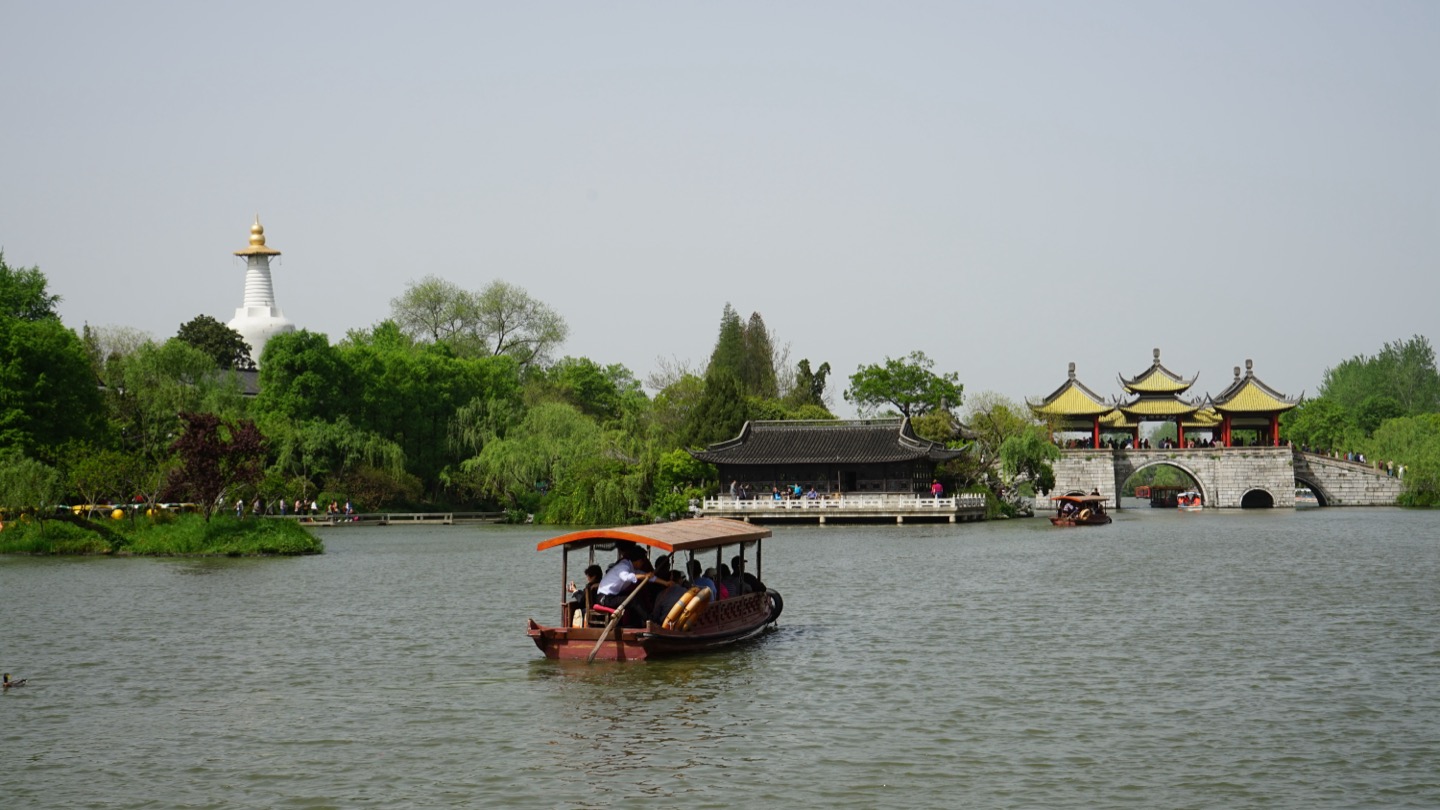
This is the strongest first choice when you want to see why Yangzhou became a garden city. A winding watercourse brings willow-lined banks, the Fishing Terrace, Five-Pavilion Bridge and the White Pagoda into changing compositions. Stop beside the water and look back across it: the scenery works through the relationship between buildings and their reflections, rather than through one distant panorama.
Begin at the south entrance for the classic sequence through the willow bank and Xu Garden toward Small Golden Hill and Five-Pavilion Bridge. Continue toward Twenty-Four Bridge only while the group still enjoys walking. A boat is an optional view of the scenery, with its own ticket and operating conditions; it is not a guaranteed shortcut back to your entry gate. For a shorter visit, turn back after the central sights and leave through the south entrance.

- Time
- 3–4 hours
- Hours
- The September 2026 local visitor listing reports daytime entry 06:00–17:30 and exit by 19:30. This is secondary information, not a directly verified operator calendar. Plan a morning visit and check the entrance notice for the travel day; night visits have separate rules.
- Tickets
- Buy a 瘦西湖日场门票 for the chosen date through the verified 瘦西湖 official WeChat account or the staffed south-gate ticket office. The 2026 municipal tariff table lists ordinary daytime admission at CNY 100 in February–October; CNY 60 in January, November and December. These are the published standard rates, before any concession or promotion. Foreign-passport checkout was not tested. Boats, evening shows and bundles are different products; check the dated ticket before paying.
- Address in Chinese
- 江苏省扬州市大虹桥路28号,瘦西湖南门(游客入口)。
- Getting there
- From the Wenhe North Road hotel below, take a short taxi to 瘦西湖南门 or walk north toward 大虹桥路 using a live map. Allow about 20–30 minutes for the walk as a planning estimate. Tell the driver the gate: the lake has several entrances.
- Visit and return
- Hotel → south gate → willow bank → Xu Garden → Small Golden Hill / Fishing Terrace → Five-Pavilion Bridge and White Pagoda → return to south gate, or continue to an open signed exit after Twenty-Four Bridge → licensed taxi → the same hotel. Use a northern exit only if you are deliberately adding #6.
2. Ge Garden个园
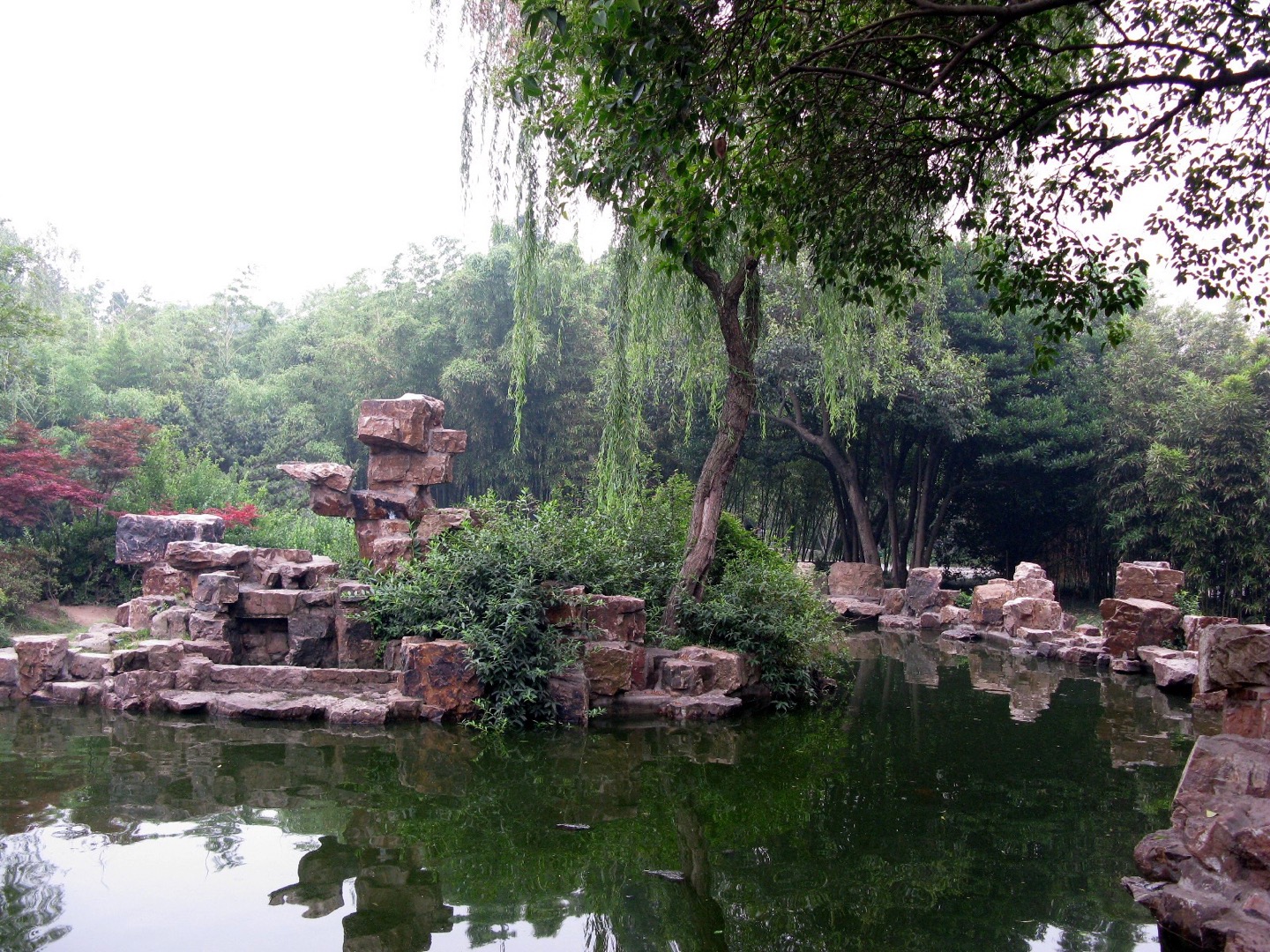
Choose Ge Garden for its changing rock landscapes. The garden’s own collection profile explains how different stones evoke spring, summer, autumn and winter. You can read those seasons in the shape, colour and arrangement of the rockwork even when the actual weather stays the same. Bamboo is part of the identity, not just background planting.
Visit both the garden and the southern residential rooms. The contrast shows how a wealthy household joined daily life to a deliberately composed landscape. Narrow rock passages and steps can become bottlenecks; you can appreciate the composition from ground level without climbing every route. If you will visit only one enclosed garden, make it this one; choose #3 as the comparison when architecture interests you.
.jpg)
- Time
- 1½–2 hours
- Hours
- The August 2026 local listing gives daytime entry 07:15–17:45, final exit 18:30. Treat this as a planning reference and check the current official 扬州个园 notice; seasonal and night admission are separate.
- Tickets
- The 2026 municipal tariff table lists ordinary daytime admission at CNY 48 in February–October; CNY 30 in January, November and December, before concessions or promotions. Use the official 扬州个园 ticket channel or the staffed garden entrance. Night admission is a separate product; the overseas-document payment flow was not tested. If a phone form rejects your passport, use the staffed counter with the original document rather than an invented identity number. The listing gives enquiries at +86 514 873 47428.
- Address in Chinese
- 江苏省扬州市广陵区盐阜东路10号,个园北门。南部住宅毗邻东关街。
- Getting there
- Taxi to 个园北门 on 盐阜东路 from either hotel. From ibis, a walk to the north entrance is an alternative; use the actual entrance pin. After the visit, follow staff signs toward the southern residence and Dongguan Street if that exit is open.
- Visit and return
- Hotel → north visitor gate → bamboo and four-season rock gardens → southern residence → open signed exit → #4 Dongguan Street and a meal → vehicle-accessible street pickup → same hotel. If the south exit is shut, leave by the marked exit and walk around on public streets.
3. He Garden何园(寄啸山庄)
He Garden is the comparison to make after Ge Garden if you like buildings as much as planting. Its celebrated double-level corridor links the house and garden, changing how you see the pond, rockwork and neighbouring rooms. Look through the shaped windows and along the covered passage; the view is part of the design.
The residence and garden reward a slow circuit rather than a quick photograph at the water. Follow the open route through the residential rooms and garden, adding the Pianshi Shanfang rockwork area when included and accessible. Upper passages have stairs and can be restricted. In wet weather, covered sections offer pauses, but this is still a garden with exposed and slippery paving, not a fully indoor alternative.
- Time
- 1½–2 hours
- Hours
- A management-office reopening notice confirmed summer daytime hours of 07:30–18:00. The local visitor listing gives earlier cold-season closing, with ticketing and admission ending 30 minutes before closure. Arrive in the morning or early afternoon; verify the day’s closing at the official 何园 channel.
- Tickets
- Buy ordinary daytime garden admission in the official 何园 mini-program or at the staffed entrance. Evening performances are separate products, not an automatic extension of a day ticket. The 2026 municipal tariff table lists ordinary daytime admission at CNY 48 in February–October; CNY 30 in January, November and December, before concessions or promotions. Confirm the dated ticket at purchase. Visitor enquiries: +86 514 872 39626.
- Address in Chinese
- 江苏省扬州市广陵区徐凝门大街66号,何园游客入口。
- Getting there
- Take a taxi to 何园 on 徐凝门大街; this is south of Ge Garden, not the same garden entrance. From Dongguan Street, leave the pedestrian area for the agreed roadside pickup. Combine the two gardens by taxi if energy is limited.
- Visit and return
- Hotel → He Garden visitor gate → open residential rooms → pond and linked corridors → permitted Pianshi Shanfang section → signed exit → sit-down lunch nearby or taxi back to the hotel area → same room. Do not depend on an upper walkway as the only exit.
4. Dongguan Street & the eastern old city东关街·东关古渡
Dongguan Street brings the garden visit back into the city. The provincial account of the old quarter describes traditional businesses, craft workshops and a neighbourhood that still contains homes. Look for the contrast between the main shopping street and a short side lane; do not enter private courtyards simply because a door is open.
Walk toward the east gate and Dongguan Ancient Ferry for the relationship between the old trading city and water. The street is busy and commercial, so go for shopfronts, snacks and a change of pace, not for the promise of an untouched empty lane. Boats and access to the gate tower are optional businesses with separate opening and ticket conditions; the public walk does not require either.
- Time
- 1–2 hours, plus a meal
- Hours
- Public outdoor streets; individual shops, food counters and visitor interiors set their own hours. Daylight shows the buildings more clearly; early evening suits a meal. Crowd controls can change which entrance or direction is available.
- Tickets
- No general ticket for the public street walk. Gardens, gate interiors, performances, boat rides and purchases are separate. Do not buy a multi-attraction bundle simply to enter the shopping street.
- Address in Chinese
- 江苏省扬州市广陵区东关街(国庆路至东关城楼、东关古渡一带)。
- Getting there
- Walk here after Ge Garden. For a separate visit, taxi to an allowed road near 东关城楼 / 泰州路, then walk into the pedestrian quarter. Confirm a road-accessible meeting point before dinner; a car cannot necessarily reach a restaurant inside the lane.
- Visit and return
- Ge Garden or hotel → public Dongguan Street → one short side-lane detour → east gate / canal edge → meal → agreed 泰州路-side pickup → same hotel. With heavy crowds, shorten the walk and leave by an open signed public exit.
5. China Grand Canal Museum扬州中国大运河博物馆
Give the canal museum a real half-day. Start with the main introduction to the canal’s geography and history, then choose galleries on boats, everyday life or the cities along the waterway. Models, objects and large-scale exhibition settings make the subject accessible even if you do not read every label.
This is south of the old city in the Sanwan area; it is not the Yangzhou Museum on Wenchang West Road. Collect the current visitor map at the service desk and choose two or three substantial sections. Gallery closures, special exhibitions and separately reserved experiences change: an admission booking does not promise every room or an interactive session. Keep #7 as a short outdoor finish rather than trying to walk the whole park after four hours indoors.
- Time
- 3–4 hours
- Hours
- The operator’s regular visitor page gives Tuesday–Sunday 09:00–17:00, last admission 16:00, with Monday opening during statutory holidays. Temporary extensions and gallery closures appear in the current museum notices; your booked session controls entry.
- Tickets
- Permanent exhibitions are free, with real-name timed booking. The operator’s 2026 instructions specify the official 中国大运河博物馆 WeChat account as the reservation channel, up to seven days ahead with releases at 19:00 China time, and explicitly support foreign passports. Some special exhibitions cost extra. Read the passport procedure before planning the transfer.
- Address in Chinese
- 江苏省扬州市广陵区运博路1号,扬州中国大运河博物馆(南广场游客入口)。
- Getting there
- Take a taxi from the central hotel to 中国大运河博物馆南广场游客入口; allow 30–45 minutes for the urban transfer, entrance walk and finding the queue as an editorial buffer. The operator also lists buses 82, 57, 56 and 9, but check the live direction and stop rather than assuming all serve your hotel.
- Visit and return
- Hotel with bags left by agreement → museum south-square visitor approach → reserved entry and chosen galleries → collect any stored items → short #7 walk if wanted → permitted taxi pickup → dinner near your hotel → same bed. Keep the museum’s closing time separate from the outdoor park’s access.
6. Daming Temple大明寺
Daming Temple offers a different reason to stay in the northern scenic area after the lake. The temple’s own visitor description identifies its main halls, Pingshan Hall and the Jianzhen Memorial Hall. The last connects Yangzhou to the monk’s voyages to Japan; Pingshan Hall adds the city’s literary tradition.
This is a working religious site on a rise, with steps on the approach. Give worshippers space and obey photography restrictions inside halls. Treat any pagoda ascent as an optional extra: do not buy a temple ticket assuming it guarantees a tower opening, lift or clear view. If the lake walk has already used your energy, leave the temple for a separate morning.
- Time
- 1½–2 hours
- Hours
- A current temple-issued opening and last-admission schedule was not found in the accessible visitor page. Choose a morning visit, and ask the temple before travelling if access to a particular hall matters. The official contact page lists the guest office at +86 514 873 40720.
- Tickets
- The 2026 municipal tariff table lists standard temple admission at CNY 48 in February–October; CNY 30 in January, November and December. Check the dated ticket and any concession at the staffed office. Optional tower access and foreign-document online purchase were not verified. Confirm the ordinary admission inclusions before adding a tower, guide or activity; a donation is a separate choice.
- Address in Chinese
- 江苏省扬州市平山堂东路8号,大明寺游客入口。
- Getting there
- From the lake’s open northern exit, use the public road and temple signs toward 平山堂东路; allow time for the uphill approach. If you leave by the lake’s south gate, take a taxi rather than walking the entire lake length again. A taxi from the hotel is simplest for a standalone visit.
- Visit and return
- Hotel or lake north exit → temple visitor approach → open main halls → Pingshan Hall / Jianzhen Memorial Hall as admitted → same visitor exit → taxi pickup on the permitted road → same central hotel. If services restrict entry, return to the lake-area public streets.
7. Sanwan Canal Park运河三湾生态文化公园
Sanwan provides the outdoor counterpart to the museum. The canal bends through a landscape remade from an industrial area into public green space. Look across the water and follow a short bank-side section, using the museum building and park signs to keep your bearings. The modern bridges belong to this renewed landscape, rather than being surviving imperial canal structures.
Choose this for fresh air, a slower walk and the visible canal. It is optional after #5, and less rewarding in driving rain or oppressive heat. A short out-and-back is enough; crossing a bridge creates extra walking and can put you on the wrong bank for your pickup. Avoid turning a museum visit into a long loop simply to reach every landmark.
- Time
- 45–90 minutes
- Hours
- Use daylight for the first visit and follow current park-gate notices. The older local listing gives 08:30–21:30, but a current park-issued daily schedule was not established. This guide does not rely on access late at night.
- Tickets
- The government-hosted account of the park’s renewal describes free public access. Paid visitor activities and any boat service are separate; no boat schedule or package is needed for this walking plan. Follow temporary weather closures.
- Address in Chinese
- 江苏省扬州市广陵区运河三湾生态文化公园(中国大运河博物馆周边公共步道;按现场开放入口进入)。
- Getting there
- Walk from the museum’s signed visitor exit into the open public park paths. For a park-only visit, ask your driver for a vehicle-accessible entrance on the museum side and save the same pickup pin. A general “三湾” map pin is too broad for a return car.
- Visit and return
- Museum exit or agreed park entrance → short canal-side walk → turn back before crossing to a distant bank → original open entrance / agreed pickup → taxi to the same hotel. In a closure or thunderstorm, skip the park and return directly.
8. Yangzhou Museum & China Block Printing Museum扬州博物馆·扬州中国雕版印刷博物馆(双博馆)
Choose the Double Museum for a closer look at Yangzhou’s material culture and printing tradition. The paired institutions share a site west of the old city. Printing blocks and related displays make a good contrast with the landscape gardens: the interest is in how text and images were made and circulated, alongside the city’s historical collections.
This is an alternative museum half-day, not an automatic addition to the Canal Museum. Pick the canal museum for the larger waterway story; pick this one for local collections and printing. Ask which permanent rooms and demonstrations are actually open. A famous object in a collection does not guarantee that it is on display on your day, and workshops need separate confirmation.
- Time
- 2–3 hours
- Hours
- The official site lists Tuesday–Sunday 09:00–17:00, last admission 16:00, normally closed Monday except statutory holidays. Seasonal extensions are temporary; use the latest museum announcement for your date.
- Tickets
- Regular museum entry is free, but the official access instructions conflict: the standing visitor page requires advance registration, while a later operator notice says individual visitors need no reservation and other valid documents can be checked at the entrance. Confirm the current passport procedure at +86 514 852 28003 before this westward trip; do not assume an old walk-in rule still applies.
- Address in Chinese
- 江苏省扬州市邗江区文昌西路468号,扬州双博馆(扬州博物馆)。
- Getting there
- Taxi from the central hotel to 扬州双博馆 / 文昌西路468号. Allow roughly 30–45 minutes including the road trip and entry approach as a planning buffer. Do not send the driver to 中国大运河博物馆: that is #5 in a different part of town.
- Visit and return
- Hotel → Double Museum main visitor entrance → identity check / confirmed booking → selected history and printing galleries → same visitor exit → taxi to hotel-area lunch or dinner → same room. If passport access cannot be confirmed, use an open garden instead.
Give morning tea time of its own
Yangzhou’s UNESCO gastronomy profile puts food alongside the city’s heritage. A tea breakfast is a seated meal, not just a takeaway drink. Try a small order of sanding bao / 三丁包 (a savoury mixed-filling bun), tangbao / 汤包 (soup dumpling), or gansi / 干丝 (fine tofu strips), with tea. Fillings and stock vary; pork, chicken, shrimp and other allergens may appear even when the English name is vague.
Before the lake: use the hotel’s included breakfast if you want an early start. Make a longer tea breakfast a separate morning, then visit Ge Garden. A concrete old-city choice is 富春茶社(国庆路店)/ Fuchun Tea House, Guoqing Road branch · 国庆路得胜桥35号; the map listing identifies this branch and its entrance area. Ask reception to confirm today’s breakfast service, then take a taxi to the vehicle-accessible end of 得胜桥 and walk the final lane. Continue by taxi to Ge Garden or He Garden afterwards. Agree a queue limit of about 30 minutes. If waiting would consume the garden morning, eat at the hotel and return for tea another time; a famous name does not require you to miss a reserved visit.
After Ge Garden: Dongguan Street is the convenient place for a casual lunch or early dinner. Choose a seated restaurant displaying a menu and prices rather than building a whole meal from queues. For two people, start with one Yangzhou fried rice / 扬州炒饭, a vegetable dish and one shared local dish such as lion’s-head pork meatballs / 狮子头; confirm portion size before adding more. This is an ordering suggestion, not a quoted set menu.
After the Canal Museum: take the taxi back to the Wenhe North Road / Wenchang area for dinner, then walk or ride to the same hotel. If staying at ibis, return to the hotel’s own neighbourhood rather than crossing the city again for a snack. Ask the restaurant directly about vegetarian stock, shellfish, nuts and other requirements; “not spicy” does not mean vegetarian or allergen-free. No restaurant tasting, current menu price or dietary-safe kitchen has been field-tested for this guide.
When weather, access or energy changes
Rain or extreme heat: keep an already secured Canal Museum session, take taxis between clusters and shorten Sanwan or the lake. He Garden has covered corridors, but neither garden is completely indoors. On a museum closure day, choose one open garden with breaks and a long lunch rather than driving to a closed building.
Limited walking: choose one enclosed garden, request its current accessible route and avoid rockwork climbs. At the lake, ask the entrance staff which short route and transport options are operating before buying extras. Daming Temple’s approach includes steps. A taxi reduces transfer distance but does not establish a step-free attraction; no full accessible circuit has been verified here.
App or payment failure: have reception call a licensed taxi and save the hotel card, return pickup and phone number offline. At a staffed ticket counter, ask which payment method and document are accepted before joining a long queue. For the Canal Museum, resolve the booking failure through its service desk before travelling south; a paper passport alone is not a reservation.
Crowds or an overfull plan: protect the lake morning and one garden, then remove the optional second garden or temple. Stop at a seated meal when needed. Keep passport, water, sun/rain protection and a charged phone with you; leave large bags at the hotel by arrangement. If the final transfer runs late, contact the railway or airline through the original booking channel and prioritise departure over another attraction.
Sources and the limits of this guide
Sources checked 4 October 2026. The linked Canal Museum pages support regular hours, free permanent exhibitions, passport reservation and its current official booking channel. Ge Garden’s partner collection profile and Daming Temple’s own visitor page support their distinctive features and locations. Hotel beds and addresses come from IHG and Accor. These are published conditions, not successful test bookings.
Garden daily hours are explicitly labelled secondary references where a current operator schedule was not obtained. Ordinary daytime garden and temple prices come from the 2026 municipal table reproduced by Yangzhou’s official news outlet with a development-and-reform contributor; its year and seasonal boundaries remain explicit. Night-product prices, passport checkout, overseas-phone verification, a fixed airport-bus timetable and complete step-free circuits remain unverified. Yangzhou Museum’s conflicting reservation instructions require direct confirmation. Follow the venue’s current notice over an older page, and use the specific fallback in the relevant section.
Visit durations, route combinations, hotel preferences and transfer buffers are editorial judgments. Photographs depict their credited places; they do not prove today’s access. The guide quotes no live room rate and claims no personal stay, meal or passport transaction.