Putian A slower Fujian stop for carved stone, everyday lanes and the maritime faith that travelled far beyond this coast.
Choose Putian for a gentler mix of historic streets, Buddhist architecture and Mazu culture. The city’s restored Xinghua lanes are good for small food stops and close attention to doorways; Guanghua Temple rewards looking at stonework and the rhythm of its courtyards. Meizhou Island gives the trip a different scale, with pilgrimage halls and the sea around them.
Use two full days and three nights for the city and island together. One full day and two nights works for a city-only stop between other Fujian destinations. Putian is less suited to a short checklist visit if your only aim is an island photograph: the mainland transfer, identity checks and ferry must all fit. Keep Meizhou separate from the urban walk.
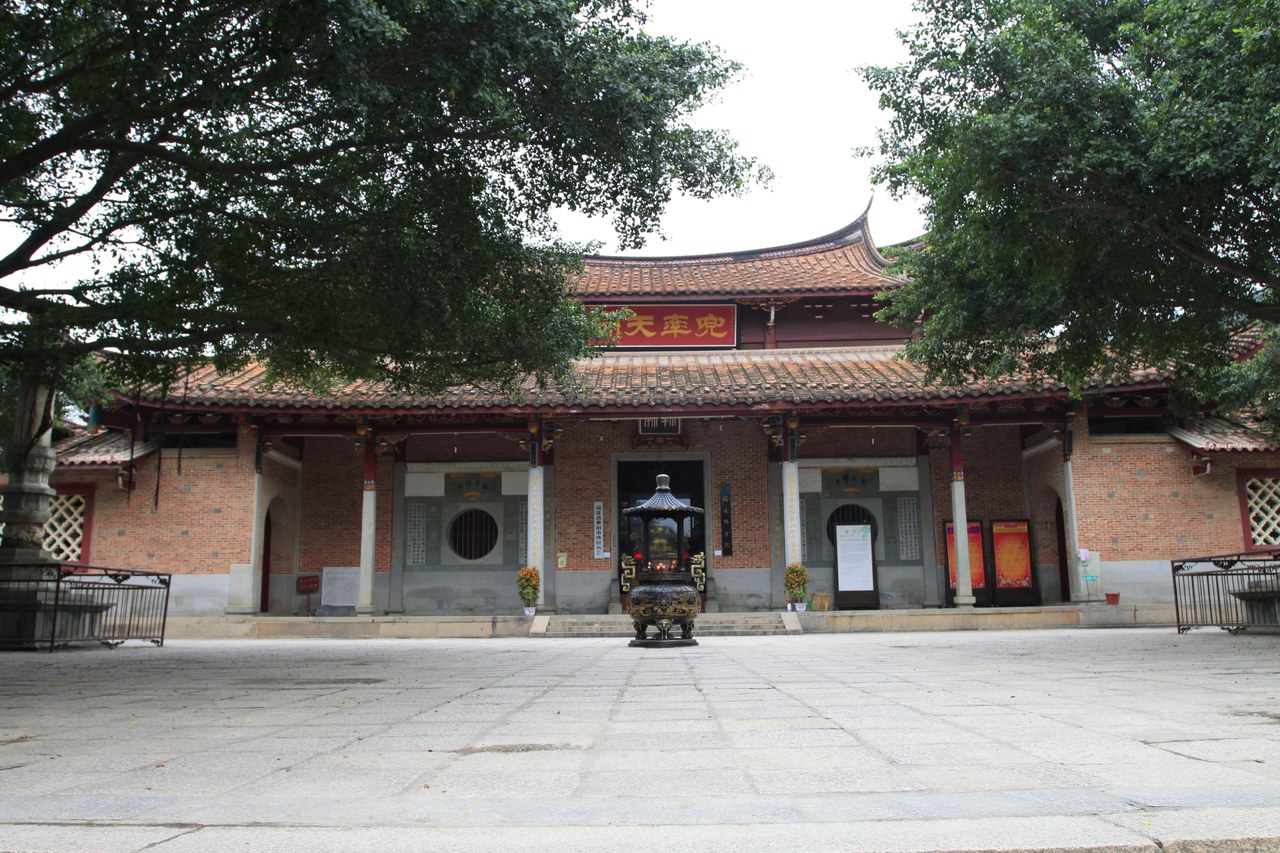
Nanshan Guanghua Temple, Putian, photographed in March 2012. Historical image; current access follows temple notices.Photo: Zhangzhugang · CC BY-SA 4.0 · Image credits
Buddhist courtyards and detailed historic stonework · Southwest of the central old-city streets, Chengxiang District
1–1½ hours · Follow the temple’s posted access arrangements. No paid ritual, incense purchase or guided package is required by this suggested architectural visit.
A living pilgrimage complex, sea views and a distinct island day · Off the mainland coast; reached through Wenjia passenger pier
One full day from a central Putian hotel · Published full adult island package: ¥125, consisting of ¥60 return ferry and ¥65 island admission. Optional shows and other paid products are separate.
The city and the island belong on different days
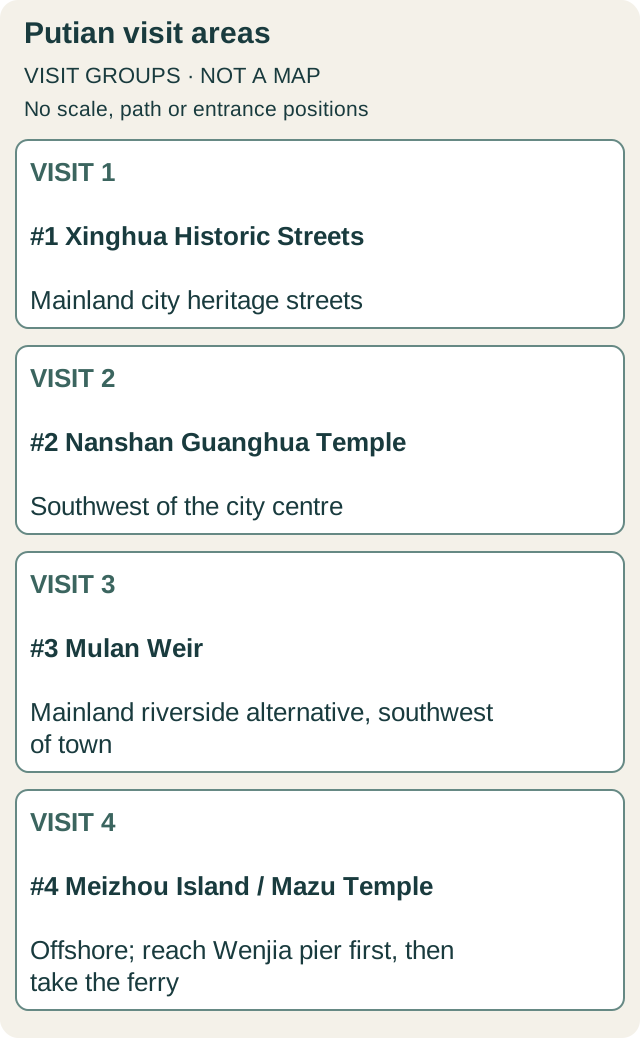
Open full-size map ↗. Not to scale or for navigation. The first three stops are mainland choices; Meizhou Island requires a road transfer and ferry in both directions. Groups show visit relationships, not walking paths or checked bus routes. This is an editorial relationship diagram, not a navigation map; box position does not encode distance or an entrance. ChinaMile diagram; location sources. Navigation: search the Chinese name in Amap.
City day: combine Guanghua’s public areas with Xinghua’s lanes and a local meal. Mulan Weir is the alternative for people more interested in water engineering than another temple visit. These are road-linked stops, not a single pedestrian precinct.
Island day: the ferry is an essential connection, not an optional sightseeing cruise. Decide on Meizhou before booking a tight onward journey. If wind or a sailing suspension makes the island impractical, retain the city stay; do not substitute an unofficial boat.
Use the old city as a practical mainland base
Near Wenxian Road and the Xinghua streets: the default for an evening walk, meals and the city-day route. Pick a property on a vehicle-accessible street rather than assuming a lane address allows taxi drop-off.
Near Putian railway station: choose this for a very early train or a simple transit night. It is a different base from the old city, and “near the station” does not mean “near Meizhou”.
On Meizhou Island: choose an island night only if you want a slower pilgrimage or coastal stay. Keep a mainland night before an important onward departure because sailings can stop. This guide’s default budget and schedule use three mainland nights. Check the exact address, room cancellation terms and passport check-in with your chosen hotel before paying.
Noodles for lunch, a shared Putian dinner
Try 莆田卤面 Putian lu mian, noodles cooked with a substantial broth and mixed ingredients, as the city-day lunch. 兴化米粉 Xinghua rice noodles give a different texture; choose one noodle dish rather than ordering both as full mains for two people.
For dinner, share 焖豆腐 braised tofu, one meat or fish dish and a vegetable. Tofu and noodle broths may contain seafood or meat: ask specifically about ingredients if these matter to you. In the old streets, 海蛎饼 oyster fritters are a small stop rather than a reason to replace a whole meal with fried snacks.
Eat lunch near the northern island settlement on the Meizhou day so you can return to the pier without another long detour. For seafood sold by weight, agree the unit, weight and cooking charge before ordering. No named restaurant or current menu price has been tested for this guide.
Use the lanes around 县巷, 后街 and 坊巷 for an introduction to Putian. Look for brick-and-timber fronts and the way the narrow streets connect; craft displays and food businesses share an area that still belongs to an ordinary working city. Expect restoration and modern retail as well as older fabric.
Use 古谯楼, the old drum tower on Wenxian Road, as an orientation point. Continue toward 元妙观三清殿 if historic timber architecture interests you, entering only where the site is open. The main street walk remains worthwhile without buying a show or promising access to every building.
Hours
Use daylight for architecture, with an early-evening food stop if convenient. Interior opening times are separate from street access.
Tickets
The suggested route uses the streets. Exhibitions, performances and individual interiors have their own admission.
Time
2–3 hours, plus a meal
Chinese address
莆田市荔城区兴化府历史文化街区;古谯楼
Getting there
Take a taxi to 古谯楼 on 文献路, then explore the lanes on foot. Save a road-side pickup point outside the narrowest streets.
How to visit
Begin at the tower exterior, choose two or three connected lanes and stop for food. Wet paving and thresholds make a compact out-and-back better than trying every alley.
2. Nanshan Guanghua Temple · 南山广化寺
Come for a quiet sequence of courtyards, rooflines and stone details. The nearby Shijiawenfo stone pagoda and the temple’s carved stone pillars are particularly useful things to look at, rather than treating the complex as only a place to take one photograph.
This remains a religious site. Stay in the public visitor areas, give worshippers space and ask before photographing an interior or a ceremony. The guide does not promise entry to the pagoda, monastic quarters or any hall that is closed.
Hours
Plan a daytime visit, preferably in the morning. A current fixed visitor timetable was not confirmed from a temple-operated notice; obey the gate notice and service staff.
Tickets
Follow the temple’s posted access arrangements. No paid ritual, incense purchase or guided package is required by this suggested architectural visit.
Time
1–1½ hours
Chinese address
莆田市城厢区南山广化寺;广化路
Getting there
Use a taxi to 南山广化寺. Return to the same accessible road entrance for the transfer to the old streets; the temple and old city are separate stops.
How to visit
If access is restricted, do not wait for an unannounced reopening. Spend the time at Xinghua instead, or choose the Mulan riverside option in suitable weather.
3. Mulan Weir · 木兰陂
Choose Mulan if you enjoy understanding how a landscape works. The weir made the plain more usable by managing fresh water and tidal influence. Its interest lies in the relationship between the stone structure, river and surrounding land, not in a long list of indoor displays.
Use it as an alternative city-day stop, not an extra destination to squeeze between the temple and a ferry. Stay on designated visitor paths: the water-control structure is not a place to improvise a crossing or descend to the channel for photographs.
Hours
Visit in daylight and skip the riverside during flood warnings, heavy rain or a local closure.
Tickets
This plan is an exterior riverside visit; it does not depend on a boat, exhibition or other paid activity.
Time
1–1½ hours, excluding road travel
Chinese address
莆田市城厢区木兰陂
Getting there
Arrange a road transfer to 木兰陂 and the return to your central hotel. Confirm the driver’s pickup position before walking away.
How to visit
Make a short riverside out-and-back, then return to town for lunch or dinner. If the accessible section is closed, keep the old-city meal and walk instead.
4. Meizhou Island and the Mazu Ancestral Temple · 湄洲岛 · 湄洲妈祖祖庙
The Mazu temple is the reason to choose this island over another stretch of coast. Follow the succession of gates and halls, observe the pilgrimage activity and compare the older west-axis arrangement with the large south-axis complex. Much of what stands today was reconstructed from the 1980s onward; the significance lies in the continuing faith as well as the architecture.
Allow about 2–3 hours around the temple and its hill, adjusting for steps, heat and crowds. Have lunch in the northern island settlement and keep any coastal walk modest. A full circuit of distant beaches is unnecessary on a first mainland-based day.
Hours
The temple publishes hall hours of 06:00–17:30 from 16 April to 15 October and 05:30–17:00 from 16 October to 15 April. Grounds may remain accessible when halls close; do not confuse this with a guaranteed ferry home.
Tickets
Published full adult island package: ¥125, consisting of ¥60 return ferry and ¥65 island admission. Optional shows and other paid products are separate.
Time
One full day from a central Putian hotel
Chinese address
文甲客运码头 → 湄洲岛客运码头;湄洲妈祖祖庙
Getting there
Travel by road to 文甲客运码头, take the passenger ferry, then use the signed approach or a confirmed local ride to 湄洲妈祖祖庙 in the island’s north. Return through the same passenger pier.
How to visit
Use the official 湄洲岛轮渡 purchase service and carry the original identity document used for booking. If the form cannot accept your passport, call +86 594 5997664 before committing to the mainland transfer; ask for the supported document and purchase procedure. Do not enter a fabricated Chinese ID.
A city day and a weather-dependent island day
Arrival evening · night 1: check in centrally, eat nearby and confirm the island purchase and return sailing arrangements.
First full day · night 2: allow the morning for Guanghua’s accessible visitor areas, then transfer to Xinghua for lunch, the lanes and the drum-tower exterior. Put Mulan in place of the temple if that better fits your interests and river conditions. Finish with a shared local dinner.
Second full day · night 3: leave the hotel after an early breakfast for Wenjia. Visit the Mazu temple before lunch, take a short island walk afterward and aim to be back at the island pier by mid-afternoon. Treat that as an editorial buffer, not a boat reservation. Return to your mainland hotel for dinner.
Departure morning: collect bags and take a confirmed transfer to the station on your ticket. In poor sea conditions swap the two sightseeing days if that still leaves a mainland night; otherwise omit the island. For one full day and two nights, keep only the city day.
Keep the train, road transfer and ferry as three bookings
Use 12306 to search Putian 莆田 for your actual origin and date. Do not substitute 涵江 or 仙游 simply because they also appear within the wider city area. Show the exact Chinese hotel address to the taxi driver.
For Meizhou, reserve the mainland ride as hotel → 文甲客运码头 → hotel, with a pickup procedure that can change if sailings change. Do not assume the urban hotel transfer or the ferry ticket includes this road journey.
The official ferry service page lists the regular daytime last departure from Meizhou as 17:40, with separate night services. Choose an earlier return and recheck that day’s operation in 湄洲岛轮渡 or 湄洲岛轮渡发布. Weather and dispatch take precedence. Never plan a critical train or flight immediately after the island outing.
Two adults, one shared room, three mainland nights
For the two-full-day plan, use 3R + A + D + ¥990–1,290. R is your actual nightly room quote, A is both station transfers for the pair, and D is the separately quoted hotel–Wenjia return road transfer. The fixed part includes ¥250 for two published full adult island packages, plus editorial allowances of ¥480–640 for meals, ¥140–220 for city and island local rides, and ¥120–180 for drinks and contingency.
With example inputs R = ¥300, A = ¥120 and D = ¥400, the total is ¥2,410–2,710 for two adults. The room and vehicle numbers are assumptions, not quotes. Exclude intercity fares, shopping, paid shows and a private guide; add the actual tariff of any extra paid interior you choose.
For the city-only one-day/two-night version, use 2R + A + ¥430–620: meals ¥260–360, local rides ¥90–140 and contingency ¥80–120. At the same R and A that is ¥1,150–1,340 for the pair. There is no island package or Wenjia transfer in that version.
Published rules and editorial choices
Sources were read on . The temple operator supplies the island package, ferry service entry and hall hours; government heritage sources establish the urban places and their character. Seasonal hall hours are recurring rules, not a one-off festival programme.
Visit durations, the mid-afternoon return target, area choices and meal allowances are editorial planning estimates. Passport booking, hotels, local rides and meals have not been field-tested. Guanghua’s current fixed visitor hours were not confirmed, so that urban stop has a practical replacement. Obtain operator confirmation if the island form cannot process your document before paying for its road transfer.