Jiangmen A compact introduction to the hometowns behind generations of overseas journeys, with time for old streets and Cantonese meals.
Jiangmen is rewarding when you look at the relationship between a street and the world beyond it. The covered shopfronts of Changdi, the mixed architectural details of Qimingli and the passports and family correspondence in the Overseas Chinese Museum tell connected stories of trade, migration and money sent home. Choose it for architecture at walking pace and local meals, especially as a quieter addition to a Guangdong trip.
One full day and two nights is enough for the central-city route below. Stay in Pengjiang, start with the museum and give the old streets the afternoon and early evening. This is a city stay: Jiangmen also administers a much larger region. If the rural watchtowers of Kaiping are your main reason to travel, give that separate excursion its own transport and accommodation plan; do not expect to find them in this walking circuit.
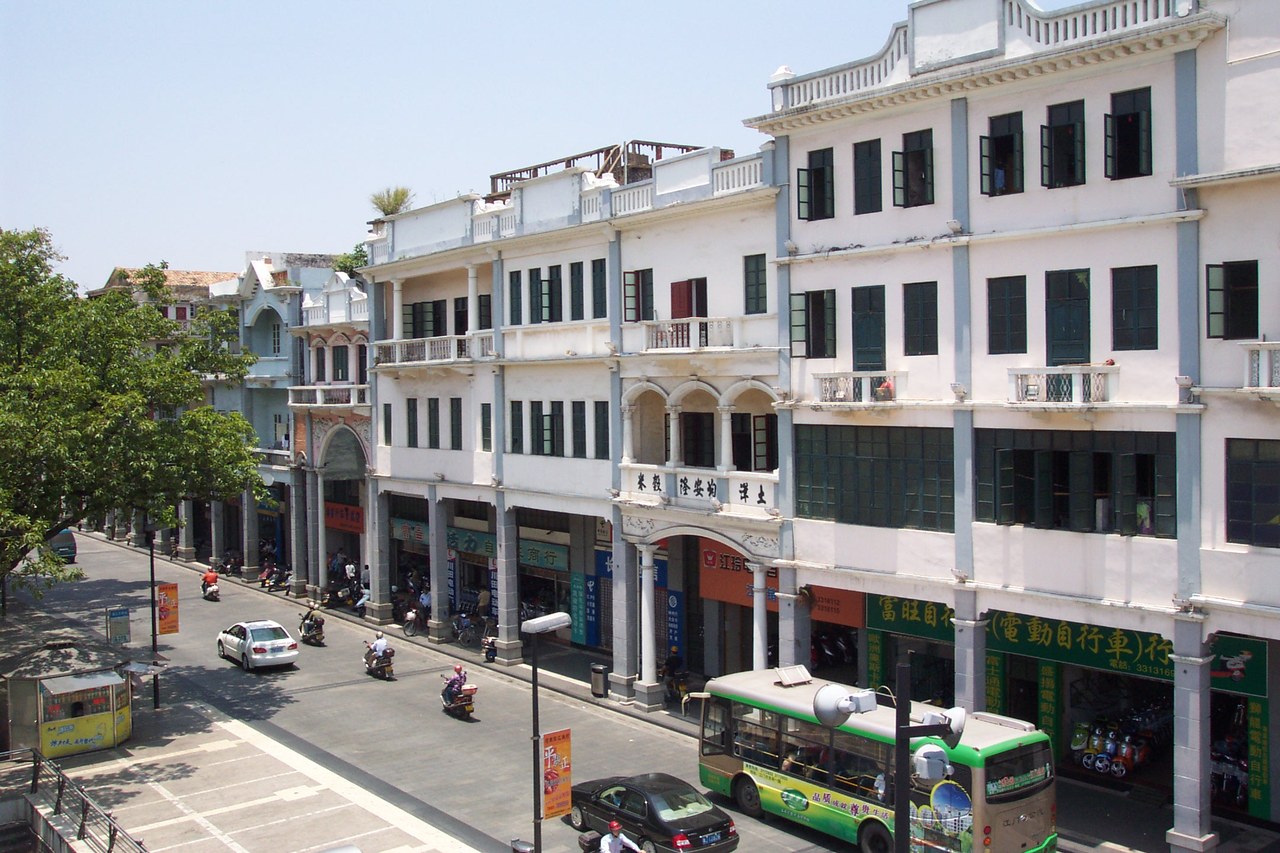
Changdi Road’s arcade buildings, photographed on 14 May 2006. An archival view; shopfronts and street arrangements have changed.Photo: 长夜无风 · CC BY-SA 3.0 · Image credits
The journeys, work and family connections behind the region’s emigrant heritage · Wuyi Overseas Chinese Square, away from the old-street walking group
2 hours · Free general exhibition visit; individual visitors do not need advance reservation under the published museum policy. Groups and guided services have separate arrangements.
One old-city walk and one separate museum stop
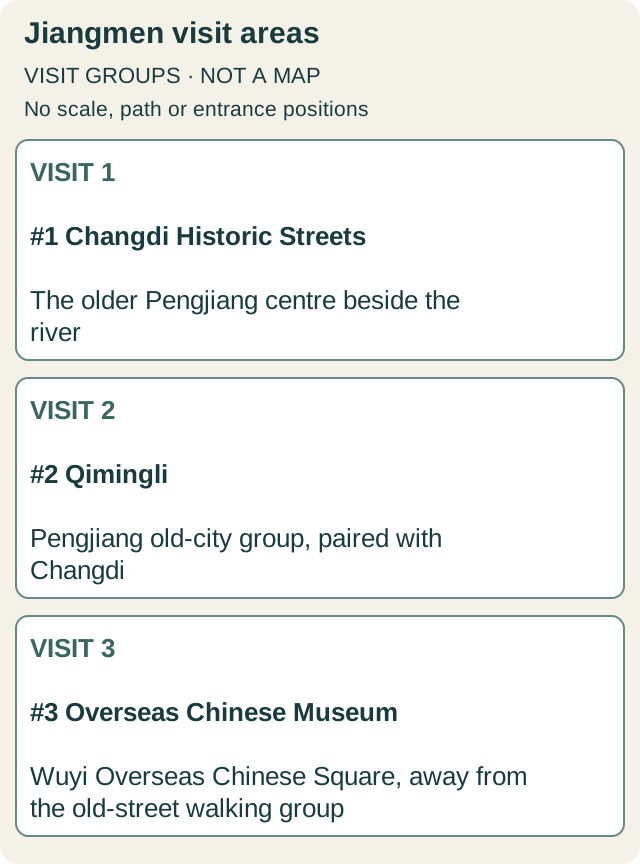
Open full-size map ↗. Changdi and Qimingli form the old-city pair. The museum is a separate road transfer. Not to scale; group layout does not show navigation or checked bus routes. This is an editorial relationship diagram, not a navigation map; box position does not encode distance or an entrance. ChinaMile diagram; location sources. Navigation: search the Chinese name in Amap.
Changdi and Qimingli belong together for the afternoon. The Overseas Chinese Museum is a separate road transfer and is best done first, when its ordinary hours are least likely to cut the visit short. The numbered places below match the diagram.
Choose Guangzhou instead if this is your only Guangdong stop and you want a wider range of major museums and metropolitan sights. Choose Jiangmen when old commercial streets and the overseas-Chinese story are the point. Do not add a rural Kaiping excursion to this full city day.
Three connected ways to read Jiangmen
1. Changdi Historic Streets · 长堤历史文化街区 · 三十三墟街
Look up beneath the arcades: columns, balconies and narrow upper-storey fronts explain how commerce and living space shared the same buildings. The pleasure is in the ordinary street scene as well as the restored facades. Choose a short section you can enjoy slowly rather than trying to photograph every block.
Use 三十三墟街 as the old-town starting point, then continue toward the Changdi shopfronts. The stepped lane adds a different scale from the broad frontage. Shops, traffic and restoration are part of the contemporary district; the archival photograph shows its architectural character, not a promise that every business still exists.
Hours
Daylight is best for architecture. Individual shops and exhibitions keep their own hours; do not rely on an evening interior visit.
Tickets
The plan follows public streets; purchases and individual interiors are separate.
Time
2 hours, longer with lunch
Chinese address
江门市蓬江区三十三墟街;长堤历史文化街区
Getting there
Take a taxi to 三十三墟街, then explore on foot. Save a vehicle-accessible meeting point outside the narrow lanes.
How to visit
Walk a manageable section, stop for lunch, and continue to Qimingli. Skip the stepped part if stairs are difficult; the street-level facades still make a worthwhile visit.
2. Qimingli · 启明里
Qimingli feels smaller and more intimate than the Changdi frontage. Its houses combine local building traditions with details brought into an emigrant community, and the revitalised lanes give you a closer look at doors, rooflines and courtyard fronts.
Come after the museum if you want the neighbourhood to mean more than a photo backdrop. Cafes and visitor businesses are part of its present identity; choose one stop and leave time to look at the architecture. Do not enter a dwelling merely because its door is open.
Hours
Use daylight or early evening. The guide does not promise a daily light show or any particular shop opening.
Tickets
The route is through the public visitor lanes; shop purchases and private interiors are separate.
Time
1–1½ hours, plus a drink or snack
Chinese address
江门市蓬江区启明里
Getting there
Walk from the Changdi old-city area when conditions suit, following current pedestrian directions to 启明里; take a local taxi if heat or mobility makes the walk unattractive.
How to visit
Explore the lanes, pause for a drink, then return to the saved pickup point or your nearby hotel. In heavy rain, shorten the lane walk and give the museum more time.
3. Overseas Chinese Museum · 中国侨都华侨华人博物馆
The collection gives Jiangmen its larger context: travel documents and remittance correspondence connect the region to overseas working lives and the families who remained. The permanent exhibition includes migration, livelihoods abroad and exchanges with China. Choose this as the main indoor visit, rather than adding several small interiors with similar themes.
Allow enough time to read a few objects closely. A short visit is more useful when you follow one family or journey through the displays than when you rush every room. Interpretation and any guided service may vary; this plan does not depend on an English tour being available.
Hours
Regular hours: Tuesday–Sunday 09:00–17:00, last entry 16:30; closed Monday. Holiday arrangements can override the ordinary week, so check the latest museum notice.
Tickets
Free general exhibition visit; individual visitors do not need advance reservation under the published museum policy. Groups and guided services have separate arrangements.
Time
2 hours
Chinese address
江门市蓬江区发展大道五邑华侨广场;中国侨都华侨华人博物馆
Getting there
Take a taxi or current bus route to the full museum name at 五邑华侨广场. It is a separate road transfer from Changdi, not the museum branch in the old street.
How to visit
Carry your passport for any entry checks. The no-reservation notice does not specify a foreign-passport registration workflow: if staff or a form cannot handle your document, call 0750-3936219 for the museum’s instruction before making a special trip. Capacity controls can still apply; if closed, keep the Changdi–Qimingli walk and move the museum to an open morning.
A simple Cantonese meal with a local accent
Near the old streets, have a modest lunch before the longer afternoon walk. For dinner, look for 豆豉炒凉瓜, bitter melon stir-fried with fermented black beans; Jiangmen’s Du Ruan variety is a local speciality. Its pleasantly bitter flavour is the point, so order a small shared portion if it is new to you. 新会陈皮, dried Xinhui citrus peel, appears in drinks and cooking; ask whether a tea or dessert contains added sugar.
For two adults, order one fish or meat dish, one vegetable dish and rice, then add a small soup or snack if still hungry. A seafood display is not a fixed-price menu: establish the weight unit, cooking charge and total before agreeing. Dish names do not prove a vegetarian stock or allergy-safe preparation.
Eat near your hotel after Qimingli instead of crossing the region for a named restaurant. This guide recommends dishes and meal locations, not a checked restaurant reservation or set-menu price.
Base yourself in Pengjiang
Near Changdi or Qimingli: best for this short stay if you value stepping out to old streets and dinner. Select a hotel on a road reachable by car, with a lift if needed; an atmospheric lane can mean a luggage carry and evening noise.
Around Wuyi Overseas Chinese Square: convenient for a museum-first morning and modern services, but requires a ride to the old streets. It suits travellers who prefer a modern hotel base over staying inside a historic district.
Near Jiangmen station: choose only for a very early train. A station hotel is not automatically near the old-city walking area. Before payment, confirm the property’s exact address, room type, cancellation terms and arrangements for checking in with your passport.
Keep one full day free of intercity travel
Arrival evening · night 1: check in in Pengjiang and eat nearby. Save the museum address and check that the full sightseeing day is an open day.
Morning: breakfast, transfer to the Overseas Chinese Museum for roughly 09:30–11:30, then travel to the old city. These are planning times, not a booked entry slot. Have lunch before walking Changdi.
Afternoon and evening · night 2: explore Changdi and 三十三墟街, take a break, then continue to Qimingli. Finish with dinner near your hotel. If heat is intense, shorten the street section and resume when conditions are comfortable.
Departure morning: collect bags and go to the exact station on the ticket. If Monday is the only full day, try the museum on an open arrival afternoon only when travel leaves adequate time; otherwise use the street-and-food version and accept that the museum is omitted. With two full days, split museum and old streets across them rather than adding distant places by default.
Jiangmen and Jiangmen East are different stations
Compare Jiangmen 江门 and Jiangmen East 江门东 on 12306 for your actual origin and date. Select a sensible arrival, then price the hotel transfer; do not choose a train only because its station contains the city name. Keep the same exact Chinese station name when arranging the return.
With luggage, use the signed taxi queue or an app pickup whose driver and plate match the booking. Show the hotel’s Chinese address. City buses can work for light luggage, but this guide has not checked a current bus timetable or last departure; use live directions to the precise stop and entrance.
For the museum-to-old-city transfer, save 三十三墟街. For the return from Qimingli, choose a road-accessible pickup rather than a doorway deep in the lane. Ask the hotel to arrange a licensed taxi if mobile booking fails. Leave the departure morning for the station transfer, security and boarding, with the buffer your train and road conditions require.
Two nights, one room and one full sightseeing day
For two adults sharing one room, one full day and two nights, use 2R + A + ¥540–800. R is the actual nightly room quote and A is the pair’s arrival-plus-departure ground transfers. The allowance is ¥360–500 for meals from arrival dinner through departure breakfast, ¥100–160 for local sightseeing rides and ¥80–140 for drinks and contingency. These are editorial planning inputs, not menu or taxi quotes.
Worked example: R = ¥300 and A = ¥100 gives ¥1,240–1,500 for the pair. The core plan uses public lanes and the free museum exhibition. Add the actual cost of any paid workshop, special product or other interior you choose; unknown extras are not included as zero.
Exclude intercity trains or flights, shopping, private guides and any Kaiping excursion. A second full day and third night adds one actual room night plus your selected meals and travel; price that extension separately rather than treating it as part of this total.
Verified operations and editorial choices
Sources were read on . Museum hours and ordinary individual admission follow the museum’s published notices; short summer extensions and temporary activities are not treated as permanent rules. The cultural authority documents the street areas and museum collection.
Visit lengths, walking order, lodging areas and spending allowances are editorial recommendations. Room availability, rail inventory, current restaurant menus and foreign-passport entry handling were not field-tested. The museum’s service number and the old-street alternative give you a usable next step if entry cannot be arranged.