Hunan · A river city and a separate sacred-mountain stay
Hengyang Use two bases if you want both the city and Hengshan; keep the mountain day clear of a tight onward train.
Hengyang has two different reasons to visit. In the city, the Xiang River, Shigu Academy and Huiyan Peak connect landscape, literary history and everyday food. Farther north, Nanyue town and Mount Hengshan offer the Grand Temple, wooded slopes and the climb towards Zhurong Peak. They should not be treated as one compact sightseeing district.
For a first trip covering both, spend the city nights in Hengyang and the mountain nights in Nanyue. If the sacred mountain is the whole reason for coming, go directly to a Nanyue base and compare trains to Hengshan West (衡山西). This guide uses a daytime mountain plan with scenic transport and a night back at the foot, leaving room for weather and the last bus down.
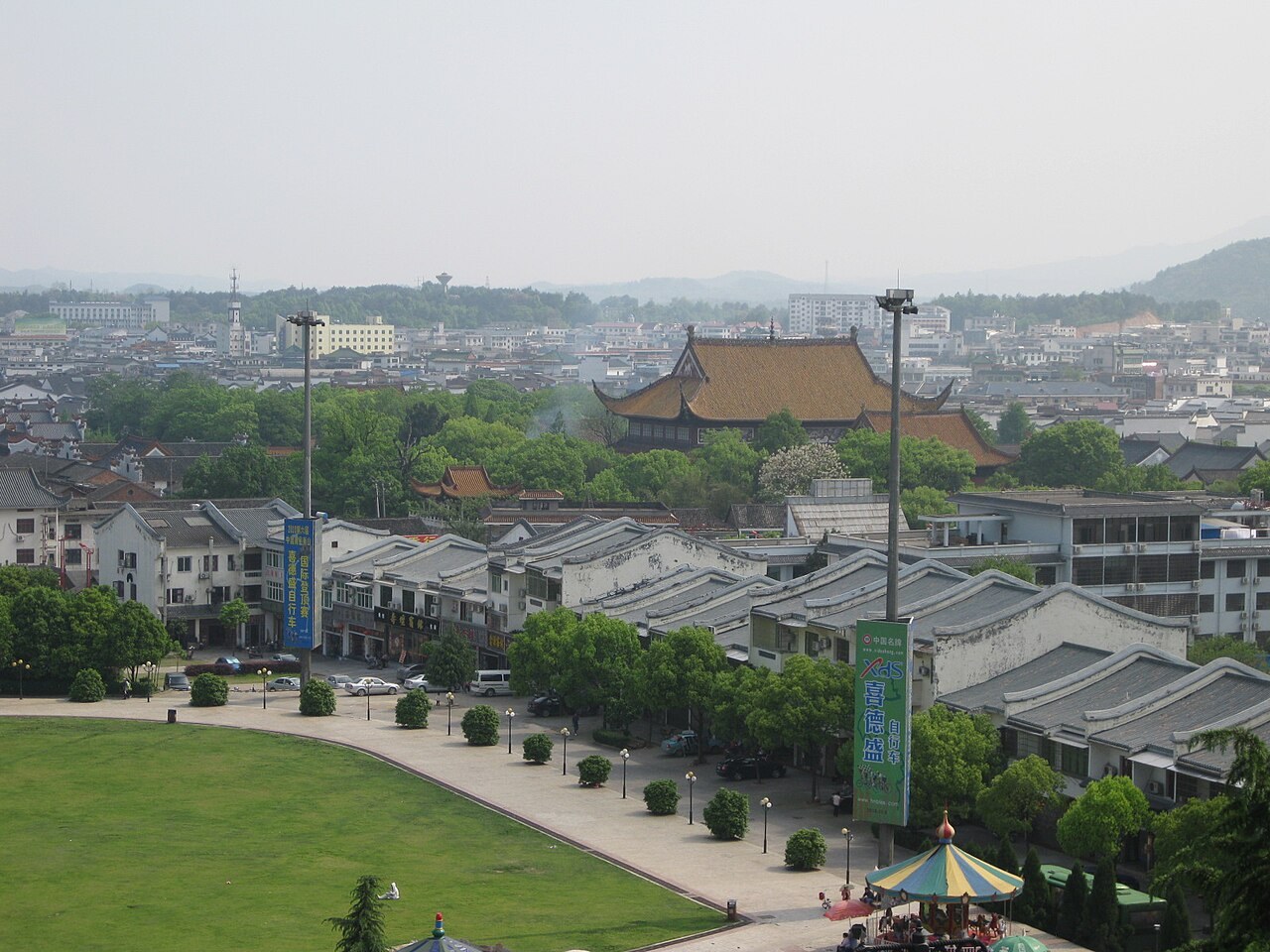
Nanyue town and the Grand Temple in April 2011. This historical overview shows the foot-of-mountain setting; present buildings, roads and access may differ.Photo: 圍棋一級 · CC BY-SA 3.0 · Image credits
Ride to Zushi Hall, walk through Nantianmen towards Zhurong Peak, and return to the same bus station. · Mountain above Nanyue town
One full day, sleeping back in Nanyue · Adult mountain guidance price ¥110; scenic transport separate
Hengyang city and Nanyue need different bases
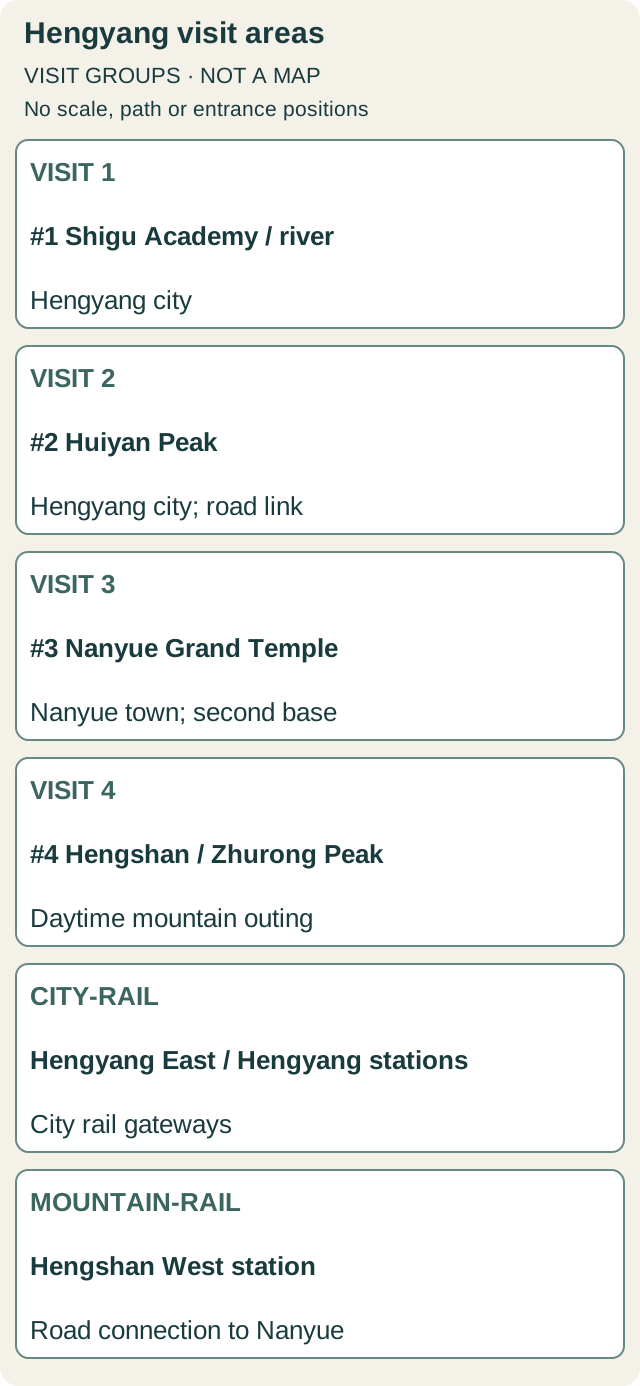
Open full-size map ↗. Hengyang city. Hengyang city; road link. Nanyue town; second base. Daytime mountain outing. City rail gateways. Road connection to Nanyue. This is an editorial relationship diagram, not a navigation map; box position does not encode distance or an entrance. ChinaMile diagram; location sources. Navigation: search the Chinese name in Amap.
For both experiences: allow three full days and four nights, with two city nights followed by two in Nanyue. The city day combines Shigu Academy’s river setting, lunch and Huiyan Peak; a separate transfer/temple day takes you north; the final full day belongs to the mountain. This is the least rushed version for a visitor arriving in the evening.
For the mountain alone: stay three nights in Nanyue for two full days, using one for the Grand Temple and town, one for Hengshan. Swap them if weather or bus availability makes the other order better. For only Hengyang city: one full day and two nights is a reasonable short stop; do not advertise that as having visited the mountain as well.
Dry, mild weather helps both routes. Summer heat makes a long city walk less comfortable, while mountain mist, heavy rain or icy conditions can change access. Snow and a sunrise are not guaranteed experiences. If the mountain closes, the lower-town temple may have a different operating decision: check it independently rather than assuming either both are open or both are shut.
Three full days, four nights and a planned descent
Arrival · city night 1: transfer to your central Hengyang hotel and have a simple meal. Keep the first sightseeing day intact.
Full day 1 · city night 2: Shigu Academy and the river setting in the morning; lunch and a rest; Huiyan Peak or the open park in the afternoon; dinner in the central city. If an interior is closed, use its public approach and keep the second half of the route.
Full day 2 · Nanyue night 1: take a confirmed road transfer north, leave luggage at the Nanyue hotel and visit the Grand Temple within its confirmed opening. Use the remaining time for the town, an early dinner and checking the next day’s ticket, scenic-bus slot and document procedure.
Full day 3 · Nanyue night 2: start with the reserved mountain entry and bus to Zushi Hall. Walk to Nantianmen, then follow the open main-road approach towards Shangfeng Temple and Zhurong Peak. Use the shorter Nantianmen return if conditions or energy deteriorate. Retrace the upper route to the Zushi Hall down-bus queue and sleep back in Nanyue.
Departure: reach 衡山西站 or whichever station your ticket actually names by a pre-arranged road connection. The mountain summit is not your starting point for this departure.
Weather alternative: swap the temple and mountain blocks where the hotel and transport bookings permit. If the mountain remains closed, keep the Grand Temple and town only if independently open, then shorten the Nanyue stay or return to the city. Do not fill the gap with an unofficial trail. If your time is tighter, choose either a city day or the Nanyue stay rather than treating a long transfer as invisible sightseeing time.
Book the place name, not just the city label
Central Hengyang, Shigu/Yanfeng side: useful for the river, city sights and meals. Choose a road-accessible hotel around the central commercial area; check the map against 石鼓书院 and 回雁峰 instead of assuming all city hotels are equally convenient.
Nanyue town, near the Grand Temple or visitor-centre approaches: the practical base for the mountain. Check the walking route to the actual morning entrance, whether luggage can remain at the hotel, and street noise during pilgrimage periods.
Hengyang East or Hengshan West station hotels: useful for a specific early departure, but neither replaces a town base for a relaxed evening and easy morning. Confirm which station before booking.
Mountain lodging: only choose it after confirming entry, operating access and the property’s return arrangements. It is not part of this guide’s daytime default, and a room booking does not override a night-closure notice.
After choosing the area, use Trip.com hotel search with Hengyang or Nanyue, your dates, two adults and one room, then check the exact address near 衡阳市区 for the city nights, 南岳区 for the mountain nights. Confirm the property can complete check-in with your original foreign passport, the cancellation terms and the vehicle entrance. See the foreign-passport hotel check-in guide if the property gives conflicting instructions.
Fish noodles in the city, a simple meal before the mountain
Hengyang fish noodles (衡阳鱼粉) make a distinctive breakfast: rice noodles with fish and broth. Ask about chilli and be prepared for fish bones. Other rice-noodle options include meat toppings; a noodle bowl is not automatically vegetarian because the noodles themselves are made of rice.
Hengdong local dishes (衡东土菜) offer a useful shared dinner style. For two, start with a meat or fish dish, a vegetable and rice, checking chilli and portion size. Tutouwan (土头碗) is a substantial layered dish better suited to a group or a deliberately shared meal than an extra snack. Shigu flaky mooncakes (石鼓酥薄月饼) are a more portable local taste.
In Nanyue, look for vegetarian cooking (南岳素菜) if that suits you, but still clarify broth, egg, dairy and cross-contact needs. Before the mountain day, have breakfast near the hotel and take water and a snack. A relaxed meal back in town is easier than planning a late train around a summit lunch and an uncertain descent.
Price the two bases and the mountain separately
For two adults sharing one room, four nights and three full days, use 2C + 2N + F + T + ¥336 + B + X. C and N are the nightly city and Nanyue room rates; F covers food from arrival dinner to departure breakfast; T covers station/city rides, the Hengyang-to-Nanyue transfer and the final station journey. ¥336 is two mountain admissions at ¥110 plus two Grand Temple admissions at ¥58. B is the actual total scenic-bus cost for both adults; X covers optional city interiors or services.
Editable planning example: C = N = ¥300, F = ¥600–850, T = ¥250–450, provisional B = ¥160, and X = ¥0–100. Total: ¥2,546–3,096 for two, calculated as ¥1,200 + ¥600–850 + ¥250–450 + ¥336 + ¥160 + ¥0–100. The B input is a transport allowance, not a current operator tariff; replace it with your selected return product, as well as the actual room and road quotes.
Intercity travel, flights, airport transfers, guides, incense purchases and mountain lodging are excluded. For a Nanyue-only visit, remove the two city nights and city-day costs, then add the one extra Nanyue night needed for the three-night/two-full-day version. A private car quote covering the whole road journey should not be added again as individual taxi legs.
City experiences, temple and mountain
1. Shigu Academy and the river setting · 石鼓书院 · 石鼓山
Shigu Academy occupies a striking river-side setting associated with a long tradition of teaching and scholarship. Its value is the combination of the site, its historical associations and the surrounding water, rather than a claim that all visible buildings have survived unchanged since the academy’s foundation.
Begin with the open approach and look at how the river shapes the city. Enter the academy when its current opening and document procedure are confirmed, allowing time for the interpretation rather than treating the visit as a quick gate photo. If the interior is closed, retain the public river view and continue the city route; do not make an unverified indoor opening the sole reason for the day.
Hours
Choose a daylight morning; check the academy’s current interior opening at the entrance or through your hotel before travel.
Tickets
This guide has not verified a current foreign-passport ticketing procedure or interior fee. Confirm before paying for an entry product.
Time
2–3 hours with the open riverside approach
Chinese address
湖南省衡阳市石鼓区石鼓书院、石鼓山
Getting there
Use a taxi or current city bus to 石鼓书院. Walk only the open riverside approaches; arrange the next city transfer from an accessible road.
How to visit
Pair it with a seated lunch and an afternoon Huiyan Peak visit. The two sites form a city day using a road transfer, not an assumed continuous short walk.
2. Huiyan Peak and the central city · 回雁峰 · 雁峰公园
Huiyan Peak explains why geese appear so often in Hengyang’s names and imagery. The urban park and hill make a lighter afternoon counterpart to Shigu Academy. This is a city-scale visit, not the high-mountain Zhurong Peak outing, despite the shared Hengshan cultural geography.
Use the open paths that fit your energy, then return to a central dining area such as the Zhongshan Road/Shifu Road district. Optional amusements and shows are separate purchases; the core city plan does not depend on a wheel operating or a special evening event taking place.
Hours
Visit in daylight; individual religious interiors, attractions and businesses set separate hours.
Tickets
Check posted charges before entering an optional venue. No bundled city ticket is required for the basic public-space plan.
Time
1–2 hours, longer with a neighbourhood meal
Chinese address
导航:回雁峰、雁峰公园,衡阳市雁峰区
Getting there
Take a city taxi/bus from the Shigu area or hotel, then walk the open paths. Return by road if the heat or stairs make a longer walk unattractive.
How to visit
Choose a short loop rather than forcing every staircase. During heavy rain, replace the exposed hill time with a longer meal and a short central street walk.
3. Nanyue Grand Temple · 南岳大庙
The Grand Temple is a major experience in its own right, with courtyards, rooflines and active religious spaces. Its Buddhist and Taoist elements make it more than a waiting area before the mountain. Walk the central sequence slowly and look into open side courtyards without disturbing worshippers.
Visit from a Nanyue hotel so that luggage and the road transfer from Hengyang do not consume your visiting window. Incense, offerings, guides and photography packages are optional purchases rather than a condition of appreciating the site. Follow the posted photography rules inside halls and avoid standing in the way of worship.
Hours
Plan a morning or early-afternoon visit; confirm the regular day’s opening through 南岳一码游 or the local service desk. Special pilgrimage-day hours are not used as the everyday schedule.
Tickets
The regulator sets a unified adult guidance price of ¥58. The older off-season ¥40 tariff has been replaced. This is a separate admission from the ¥110 mountain ticket.
Time
2–3 hours, plus time in the surrounding town
Chinese address
湖南省衡阳市南岳区南岳大庙
Getting there
Walk or take a short local ride from a Nanyue-town hotel. From Hengyang city, first make a separate inter-district road journey; do not navigate only to a generic “Hengyang” hotel.
How to visit
Carry the original passport and confirm staffed ticket handling if the mini-program’s identity fields do not work. Tourist service contact: 0734-12345. Leave the mountain for the next full day.
4. Mount Hengshan and the Zhurong Peak approach · 南岳衡山中心景区 · 祝融峰
Choose the mountain for its wooded slopes, pilgrimage landscape and the stone summit shrine of Zhurong Peak. A clear panorama is a bonus: mist can hide the view. The bus takes out much of the ascent, but the summit still involves uphill walking and steps. Keep this as the main event of the day.
The default upper route is a return walk from Zushi Hall station (祖师殿站场). The published low-effort approach takes the scenic bus here; Nantianmen is a walking landmark above the station, not a promise that your bus stops at the peak.
Zushi Hall → Nantianmen (南天门): leave through the passenger walking exit and head uphill to the stone arch. Pause for the gate and the sense of entering the upper mountain. Note the signed down-bus queue towards 祖师殿 before continuing.
Nantianmen → Shangfeng Temple approach (上封寺): keep to the open main-road route towards the upper temple and peak. Do not take the Nantianmen arch–Shizi Rock (狮子岩) stair shortcut: the checked reopening notice lists it under repair. Skip other closed side trails, including the Xiangnan Temple–Zushi Hall path.
Shangfeng Temple approach → Zhurong Peak (祝融峰): continue on the open summit approach to the final steps and the stone Zhurong Hall. The low, substantial temple masonry and the surrounding ridges give the summit its character. A temple interior or a clear distant view is not needed to complete the visit; neither is guaranteed.
Return to Zushi Hall: retrace the open upper approach to Nantianmen, then follow 祖师殿下行乘车处 into the passenger waiting area. This is the bus return point; do not follow an old downhill hiking itinerary to Halfway Pavilion.
Set aside the middle of the day for this walking block, a packed lunch and the return queue. The latest notice and posted barriers override the route if access changes. The shorter choice is Zushi Hall → Nantianmen → Zushi Hall: use it if the upper route is closed, wet steps are unsuitable, or the remaining bus window is too short. If buses cannot reach Zushi Hall, retain the Grand Temple/town day instead of extending the climb from a lower stop. Check the last down-bus before boarding uphill and leave enough time to walk back and queue; the summit is not the boarding point.
Hours
This plan uses daytime entry and a return to Nanyue town. Check the latest operator notice for your date’s opening window, night-access restrictions, open entrances, trail closures and last downward transport.
Tickets
Unified adult mountain admission ¥110; buy/confirm scenic transport separately. Scenic-bus seats require a timed reservation via 南岳一码游 or a staffed ticket window. Bus pre-check guidance explicitly lists passports, but the complete foreign-passport online entry process was not tested.
Time
One full day, sleeping back in Nanyue
Chinese address
导航:南岳衡山游客服务中心(金沙路);按预约票的检票入口前往
Getting there
From the Jinsha Road visitor centre take the reserved scenic bus to Zushi Hall station (祖师殿站场), below Nantianmen. The upper visit continues on foot. Return to 祖师殿下行乘车处 for the bus to town; save this name before walking uphill. Private cars to Nanyue are not mountain transport.
How to visit
Use Zushi Hall → Nantianmen → the open main road towards Shangfeng Temple → Zhurong Peak, then retrace the open upper route to the Zushi Hall down-bus queue. The Nantianmen arch–Shizi Rock stair trail is listed as under repair; it is not this route. If the open summit connection or return bus is suspended, stop at Nantianmen or use the town alternative. Bring the original passport, water, rain protection and shoes for wet steps.
Hengyang East and Hengshan West solve different journeys
Compare the actual date and train on China Railway 12306. 衡阳东站 (Hengyang East) and 衡阳站 (Hengyang) serve city-arrival plans. 衡山西站 (Hengshan West) is the station to compare for a Nanyue-focused trip, followed by road transport to town. These names are easy to confuse in English; save the characters and send them to the hotel.
Hengyang Nanyue Airport (衡阳南岳机场) is an airport gateway, not a terminal at the Grand Temple. Confirm the whole road journey to your chosen city or Nanyue hotel and the timing of any current shuttle. For an evening arrival, the useful destination is your booked hotel.
For the city-to-Nanyue move, ask the hotel for a current intercity bus departure or a licensed car quote, then agree the Nanyue drop-off. A public bus is reasonable when its station, departure, luggage and payment work for you; otherwise choose a complete legal road arrangement. The reverse leg and the final rail-station connection need the same attention.
The mountain’s internal transport is a separate system with a reservation. The default uses Zushi Hall station (祖师殿站场) in both directions; the summit walk and return queue come between the rides. Before boarding uphill, confirm that the bus reaches this station and check the last downward service. Finish at the Nanyue hotel that night. This removes the need to gamble a train booking on summit weather and a queue for the last bus.
Use the official ticket route and retain an easy fallback
The operator identifies 南岳一码游 as its official booking platform and warns against unauthorized “ticket-plus” sellers. Keep the original passport with you. The scenic-bus guidance explicitly accepts passports among valid pre-check documents and provides a staffed-window route; it does not prove that every foreign passport completes every online attraction form. Ask the visitor centre or 0734-12345 to settle your entry and transport together before the mountain morning.
Do not buy incense, a guide or a photography package merely because a seller says it is required for entry. Use the official ticket conditions. At religious sites, follow the posted rules, keep voices low and ask before photographing worshippers. On the mountain, closed trails and a daytime-only notice take precedence over an old hiking blog.
Continue to Changsha for a larger Hunan city, or compare Guilin for a different landscape trip. Confirm the rail station and timetable before deciding which base to leave from.
Updated tariffs and a daytime mountain plan
Sources checked on . Both unified admission tariffs and the mountain reopening notice were read directly. The government’s scenic-bus article was readable as indexed full text; direct access returned an error. Holiday-only temple hours and temporary road restrictions were not generalized into regular rules. Foreign-passport purchases, the exact scenic-bus tariff, academy admission, hotel transactions and road fares remain untested. The itinerary durations and cost inputs are planning judgments.
The upper-route arrangement and closure boundary were reviewed on : the operator’s reopening notice was readable directly; the local newspaper route, government landmark description and station-corridor document were available as indexed text. The stop sequence is an editorial combination of those sources, using the open main road rather than the closed Shizi Rock trail. This additional check does not refresh the other tariffs, document processes or local journeys above.