Baoji Choose Baoji for ancient objects you can study closely, a hillside city view and noodles with a sharp local character.
Baoji is a strong short stop for travellers who enjoyed ancient Chinese history in Xi’an and want to look more closely at bronze objects. The museum is the reason to come; its setting at Shigu Park gives the day fresh air and a view over the modern city. West Shaanxi noodles and ganmianpi add a different kind of local character.
Allow one full day and two nights for the museum, park and nearby Chencang leisure streets. Add a second full day and third night if you want the hill setting and architecture of Jintai Temple. Famen Temple is in Fufeng County, while Taibai Mountain is another separate excursion; neither is a spare-hour addition to central Baoji.
A hillside walk and views around the Shigu Pavilion · Same visit group as the bronze museum
1–2 hours, depending on climbing · The operator lists park admission as free. A specific pavilion interior or additional service may have separate terms.
Hillside Daoist architecture, courtyards and inscribed stone · Northern city hillside in Jintai District; separate from Shigu Park
A half day including local transfers and a meal · Treat current interior admission and any paid activity as separate; verify at the scenic service before visiting.
Keep the first day around Shigu
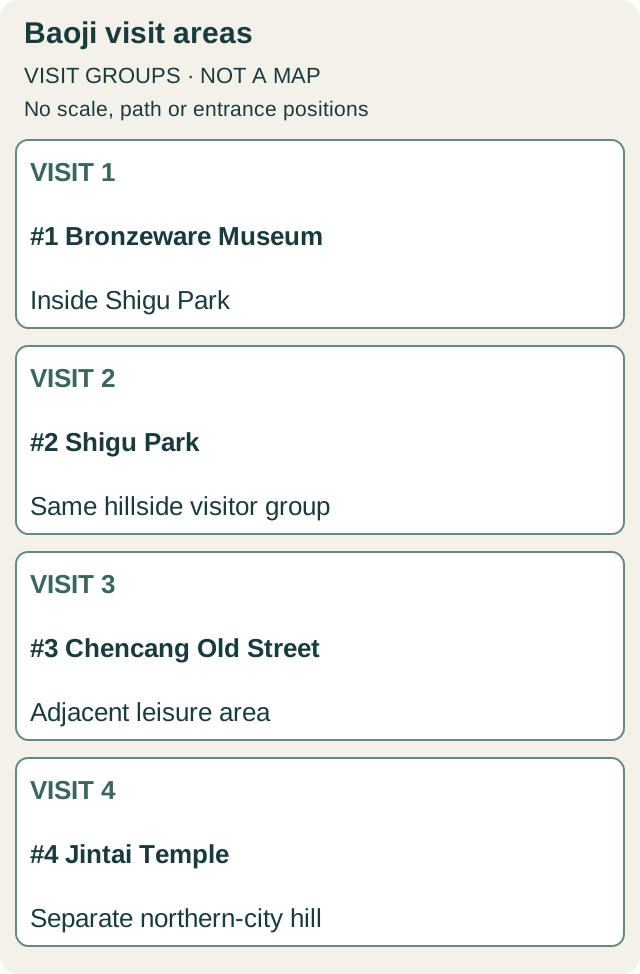
Open full-size map ↗. Not to scale or a navigation map. Museum, park and Chencang form one visit group. Jintai requires a separate transfer; Famen Temple is outside the city itinerary. This is an editorial relationship diagram, not a navigation map; box position does not encode distance or an entrance. ChinaMile diagram; location sources. Navigation: search the Chinese name in Amap.
The bronze museum, Shigu Park and Chencang Old Street form the useful first-day group. Jintai Temple is a separate northern-city outing for an optional second day. Start with the successful museum reservation and build the outdoor part around it.
Famen Temple is in Fufeng County and Taibai Mountain is in the Meixian area. Both need a distinct transport and return plan; this city itinerary does not promise them as easy add-ons. Choose a separate excursion if either is your real reason for coming to Baoji.
One base in Weibin is enough
Weibin with road access to Shigu Park: the practical choice for the museum day and a simple return after dinner. Confirm the actual hotel pin and entrance; “near the museum” can still mean an uphill walk.
Older central Baoji near the main station: useful for a conventional-train arrival and city meals, with a local transfer to Shigu. Baoji South station area suits an early high-speed departure, but is a different base from the older centre.
Choose an area first, then search dates, two adults and one room. Ask the property to confirm passport check-in, luggage storage and taxi access. There is no need to change hotels for the optional Jintai day.
Protect a full morning for the museum
Arrival evening · night 1: check in and have a local meal. Save the reservation confirmation and the museum’s latest opening notice.
Full day · night 2: visit the museum in the morning, then lunch. Walk a comfortable section of Shigu Park in the afternoon and finish at Chencang Old Street for a snack or early dinner. Return to your original hotel.
Departure morning: collect bags and travel to the station printed on your booking. For two full days and three nights, use the extra day for Jintai Temple, a leisurely lunch and time in the city; depart the following morning.
If your stay includes a Monday, move the museum to a confirmed open day. If reservation or passport entry cannot be resolved, do not count the museum as available: change dates if bronze art is your main purpose. On a rainy day, use the confirmed indoor visit and shorten the hillside walks.
Try noodles and ganmianpi in separate meals
岐山臊子面 Qishan saozi mian is the regional noodle choice, typically a sour, spicy broth with small toppings; recipes can include pork. Ask for the available portion size and ingredients. Order less chilli with 少辣 if useful, while recognising that the broth may already be seasoned.
擀面皮 ganmianpi is a cool, chewy wheat preparation, cut into strips and dressed for a snack or light meal. It is a different experience from a bowl of hot noodles, so try it at another meal rather than ordering two full starch-heavy plates at once.
Choose breakfast near the hotel, lunch around the museum group and an easy dinner at Chencang Old Street or back in town. Confirm sauces and stock for dietary restrictions; noodles alone do not establish a vegetarian meal.
A museum-focused stay for two
For one full day and two nights, calculate 2R + A + ¥420–640. R is your actual nightly room quote; A is the pair’s arrival and departure station transfers. The editorial allowance includes ¥260–380 for meals, ¥60–100 for local trips and ¥100–160 for drinks and contingency.
Basic museum and park admission are listed as free. Paid guides, audio services, optional interiors, intercity rail and shopping are excluded; add actual prices for anything you choose. With illustrative inputs R = ¥280 and A = ¥100, the total is ¥1,080–1,300 for the pair.
For the optional second full day and third night, add R + ¥280–420 plus J, where J is the pair’s actual Jintai admission or paid activities, if any. With the same room quote the example becomes ¥1,640–2,000 + J. An unknown admission cost remains J, not zero.
Bronze art first, then open air
1. Baoji Bronzeware Museum · 宝鸡青铜器博物院
Give the main bronze displays the freshest part of your day. Look at the animal forms, handles and inscriptions, and read the interpretation around a few objects instead of racing from case to case. The experience is strongest for visitors interested in material detail and early history.
Use the museum’s current gallery signs to choose the route. Individual objects may be on loan, so this plan does not guarantee one famous vessel will be on display.
Hours
Tuesday–Sunday 09:00–17:00, last entry 16:30; normally closed Monday except national public holidays. Current official notices take precedence.
Tickets
General museum admission is free; reserve through the museum’s official WeChat account. Guides and other services can charge.
Time
2–3 hours
Chinese address
宝鸡市渭滨区滨河大道东段中华石鼓园内;宝鸡青铜器博物院
Getting there
Take a taxi to the museum/Shigu Park visitor arrival point, then allow time for the approach and security.
How to visit
In WeChat use 宝鸡青铜器博物院 → 门票预约. The official rule accepts the reservation code or Chinese ID for entry. Bring your passport; if the form cannot accept it, call +86 917 2769018 for instructions before travel. The notice does not publish a tested foreign-passport workflow. If unresolved, change the museum day rather than assuming walk-up entry.
2. Shigu Park · 中华石鼓园
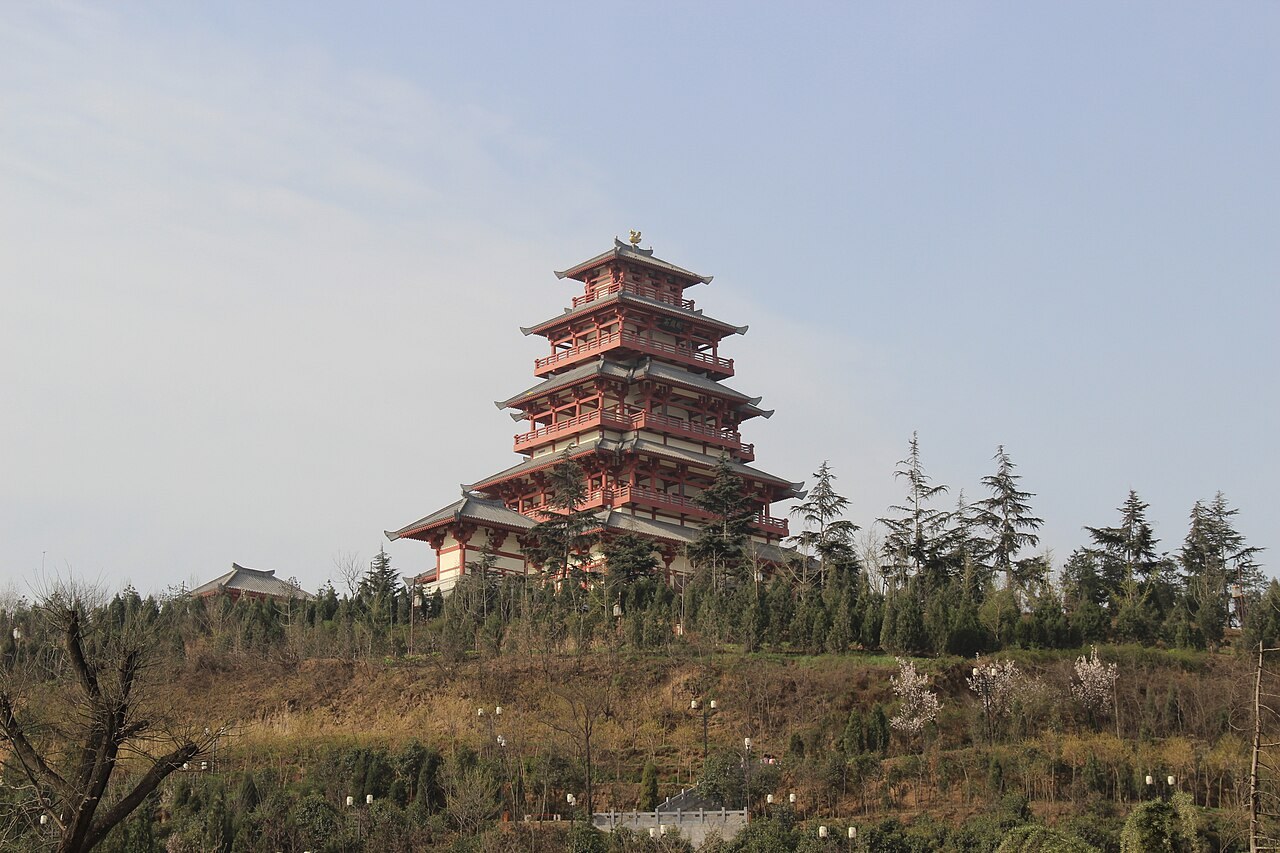
After the indoor visit, use the park for a change of pace. Its hill paths, cultural sculpture and large pavilion explain why the museum’s setting matters as much as its building. The pavilion is a modern landmark inspired by earlier architectural forms.
The hillside requires more effort than a flat promenade. Choose a short section if steps or heat are a concern; seeing the pavilion from outside does not require committing to every uphill path.
Hours
The operator describes year-round park access. Use daylight; individual buildings and paths may have their own access controls.
Tickets
The operator lists park admission as free. A specific pavilion interior or additional service may have separate terms.
Time
1–2 hours, depending on climbing
Chinese address
宝鸡市渭滨区滨河大道;中华石鼓园
Getting there
Continue from the museum within the park; ask staff for the appropriate accessible route if steps are difficult.
How to visit
Keep to marked routes and return to the saved entrance or pickup area. Skip slippery uphill sections in rain. Do not treat park access as proof that the museum is also open.
3. Chencang Old Street · 陈仓老街
This is a themed modern leisure development, not an intact ancient street. Its value in the plan is practical: somewhere to eat, rest and browse after the museum without adding a long cross-city detour.
Try a small local snack, then choose a proper meal if hungry. Evening entertainment depends on current businesses and programmes; do not make an unverified show the reason for extending the visit.
Hours
Businesses have individual hours. Use an afternoon or early-evening meal rather than relying on late-night service.
Tickets
Public leisure streets with separately paid food, shopping and entertainment.
Time
1–2 hours including food
Chinese address
宝鸡市渭滨区陈仓老街
Getting there
Walk from the Shigu visitor group using the open pedestrian access, or take a short local taxi if the chosen exit makes walking inconvenient.
How to visit
Finish at a road-accessible pickup point and return to the same hotel. Ask for food prices and portions before ordering.
4. Jintai Temple · 金台观
Choose Jintai Temple for a second day if architecture and a hillside setting appeal after the museum. Buildings follow the slope, and inscriptions and small courtyards reward a slower visit.
It is a more demanding addition than another flat shopping street. If mobility, rain or fatigue makes the climb unattractive, keep the one-day stay rather than forcing a second sightseeing day.
Hours
Plan a daylight visit and check the 金台太极源文化景区 service notice before leaving. This guide does not claim a verified current last-entry time.
Tickets
Treat current interior admission and any paid activity as separate; verify at the scenic service before visiting.
Time
A half day including local transfers and a meal
Chinese address
宝鸡市金台区陵塬路112号;金台太极源文化景区、金台观
Getting there
Take a taxi to the scenic entrance; this is not within walking distance of the Shigu museum group.
How to visit
Confirm which areas are open at the staffed entrance before paying. If closed or the climb is unsuitable, return to the city for lunch and a shorter street walk.
Keep Baoji South and Baoji distinct
Search Baoji South 宝鸡南 for the high-speed options appropriate to your origin, and compare Baoji 宝鸡 where offered on 12306. They are separate terminals. Check each booked journey rather than assuming the city name describes one common station.
Use the official taxi rank for a first hotel transfer with luggage. The museum names city buses serving Shigu Park, but this guide has not verified their current last departures; live directions or a taxi are the practical choices for the day.
Save your hotel’s Chinese address and a road-accessible pickup point before entering the park. Leave time for the downhill exit, the road trip, station security and the boarding gate. Do not schedule an out-of-city Famen excursion immediately before a fixed onward train.
What the operator confirms
Sources were read on . The museum’s visitor rules establish normal hours, WeChat reservation and the service number; its park page describes Shigu and the adjacent modern leisure streets. City authorities establish the location of Jintai and the separate county attractions.
Visit lengths, lodging areas and budgets are editorial estimates. The original-passport booking path was not field-tested, and optional Jintai operating details remain a same-day check. The first-day plan is anchored to the confirmed museum booking, not an assumed walk-up exception.