Come for painted Buddhist stories, sculpted figures and the surviving Silk Road oasis, with a separate sand-and-spring landscape. Mogao is a managed, guided visit through a selection of caves, rather than a site where you choose any cave and wander for hours. Dunhuang suits travellers who will organise that appointment and accept road transfers between the town and its sights.
Three nights
Three nights usually mean two complete sightseeing days. An arrival evening settles you into town; the two clear days hold Mogao, a separate desert block and the museum or a relaxed town evening; the departure morning is for leaving. Flights and trains arriving late consume an overnight without supplying a sightseeing day. Reserve the same hotel for those nights so each outing ends at a known bed.
Two nights or four nights
Two nights work when arrival is early, departure is late and the booked cave time leaves a genuine desert block. Otherwise, keep Mogao and give up the west road and most town sightseeing. Four nights create a third full day for a west-road trip, a slower desert visit or extra art time. A same-day fly-in visit is vulnerable to delay and leaves little room for the digital-centre appointment.
Choose another stop if cave art has little appeal and you only want a brief sand photograph: the travel to this far-western base may outweigh that outing. For an art-led trip, the loss of normal Mogao admission changes the purpose of coming. Museum objects and the desert remain worthwhile, but they deliver different experiences.
Choose the visits that matter
Keep the first two as the core pair; add the museum for historical context and the market for an evening. Each is an independent visit. The west-road passes and Yardang are a different travel commitment, described below.
An evening meal and busy town streets. 45–90 min plus dinner; purchases separately priced.
For art, spend your energy on the assigned cave interiors and the guide's explanation. For landscape, choose the spring plus one dune viewpoint rather than buying every activity. For low walking effort, keep the museum, market and lower spring route; cave access and park buses still involve walking and steps.
1. Mogao Caves: reserve the actual visit
莫高窟 preserves Buddhist wall painting and sculpture across many centuries. Look for narrative scenes, donors and different styles of painted and modelled figures, rather than expecting one famous cave to be guaranteed. The guide selects an operating route; cave availability and conservation conditions govern what you enter.
Normal and emergency tickets deliver different visits
Normal visit
The 2026 Academy notice specifies digital films in Exhibition Hall 1 and eight actual caves. The full adult tariff is CNY 238 in the April–November peak season. This is the default for an art-led first visit.
Emergency visit
Four actual caves, CNY 100 full adult tariff. The operator activates this limited peak-season option when required; it is neither an always-available fallback nor the same digital-plus-eight-cave experience. Its published entry instructions use a Chinese second-generation ID scan, with no demonstrated foreign-passport equivalent.
Winter scope
The tariff page lists CNY 140 for December–March and describes ten caves, while the dated 2026 visit notice says eight for normal visits. Use the dated product description issued for your visit; plan around the normal guided selection rather than a promised winter cave count.
Time at the site
Allow roughly 4–5 h from a central hotel back to that hotel, including the early arrival, films, park transport and cave visit. This is a planning allowance, with queues and your slot affecting the actual duration.
Special-cave visits have limited separate availability after a normal or emergency visit. They can add focused art time when the Academy offers a suitable cave, but a particular cave and extra ticket are optional additions. Start with the normal visit; a longer hotel stay creates flexibility rather than guaranteed special access.
Book with a passport, then collect the paper slip
Open the official WeChat service account 莫高窟参观预约网. Select 预约购票 → Ticket Booking, the route the Academy specifically provides for foreign-passport and Hong Kong, Macao or Taiwan visitors. Enter the traveller details and choose the actual dated normal product and appointment.
Keep the successful booking record and bring the original passport used for it. The public notice gives no fixed advance-release window for individual dates; book when your date is offered, before fixing a tight flight-and-cave combination.
Reach the 莫高窟数字展示中心 · 敦煌市阳关东路8899号 at least 30 minutes before the appointment. At the manual ticket window or a usable self-service terminal, collect the paper 莫高窟购票信息单. A foreign visitor can use the manual window with the original passport; the notice requires a paper slip for normal-ticket entry.
Use the paper slip and original document for the appointed visit and its checks. Keep both through the digital-centre and cave-zone stages; the ticket is for the issued date and visit, rather than an open return pass.
The Academy's July 2026 statement says no third party is authorised to sell or buy Mogao tickets on your behalf. Use the Academy's official channels. The general website route has a registered-agency role in the 2026 instructions; the foreign visitor route above is the explicit individual passport route.
If that passport form cannot complete your booking, keep the cave visit unconfirmed. The official consultation number 4008-333-715, 08:30–16:30 can explain a booking problem; it does not take telephone reservations. Move to an available normal-ticket date or reassess the stop. An emergency offer is usable for a foreign visitor only when the official passport channel actually issues it with a workable entry instruction; the published ID-scan rule alone supplies no passport-entry assurance.
Enter at the digital centre and return there
Digital centre → films → signed park bus
assigned cave route
park bus back → digital centre pickup.
The caves and digital centre are separate stages of one visit. The cave core has no visitor parking or ticket-sales point; a taxi destination labelled only 莫高窟 can put you at the wrong end. Set the digital-centre name and 阳关东路8899号 for the outward car.
At the cave zone, follow the guide, give your attention to a few scenes and figures, and accept the assigned sequence. Photography, filming and touching inside caves are prohibited. Leave suitcases and large bags at your hotel; the digital centre also publishes free large-luggage storage. The normal route involves boarding transport and walking between interiors; a completely step-free cave itinerary has no assurance in the published guide.
Return on park transport to the digital centre. Meet your taxi or agreed driver at the 中区公共乘车区, the operator's public-bus/taxi pickup area, then return to your original hotel. The north and south parking areas serve other vehicle arrangements; naming the middle public pickup zone makes the return meeting clearer.
Opening and a closure decision
Dated seasonal operating window
The dated 2026 schedule is April 1–November 30, 08:00–18:00, last verification 16:10; December 1–March 31, 09:00–17:00, last verification 15:10.
Your booked time governs the visit. The undated tariff page's winter 17:30 closing is superseded here by the dated notice's 17:00.
Heavy rain or sandstorms can close the caves. The Academy provides refunds for affected unredeemed bookings; its June 2026 closure and reopening notice shows this is a real operating constraint. On a closure day, use the museum if open and a town meal, then keep another date only if a normal booking becomes available. This protects a usable day while recognising that the cave-art promise remains undelivered.
2. Mingsha Mountain and Crescent Spring: choose your effort
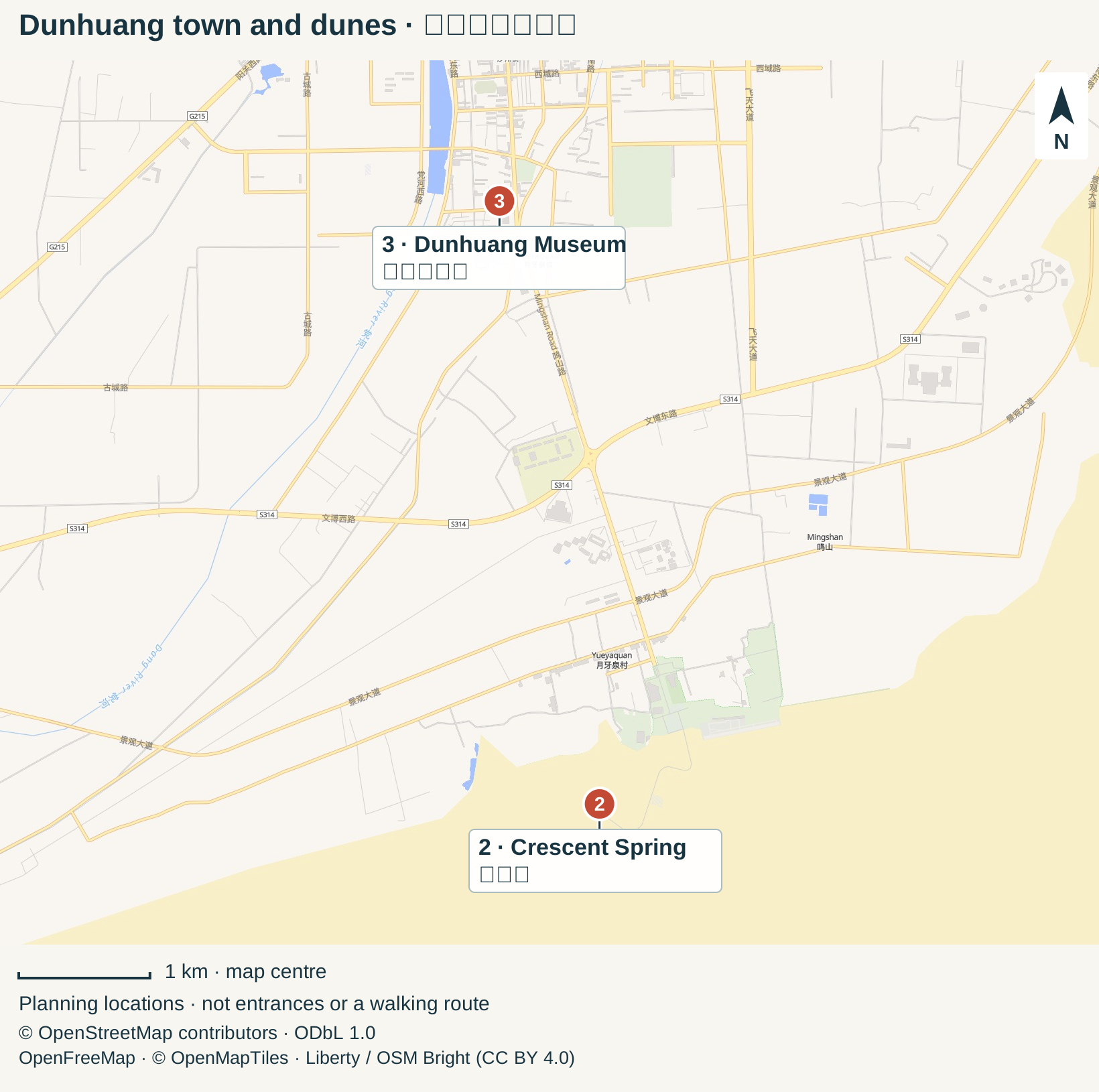
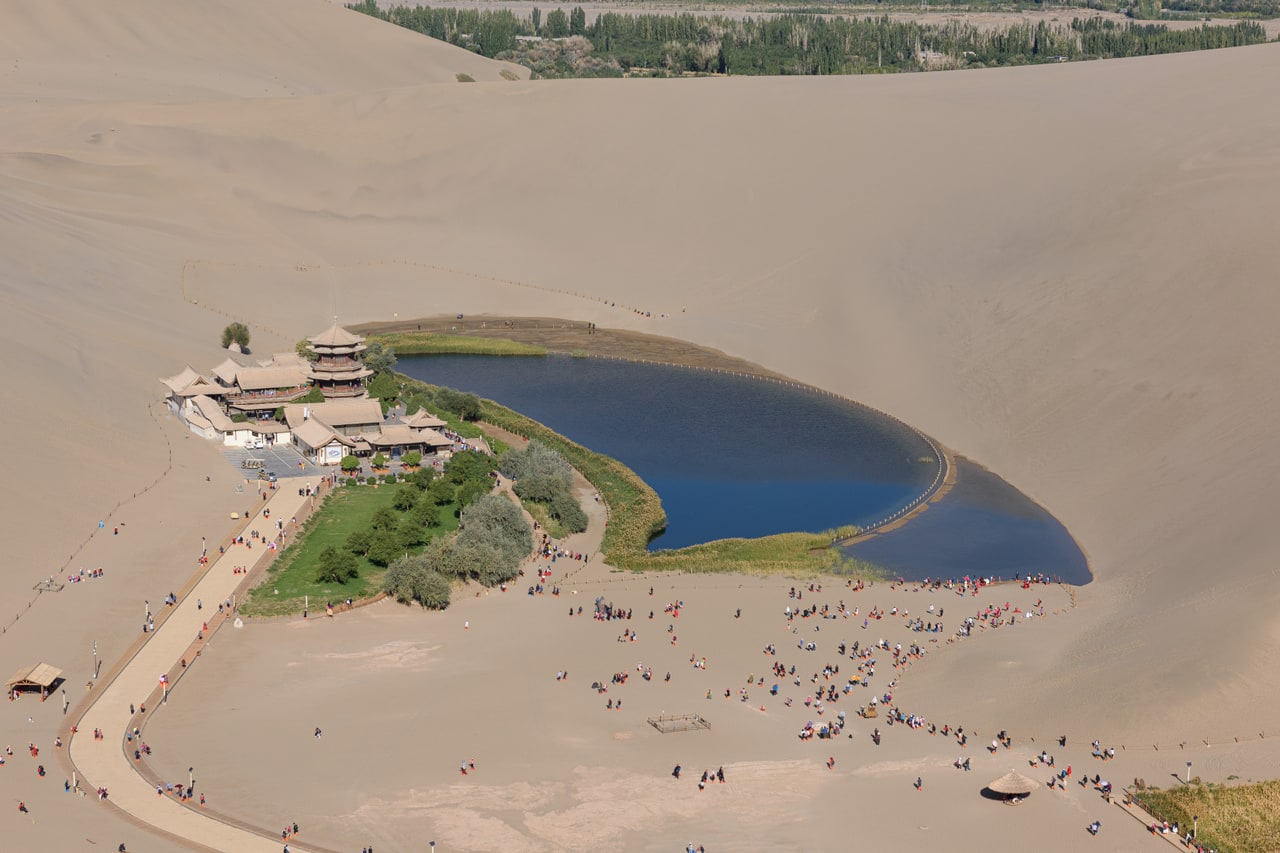
鸣沙山月牙泉 is the contrasting landscape visit: a crescent-shaped spring and pavilion below large dunes. The spring, uphill view and paid sand activities are choices within one scenic area. You can have a worthwhile visit without riding a camel or reaching a ridge.
Choose a lower route, a climb or an activity
Spring and pavilion landscape: middle gate → signed lower path toward 月牙泉 → spring viewing area → return on the lower route to the same gate. Allow about 1½–2 h inside, plus transfers; exposed walking still needs water and sun cover.
Spring plus one dune view: add a signed uphill route only when the sand, temperature and your energy suit it. Allow 2½–3½ h inside. Loose sand makes uphill progress and the descent slower than an ordinary pavement walk; stop low if your legs or balance are struggling.
Camel ride or sand play: buy a separate named activity at the authorised activity point. Admission alone covers neither a ride nor sandboarding. Choose the actual displayed route and charge; follow staff instructions for boarding and dismounting, and keep distance from working animals.
In hot weather, a cool morning is a stronger default than a midday ridge. A late-afternoon climb can suit the light and temperature, but it needs a ticket slot that actually allows that entry. The passport product described below has a 10:00–16:00 window, so it supports a morning visit or an earlier low route; it gives no entitlement to arrive after 16:00.
Admission, passport purchase and the correct gate
A dated official 敦煌发布 guide listed CNY 110 full adult admission when checked, but its temporary entry hours do not establish a standing window. Reserve the actual visit date and entry slot through the park's 鸣沙山月牙泉 WeChat account, i游敦煌, or the named authorised Ctrip/Meituan channels. Check the park's latest opening notice and your issued slot before paying or planning a late arrival. The guide's ID-card facial-entry instruction does not establish foreign-passport scanning; confirm the passport exchange path for the selected product.
Its supplier listing shows CNY 110 and 需换票, meaning exchange is required.
Original passport and voucher
Bring the original passport and issued voucher; use the voucher's specified exchange point before entering.
These are the terms of that particular product, not a promise that every foreign ticket uses the same window or that a phone QR alone opens the gate. The public date selector supplies the next purchase step; available dates and its final exchange instructions must be present in the selected offer before payment.
Default middle-gate pin
Default arrival pin: 鸣沙山月牙泉景区中门游客中心,敦煌市鸣山路.
Town bus
Bus 3 from town serves the middle gate.
A taxi should use that same named visitor centre, where you can complete the entry or ticket-service stage and return to the same pickup area after your visit. If your issued product specifies another exchange point, make that the first car stop rather than walking past it and expecting the gate to solve the voucher.
The official guide also describes the west visitor centre's separate 4.2 km cart approach, CNY 20 return, and an east entrance near Parking 2. Those are different arrival choices. Keep the middle gate for the default town-and-bus chain; a generic park pin can create an unnecessary extra approach.
Exit, weather and the evening return
Return to the same hotel
Retrace the lower path to the middle gate, keep your ticket record, and take the agreed taxi back to your hotel. Set a pickup place and a realistic meeting time before the dune climb; the climb can consume the time you intended for a seated meal. A free or late city-bound shuttle is usable only if the park confirms it for your date and boarding point. Otherwise keep the prearranged taxi or a verified operating return route.
Different entry and return cutoffs
Opening, last admission and the last usable return service are different cutoffs. Use the park's current notice and your issued entry slot for the chosen day; an evening programme does not create late-entry entitlement. The sources do not establish multi-day re-entry.
Wind, sand and an earlier return
Wind and blowing sand can make the ridge unsuitable even when the lower area is open; a closure overrides your planned route. Reduce to the spring and return early when conditions deteriorate. Bring water, sun protection and a layer for cooling after dark. The operator prohibits drones, personally carried sandboards and pets; paid rides and rentals follow their own terms.
Dunhuang Museum and a town evening
3. Dunhuang Museum · 敦煌博物馆
This is the town's archaeological and historical visit, with a different subject from Mogao's religious interiors. Use the permanent displays to understand the oasis, Han and Tang trade, frontier administration and the objects people left behind. Inscriptions and documents make a useful counterpoint to the caves' painted stories.
Museum visit time
Allow 1½–2 h, with one chosen chronological route rather than every caption.
Museum address
Address: 敦煌市鸣山北路1390号.
Take a short town taxi to the museum entrance; from a central bed it belongs to the town block, rather than a stop at the Mogao digital centre.
Passport ticket collection
Enter at the museum's ticket-issuance desk, collect the visitor ticket with your original passport, pass security and follow the permanent exhibition sequence.
The operator guide explicitly lists passports. Permanent displays use the general visitor ticket; temporary special exhibitions, guided services and parking can carry separate charges.
Regular museum hours
The published regular guide lists May–September 08:30–18:30, last admission 17:30, and October–April 08:30–18:00, last admission 17:00, Tuesday–Sunday; Monday closed.
These are the regular website hours, with dated holiday notices taking precedence. Use a daylight block well before the last admission; a holiday opening or extra slot needs the museum's own current notice, rather than an assumption that every Monday opens.
Leave a large bag at the service desk if directed, carry valuables, and avoid flash or a tripod. Follow the signed visitor exit back to 鸣山北路, then taxi to your original bed or the town food district. If the cave slot is late, the museum can occupy the earlier part of the day; if Monday closes it, keep that time for rest and the market.
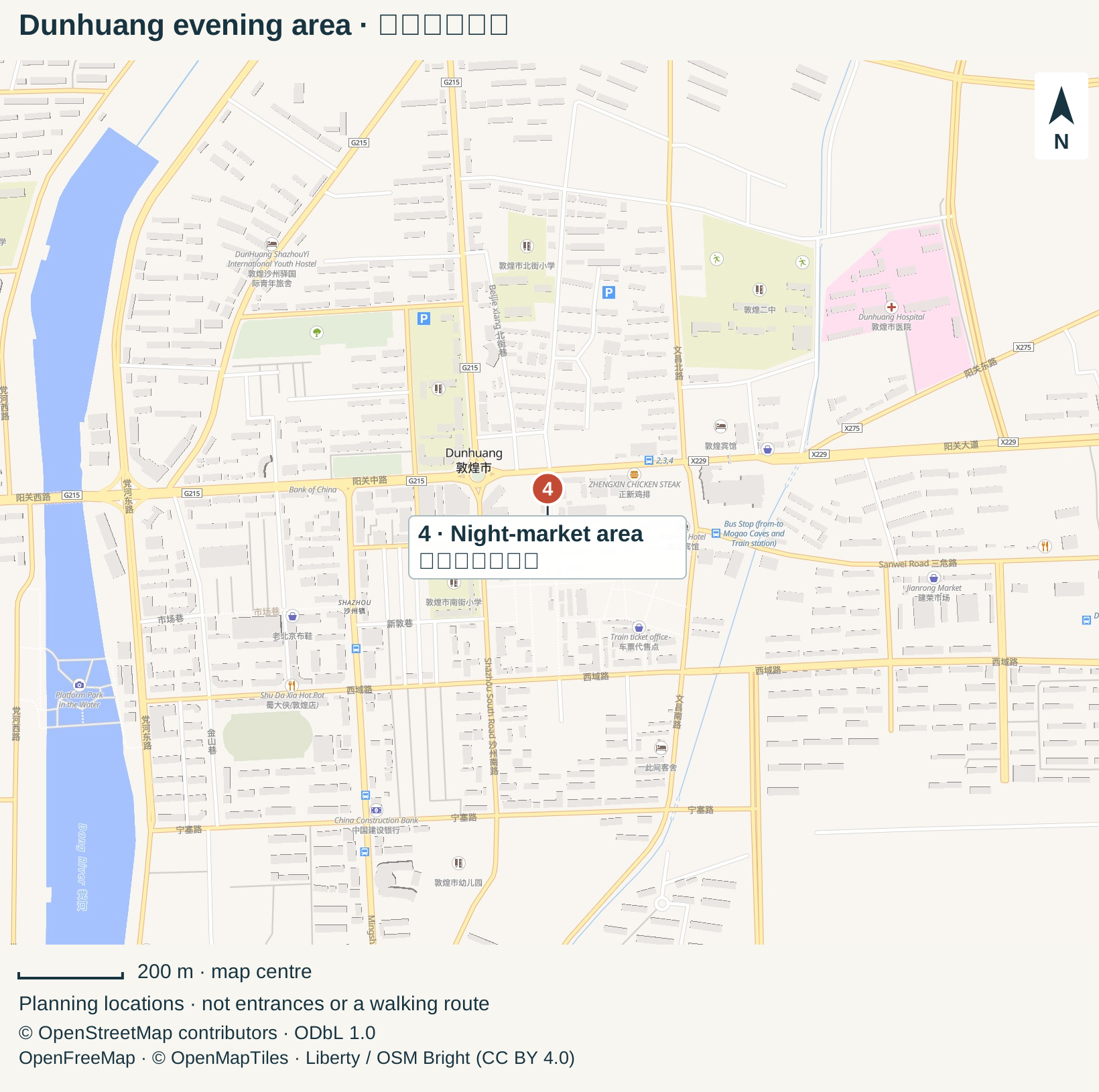
4. Shazhou Night Market · 沙州夜市 / 敦煌夜市
Market street approach
Use the 阳关东路沙州夜市 main pedestrian entrance for a town evening of food stalls, local products and busy lanes.
Public access
The public streets have no general scenic admission ticket; food, crafts and performances are individual purchases.
Evening time
Allow 45–90 minutes plus dinner.
Come in early evening rather than relying on every stall staying open after a late flight.
Walk the main food lane, compare the posted menu and portion before ordering, then make one side-lane loop and return to the same main entrance. For a full meal, sit down at a restaurant around the market before browsing; a string of snacks can be awkward after a strenuous dune climb. Choose a noodle bowl when alone, or a shared lamb-and-bread dish with sides for a group. The food choices below give useful Chinese names.
A hotel on 阳关中路 keeps this as a town walk or short taxi ride. From Four Points on the eastern road, make a return taxi to the hotel's full Chinese address part of the evening. The market is an optional social contrast to the quieter art visit; it supplies neither another cave collection nor a replacement for a missed Mogao ticket.
Where to stay: keep one town base
Default: Shazhou town around 阳关中路 and the market streets. You get meals and an evening walk, while cars handle the cave and desert gates. A dune-side bed may shorten repeated cool-hour desert visits, but it adds town meal transfers. An eastern hotel suits travellers who prefer a larger branded room and easy vehicle pickup; its quieter road location makes the market a car outing.
Dunhuang Hotel · 敦煌宾馆
Dunhuang Hotel address
阳关中路151号.
Published room categories
The operator lists real rooms including 1#楼标间 and 1#楼商务单间.
Choose the first for a twin-room request or the business single-room category for one bed, with bed details supplied in your reservation. The official room page and hotel booking phones +86 937 8859268 / 8859258 are the direct contact route. Its displayed CNY 0 is a catalogue placeholder, so obtain a dated rate and cancellation terms from the hotel. This is the useful central-address choice for town meals.
Four Points by Sheraton Dunhuang · 敦煌福朋喜来登酒店
Four Points address
飞天大道西、三危路北888-1号.
Published rooms
The Marriott room page lists Preferred King and Preferred Double, the latter with two twin beds.
Use Check Availability for actual dates, room, cancellation and breakfast terms.
Room access
Official check-in is 15:00 and checkout 12:00.
Airport transfer
The operator explicitly lists no airport shuttle; arrange a taxi or a separate car.
Its eastern address changes the town-evening leg, rather than giving a walk-to-market default.
Choose dates after securing the core cave plan, with a cancellable room if that is valuable to you. A room name alone establishes neither current inventory nor a fixed nightly budget. Keep the hotel's full Chinese address and reservation record offline. Hotel breakfast can simplify an early gate departure; buy the rate that actually includes it, or arrange breakfast separately.
Arrive, reach the gates and return to your bed
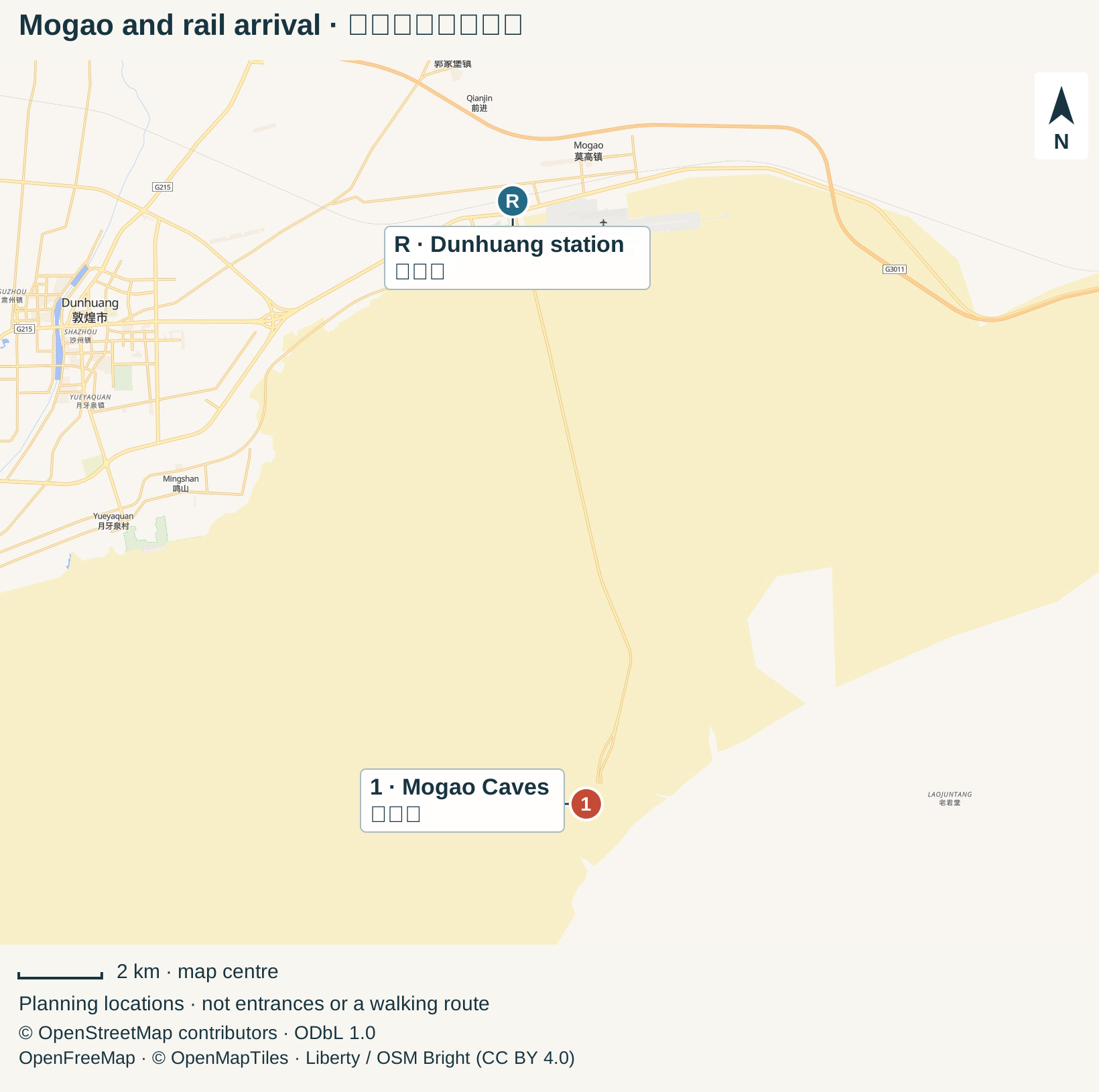
Airport or the actual Dunhuang railway station
For a short stay, choose Dunhuang Mogao International Airport · 敦煌莫高国际机场 (DNH) or a train whose ticket says 敦煌站. After baggage collection or the station exit, take the signed taxi rank or your prearranged pickup to your booked hotel: 敦煌宾馆,阳关中路151号, or 敦煌福朋喜来登酒店,飞天大道西三危路北888-1号. Show the exact address and agree the fare basis before departure. The airport, station and digital centre are separate destinations; reaching one does not complete hotel arrival.
Route details, choices and return steps
柳园南站 is a different station and requires a separate long road transfer. Select it only when the rail connection plus a prearranged road leg makes sense. Before buying that rail option, obtain a pickup quote tied to the actual train, passenger and luggage count, hotel address, delay policy and the reverse hotel-to-station departure. There is no verified current bus timetable or fixed station-to-hotel fare established here. For the simplest first visit, search the actual 敦煌 station first on official 12306 and use the timetable and fare for your travel date.
A late arrival means hotel, meal if a kitchen is still serving, then sleep. An early arrival can leave bags with your booked hotel and use town time, while normal room access follows the hotel's check-in. Keep the Mogao appointment on a clear day when arrival delays would otherwise put it at risk.
Town bed → Mogao → the same bed
Order the outward car for 莫高窟数字展示中心,阳关东路8899号, rather than the cave core. As a starting planning allowance, leave a central hotel about an hour before your slot, preserving the mandatory 30-minute early arrival; allow more for holiday traffic, bag storage or ticket collection. The Academy gives the early-arrival requirement, while this hotel departure allowance is an estimate.
Films and park transport take you to the caves. After the assigned route, return by park transport to the digital centre and its 中区公共乘车区. A waiting driver needs the appointment, return meeting zone, contact method and actual hotel address. A single outward taxi fare supplies no automatic return car; make the return arrangement before losing mobile contact inside the visit.
Town bed → desert middle gate → the same bed
The dated 敦煌发布 guide places the scenic area about 5 km south of town and identifies Bus 3 to 中门. For luggage-free daylight travel, use that signed middle-gate route only if its current timetable serves your date; for a timed passport exchange, limited mobility or a late return, a direct taxi keeps the gate and hotel endpoints simpler. Check the operator's current bus and park notices before departure. Local intervals and the last ordinary bus remain unverified, so arrange a return car if the full public-transport chain cannot be confirmed.
Use 鸣沙山月牙泉景区中门游客中心,鸣山路 for the taxi, complete the product's exchange stage, follow the spring or chosen dune route, and exit back at the middle gate. Carry your hotel address and keep enough charge for the return. Town walking works for a meal and short market loop; exposed roads to scenic gates are a different last leg.
Leave overnight luggage at the hotel for a sightseeing day. The museum has a bag-service instruction and Mogao's digital centre lists large-luggage storage; neither turns a long west-road tour into a guaranteed luggage-transfer service.
What to eat, and where
Make Shazhou's market and surrounding town restaurants the default meal area. The provincial culture-and-tourism site's food account describes Dunhuang's yellow noodles, donkey meat, lamb dishes and apricot drink. Use the names on an actual posted menu; they identify flavours rather than guaranteeing that every stall serves them.
驴肉黄面 / 黄面: chewy yellow wheat noodles with a savoury donkey-meat topping or meat ordered alongside. For one person, a bowl is a straightforward meal. Say 一碗驴肉黄面,辣椒另放 for one bowl with chilli separate; a separate plate of meat can turn a cheap bowl into a much larger order.
胡羊焖饼: lamb stew with pieces of flatbread absorbing the sauce, rich and filling. For two or more diners, choose one pot or a stated small portion and add vegetables; use the vendor's stated serving size before combining it with several noodle bowls.
浆水面: noodles with a fermented vegetable broth, distinctly sour and lighter in texture than the lamb-and-bread pot. 沙葱炒蛋 adds a savoury onion-like green with eggs; ask about added meat and stock if you avoid meat.
杏皮水: apricot-skin drink, sweet and tart. A cup makes a useful flavour contrast with the savoury meal. Choose the vendor's actual size and temperature; health claims are unnecessary to decide whether you like it.
At the market, order one bowl or one main dish first, then add a grilled skewer or small snack if you still want it. With a group, a shared lamb dish, one vegetable dish and noodles ordered in portions is easier than buying a complete meal for every person at several stalls. Photograph the menu price and point to the size you want before the stall starts cooking.
For a seated alternative at a known location, Four Points lists The Mesh · 玩啤食社 in the hotel at 三危路北888-1号, with Asian dishes and local influences. It is useful when staying there; order from that day's menu and service hours. For a late airport arrival, retain a simple packaged-food option rather than promising a hotel kitchen or the whole night market will still be serving.
Vegetarian food requires a more specific order than “no spicy”: say 不放肉,不用肉汤 for no meat and no meat stock. Eggs, dairy and a separately served meat plate are distinct choices. Carry water for the scenic visits; the market meal belongs after you return to town.
Beyond town: choose one west-road purpose
A western outing spends substantial time on exposed roads and finishes back at your original town bed. Add it with a third clear sightseeing day, or trade away another main visit knowingly. Yangguan is on a southwest branch; Yumen Pass and Yardang belong to the longer northwest corridor. Buying all the names together creates a long day, rather than a casual town combination.
5. Heritage: Yangguan, Yumen Pass and Han wall
阳关 combines a museum/interpretive area with a surviving beacon landscape; 玉门关 has a rammed-earth frontier ruin and a wider Han-wall setting. These are archaeological and historical landscapes, with weathered earth remains rather than two intact monumental gateways. Enter through each scenic visitor centre and use its organised internal route; the Yumen Pass heritage site is a different destination from 玉门市 or a railway station named 玉门.
Its published route starts and finishes at a Dunhuang city hotel, with an approximately 8-hour service period.
Select the car rental + tickets product when that is the intended inclusion, or the separately listed Private English Tour when you want English interpretation, using that package's actual inclusions. The published example is 09:00–17:00; overtime and pickup outside the city can cost extra. These are this product's terms, rather than all operators' park access rules.
6. Landscape: Yumen and Yardang
敦煌雅丹国家地质公园 shows wind-shaped ridges and isolated blocks in a Gobi landscape. Use the visitor-centre and park-vehicle system for the chosen route, with the geological formations as one visit; named formations are viewpoints within it. A sunset outing pushes the return later and needs a full transport commitment.
Sunset car inclusions and extras
The named Yumen Pass + Yardang sunset charter is a car product with a Chinese-speaking driver; its published fee includes driver, fuel, tolls and parking, while attraction tickets, meals and possible overtime or excess-distance charges are additional.
Choose that exact route and city-hotel pickup/return when quoting it, and obtain the return time before committing your last night. A Chinese driver with a translation tool is different from a booked English guide.
The city publisher's October 2025 operator road notice describes a roughly 158 km one-way city–Yardang road journey and warns of no fuel along the 玉雅公路. That is useful scale and fuel context; its 2025 sale hours do not establish a 2026 sunset departure. For a self-drive trip, start fuelled in town and use the park's dated access notice and actual route.
All-three-stop published day
To see the cost of adding every west stop, one published Yangguan–Yumen–Yardang product runs from a 09:00 hotel departure to a listed 22:30 end; agree the drop-off back at your named hotel.
Product age and shuttle boundary
It restricts participation to under 65 and leaves some internal scenic shuttles extra.
Those conditions belong to that product; they are a reason to choose a narrower outing or another suitable provider, rather than promising an easy universal three-site tour.
Take water, a meal plan and layers; return to your booked city hotel after the last visitor-centre stage. Keep a west sunset trip away from a same-evening flight or train. Its long road return offers much less recovery room than a short town taxi.
Combine, shorten and handle heat or closure
Early Mogao appointment
Early Mogao slot: use the cave visit as the main half-day, return to the hotel for food and rest, then add the museum while it is open or the market in the evening.
The museum fits only if your actual return leaves meaningful viewing time before its last admission.
Later Mogao appointment
Later Mogao slot: use the museum earlier if open, then go from town to the digital centre with the required buffer.
Keep the desert on the other clear day. A late cave return plus an entry-limited desert slot is a weak combination, especially after adding ticket exchange and the dune walk.
Desert and town
Desert and town: choose a cool-hour spring visit, return to the bed for a shower or rest, then use a town meal and market.
Add one ridge or one paid activity if it matters to you. The lower spring route and a quiet museum block supply a useful slower trip without pretending they have the same physical requirements as a climb.
One less usable day
Lose a usable day: delete the west road first.
Next cut the museum or the dune ridge and paid activities. Retain the normal Mogao appointment and the lower spring visit when their actual slots allow them on the remaining time; keep dinner simple near the bed. With only one clear day, a morning normal cave visit followed by an earlier desert entry requires real appointment and return times, rather than a generic two-site promise.
Heat, wind or low energy
Heat, wind or low energy: shorten the dune outing, avoid the exposed ridge at midday and preserve water, rest and the return car.
For cave closures, keep the Academy's refund route and reassess whether a later normal date is available. Rain does not turn a long west-road excursion into a guaranteed substitute; park access and road conditions still govern it. Museum plus town is a practical weather fallback on an opening day, with the loss of the cave visit stated plainly.
Leaving Dunhuang
Leave from the same hotel and set the destination to the airport terminal or the exact railway station printed on your ticket. Ask the pickup to use the hotel entrance, keep passports and travel records accessible, and include the drive, baggage handover and the airline's actual check-in deadline or rail security margin. A planning buffer of about an hour at 敦煌 station is more useful than arriving as doors close; use a larger road allowance when the ticket says 柳园南.
For Liuyuan South, book the reverse road leg explicitly with your train time and hotel address. A price quoted for arrival does not automatically include that departure transfer. Keep a late west-road return on the night before a free day or a comfortably later departure, so a road delay does not consume the only airport or rail connection.
Jiayuguan, Zhangye and Lanzhou can continue an eastward journey as separate overnight stops; the Gansu corridor guide helps choose that continuation. Compare the actual 12306 dates and station names before buying onward accommodation; their distance and sightseeing commitments exceed a short Dunhuang town excursion.
Sources for reservations and practical details
Practical sources were read on October 1, 2026. Dated operating notices and your issued product govern appointments and seasonal exceptions. Hotel and supplier links lead to their own rooms or named products; they establish a purchase route and published terms, with current inventory and your booking outcome still determined in that transaction.
.jpg)